
Technology & Patient Resources
AI in dentistry: better implant outcomes
Where artificial intelligence genuinely improves implant treatment — and where it remains a tool supporting clinical judgement rather than a substitute for it.
Three places it helps
Diagnostics
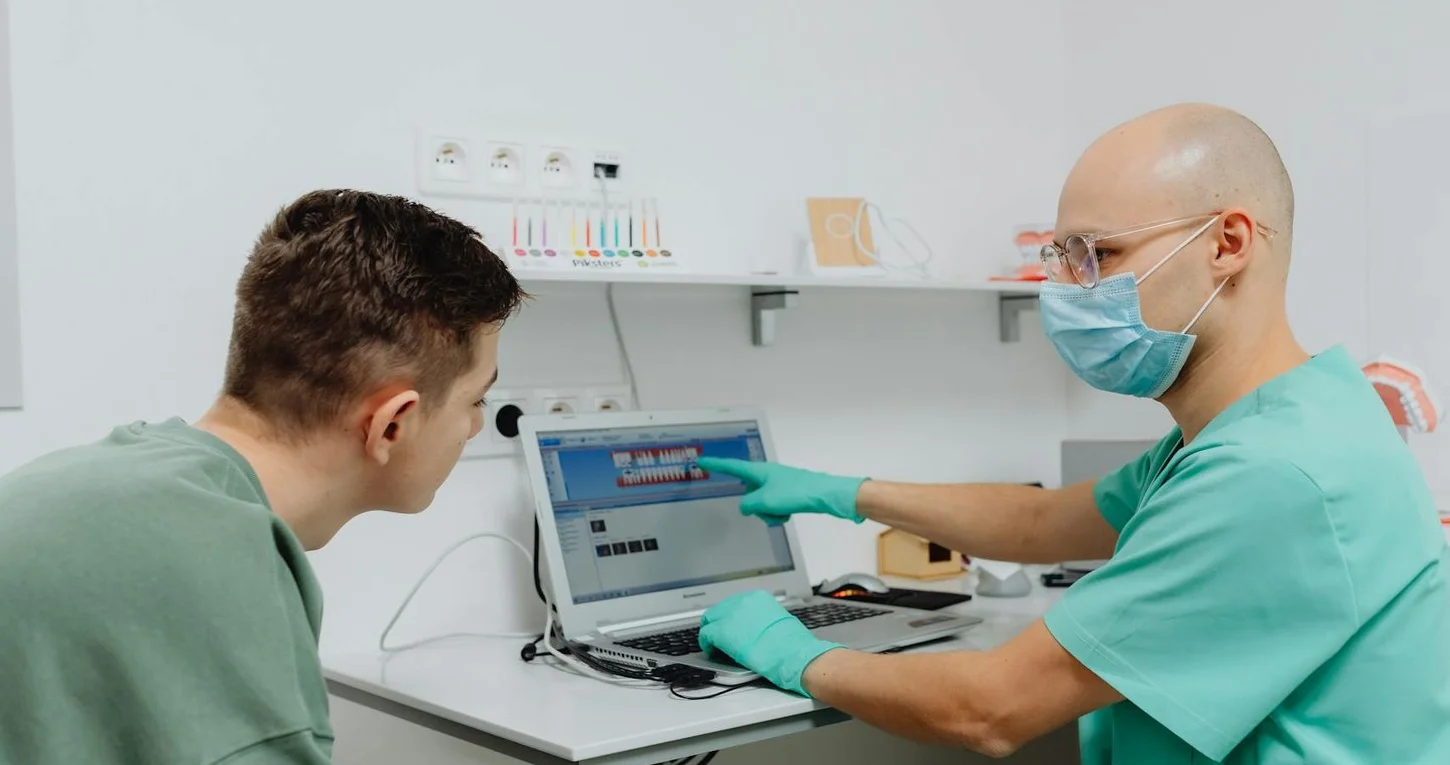
AI algorithms analyse CBCT scans and panoramic radiographs to detect pathology, assess bone density, and identify anatomical structures such as nerve canals and sinus floors — flagging things a tired human eye can miss on a busy day.
Treatment Planning
In computer-guided surgery, AI tools suggest optimal implant positions based on available bone, the planned restoration, and anatomical constraints. This is particularly valuable in complex cases: full-arch work and situations with limited bone.
Post-Operative Monitoring
Analysis of follow-up radiographs detects early signs of bone loss around implants, identifying patients at risk before symptoms emerge — which is precisely when peri-implantitis is still reversible.
What it does not do
It does not decide. An algorithm can propose an implant position that is geometrically optimal and still be wrong for the patient, because it does not know how hard they grind, what their oral hygiene is realistically like, or what they actually want from treatment.
The technology supports Dr. Raj Singh's clinical expertise rather than replacing it. Forty-plus years of implant experience is the thing that decides whether a suggestion is sensible — and, importantly, when the right answer is not to place an implant at all.
Have a question?
Book a consultation and see how your case is planned. Call (905) 479-7777.