How Long Do Dental Implants Last?
Dental implants are designed to be long-lasting — but what does that really mean? Here is what the research says, and what you can do to protect your investment.

You have done the research, attended a consultation, and decided that dental implants are the right solution for you. Now comes the question every patient eventually asks: how long will they actually last?
The short answer is that a well-placed implant, in a healthy patient, can be long-lasting. But that answer deserves some unpacking — because the implant post, the crown, and your own habits all play different roles in the long-term outcome.
The Implant Post vs. the Crown: Two Different Timelines
A dental implant is not a single component. It has two main parts, and they age differently.
The titanium implant post is the part that fuses with your jawbone through a process called osseointegration. Once fully integrated — typically within three to six months — it becomes part of your skeletal structure. A 2019 review of 18 studies (Howe et al.) found 96.4% of implants still in place after ten years, and a 2015 review of 23 studies (Moraschini et al.), averaging 13.4 years of follow-up, reported 94.6%. A 2026 review of 10 studies (Lupi et al.) found 93.0% of implants still in place after twenty years. For most patients, the post itself is designed to stay in place.
Sources: Howe M-S, Keys W, Richards D. “Long-term (10-year) dental implant survival: a systematic review and sensitivity meta-analysis.” Journal of Dentistry 2019;84:9–21. · Moraschini V, Poubel LA, Ferreira VF, Barboza EP. “Evaluation of survival and success rates of dental implants reported in longitudinal studies with a follow-up period of at least 10 years: a systematic review.” International Journal of Oral and Maxillofacial Surgery 2015;44(3):377–388. · Lupi SM, Agolli J, Isola G, Scribante A. “Dental implant survival and marginal bone loss after a minimum of 20 years: systematic review and meta-analysis of prospective studies.” International Journal of Oral and Maxillofacial Surgery 2026;55(11):1360–1369.
The crown (the visible tooth-shaped restoration on top) is a different story. Crowns are subject to the same forces as natural teeth — biting, chewing, grinding — and are typically made from porcelain, zirconia, or a combination of both. A 2012 review of 46 studies (Jung et al.) found 89.4% of implant crowns still in place after ten years. Replacing a crown does not mean replacing the implant; the post below remains intact.
Source: Jung RE, Zembic A, Pjetursson BE, Zwahlen M, Thoma DS. “Systematic review of the survival rate and the incidence of biological, technical, and aesthetic complications of single crowns on implants reported in longitudinal studies with a mean follow-up of 5 years.” Clinical Oral Implants Research 2012;23 Suppl 6:2–21.
What Affects How Long an Implant Lasts?
Several factors influence whether your implant reaches its full potential lifespan.
Bone Quality and Volume
Osseointegration depends on having sufficient healthy bone to anchor the implant. Patients with good bone density at the time of placement tend to have more durable long-term outcomes. Where bone volume is limited, a bone graft performed before or during implant placement can restore the foundation needed for a stable result.
Oral Hygiene
Implants cannot get cavities, but the tissue around them absolutely can become inflamed. Peri-implantitis — a bacterial infection of the gum and bone surrounding an implant — is the leading cause of late implant failure. It is largely preventable with consistent brushing, flossing, and professional cleanings. Treating an implant like a natural tooth is not just a recommendation; it is the single most important thing you can do to protect it.
Smoking
Smoking significantly impairs blood flow to the gums and slows healing. Research shows that smokers have implant failure rates two to three times higher than non-smokers. If you smoke, quitting before implant placement — and staying smoke-free afterward — dramatically improves your odds of a lasting result.
Bruxism (Teeth Grinding)
Chronic grinding places excessive force on implants and crowns alike. Patients who grind at night are typically fitted with a custom nightguard to distribute that force and protect the restoration. Left unaddressed, bruxism can loosen the crown or, in severe cases, stress the implant post itself.
The Skill of the Placing Surgeon
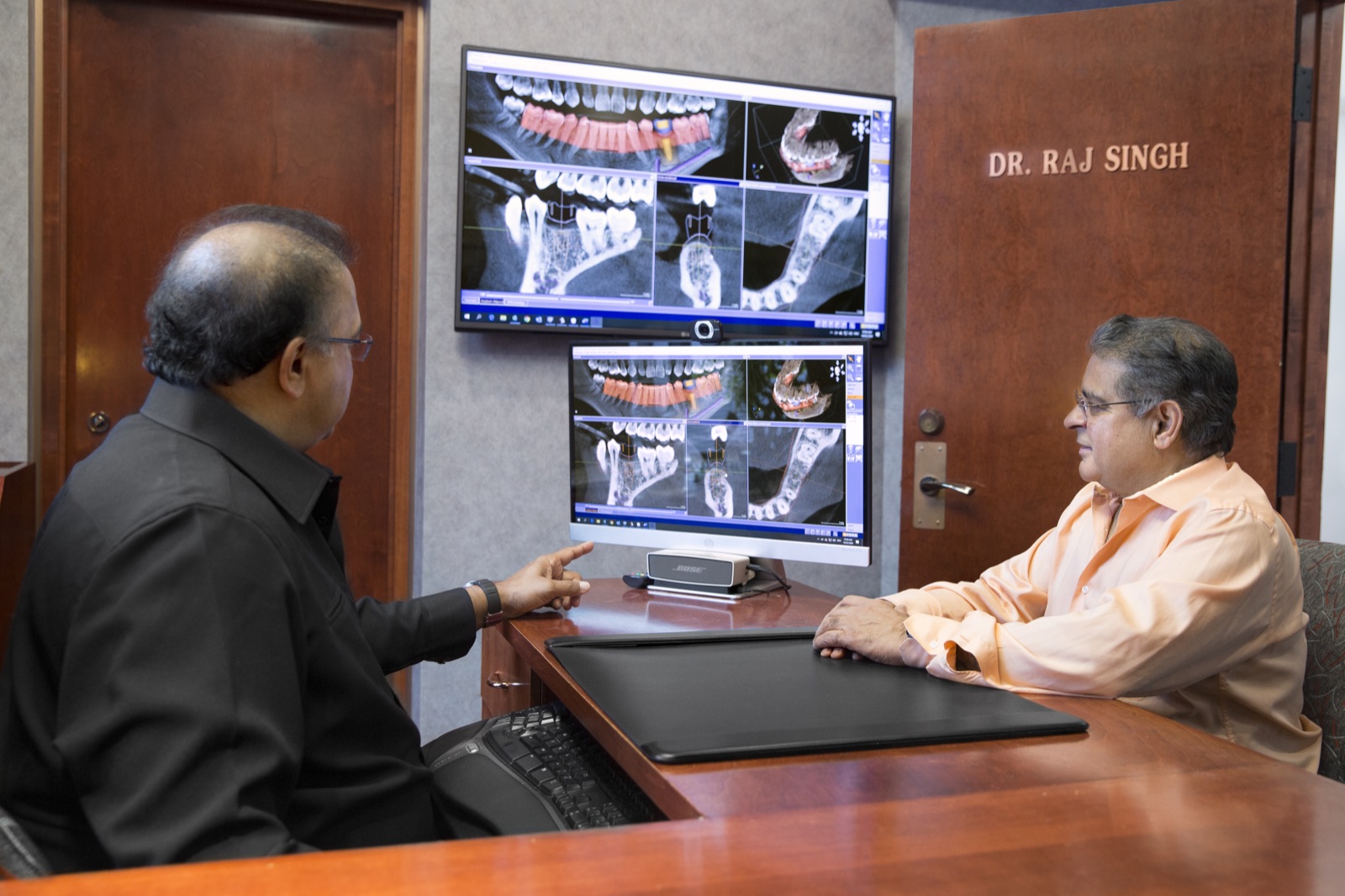
Implant placement is a surgical procedure, and outcomes are directly tied to the precision of that surgery. Computer-guided implant placement — which we use at Vitality Health — allows the surgeon to plan the exact angle, depth, and position of each implant in three dimensions before a single incision is made. This reduces the margin for error and optimizes the implant's relationship to the surrounding bone and adjacent teeth.
Signs That an Implant May Need Attention
Most implants give no trouble at all for years. But it is worth knowing the warning signs that warrant a prompt visit:
- Persistent discomfort or sensitivity around the implant site, especially if it was previously pain-free
- Swelling, redness, or bleeding of the gum tissue around the implant
- A feeling of looseness — a properly integrated implant should feel completely stable
- Difficulty chewing that was not present before
None of these symptoms necessarily mean implant failure, but they should be evaluated quickly. Early intervention almost always leads to a better outcome than waiting.
The Role of Regular Check-Ups
Your implants should be assessed at every routine dental visit. We check the integrity of the crown, probe the surrounding gum tissue for any signs of inflammation, and take periodic X-rays to confirm that the bone level around the implant post is stable. These appointments are not optional maintenance — they are the mechanism by which small problems are caught before they become large ones.
What Happens If an Implant Fails?
Implant failure is uncommon, but it does occur. Early failure — within the first few months — is usually related to healing complications or insufficient bone integration. Late failure, years after placement, is most often linked to peri-implantitis or unmanaged bruxism.
In most cases, a failed implant can be removed, the site allowed to heal, and a new implant placed successfully. The second attempt has a high success rate, particularly when the underlying cause of the first failure has been addressed.
The Bottom Line
A dental implant placed by an experienced surgeon, in a patient with good bone health and consistent oral hygiene habits, is the closest thing dentistry has to a permanent tooth replacement. The post is designed to be long-lasting. If a crown does need replacing, it is a minor procedure compared with the original treatment.
The investment you make in an implant today is, for most patients, a one-time decision. Take care of it the way you would a natural tooth, attend your regular check-ups, and there is every reason to expect it to serve you for the rest of your life.
If you have questions about implant longevity or want to understand whether you are a good candidate, we are happy to walk you through the details at a no-obligation consultation.

Free Dental Implant Seminar — No Obligation, No Pressure
"Everything You Need to Know About Today's Dental Implant Treatments" — held monthly at our Markham clinic.
Explore Topics
Written by
Dentistry at Vitality Health
Content creator and writer sharing insights and stories.