
About Vitality Health
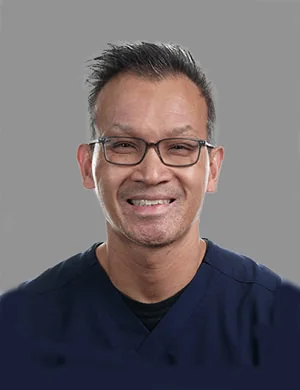
Dr. Stephen Ing
A dental anaesthesiologist is on staff here, so the person who plans your sedation is the same person who stays with you through the procedure.
Sedation is managed by an anaesthesiologist on staff
Dr. Ing completed dental school and additional specialty training in dental anaesthesiology. That advanced training means he understands the full spectrum of patient health factors and can safely administer IV sedation to patients with complex medical histories.
What sets his role apart is that he is on staff here. Rather than contracting a different visiting anaesthesiologist each time, sedation cases are scheduled with Dr. Ing in advance. He understands your case completely, manages your sedation personally throughout, and monitors your recovery afterwards.
Levels of comfort available
Nitrous Oxide
A mild sedative gas mixed with oxygen, breathed through a nose mask. It takes the edge off anxiety without putting you to sleep, and wears off immediately once you stop breathing it.
Minimal Sedation
For mildly anxious patients. You receive medication that helps you relax while remaining conscious and able to follow instructions. You will remember the procedure and can leave shortly afterwards.
Moderate Sedation
Sometimes called twilight sleep. You drift in and out of consciousness with little or no memory of the procedure, responsive to stimulation but deeply relaxed.
Deep Sedation
For extensive surgery or highly anxious patients. Dr. Ing monitors you continuously, managing your airway and vital signs. You wake feeling as though you have had a restful nap.
Everything you need to know about IV sedation
Is IV sedation safe? +
Yes. It is extremely safe when administered by a qualified dental anaesthesiologist. Dr. Ing monitors your heart rate, blood pressure, oxygen levels, and breathing continuously throughout. Modern sedation medications have excellent safety profiles.
Will I feel any pain during the procedure? +
Most patients do not feel pain. Combined with local anaesthetic, IV sedation is designed to keep discomfort to a minimum. You may feel pressure or vibration from instruments, but these sensations are not usually painful.
Can I eat or drink before sedation? +
No. You must fast for six to eight hours before IV sedation, with clear liquids only. This prevents complications. We provide detailed pre-procedure instructions when you schedule.
How long is recovery? +
Quick. Most patients are alert within fifteen to twenty minutes after sedation ends. You will need someone to drive you home — you cannot drive yourself. Most people resume normal activities the next day.
Will I remember the procedure? +
With moderate or deeper sedation, most patients have little to no memory of it — it feels as though no time has passed. This is one of the main reasons patients choose IV sedation for complex treatment.
Are there any side effects? +
Minimal. Some patients experience mild nausea or grogginess afterwards, but these resolve quickly. You will receive detailed post-operative instructions.
Come see us
If anxiety has kept you away from the dentist, book a sedation consultation. Dr. Ing and the team will make your procedure comfortable, safe, and stress-free.