
Implant Surgery & Support
How long do dental implants last?
With proper care, dental implants are designed to be long-lasting. Here is what actually determines their longevity — and what you control.
Two components, two lifespans
The Implant Post
The titanium post placed in your jawbone is designed to stay in place once osseointegration is complete. A 2019 review of 18 studies (Howe et al.) found 96.4% of implants still in place after ten years. A 2026 review of 10 studies (Lupi et al.) found 93.0% still in place after twenty years.
Sources: Howe M-S, Keys W, Richards D. “Long-term (10-year) dental implant survival: a systematic review and sensitivity meta-analysis.” Journal of Dentistry 2019;84:9–21. · Lupi SM, Agolli J, Isola G, Scribante A. “Dental implant survival and marginal bone loss after a minimum of 20 years: systematic review and meta-analysis of prospective studies.” International Journal of Oral and Maxillofacial Surgery 2026;55(11):1360–1369.
The Restoration
The crown, bridge, or prosthesis attached to it experiences wear much like a natural tooth. A 2012 review of 46 studies (Jung et al.) found 89.4% of implant crowns still in place after ten years. A 2019 study of 471 patients with All-on-4 in the lower jaw (Maló et al.) found 98.8% of the bridges and 93% of the implants still in place after 10 to 18 years.
Sources: Jung RE, Zembic A, Pjetursson BE, Zwahlen M, Thoma DS. “Systematic review of the survival rate and the incidence of biological, technical, and aesthetic complications of single crowns on implants reported in longitudinal studies with a mean follow-up of 5 years.” Clinical Oral Implants Research 2012;23 Suppl 6:2–21. · Maló P, de Araújo Nobre M, Lopes A, Ferro A, Botto J. “The All-on-4 treatment concept for the rehabilitation of the completely edentulous mandible: a longitudinal study with 10 to 18 years of follow-up.” Clinical Implant Dentistry and Related Research 2019;21(4):565–577.
What affects longevity
Oral Hygiene
Brushing twice daily and cleaning around implants prevents plaque accumulation and peri-implantitis. Professional cleanings every six months maintain implant health and monitor bone levels. Implants lack a periodontal ligament, which makes consistent care more important rather than less.
Surgical Precision
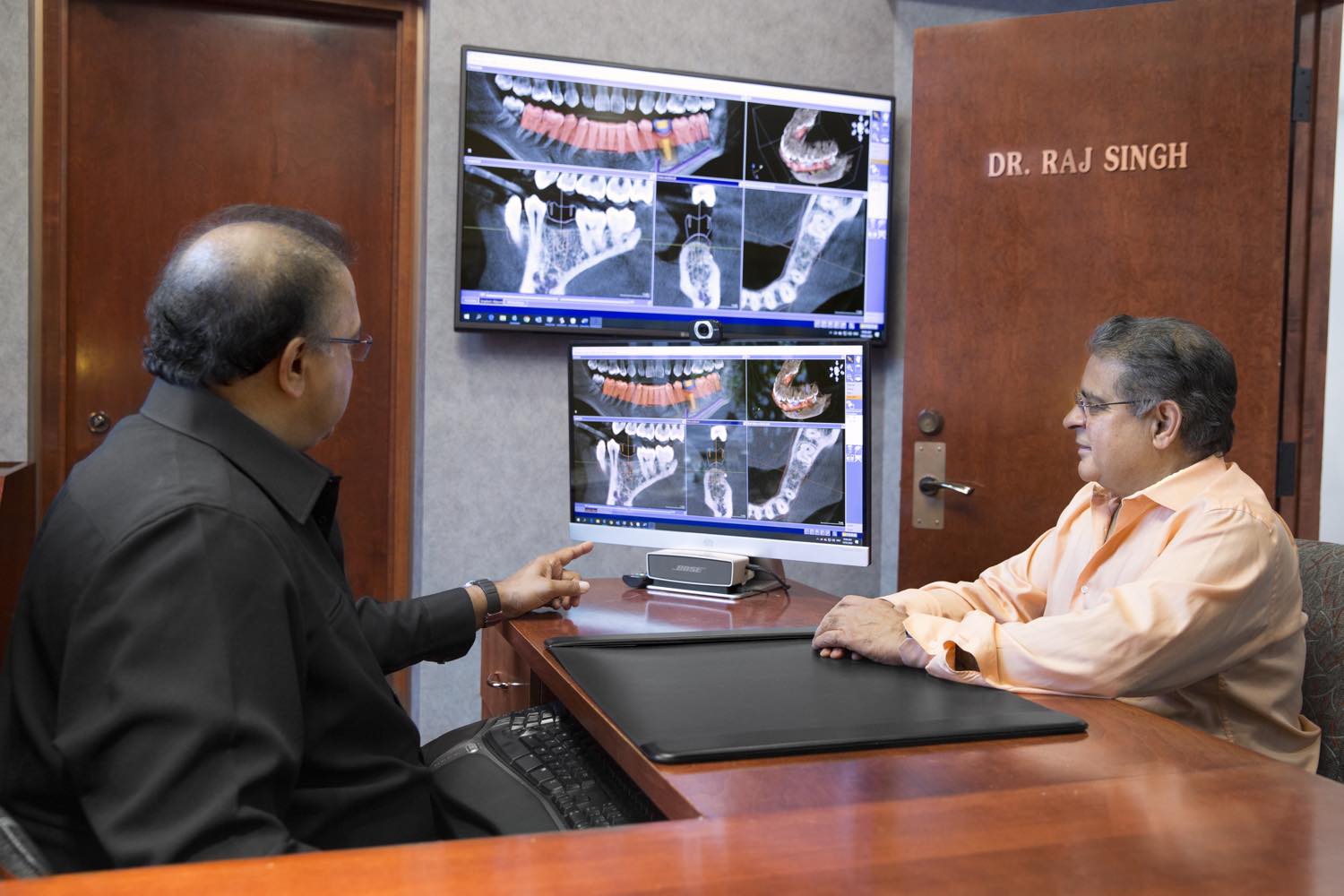
Modern implants have exceptional longevity when properly placed. Computer-guided surgery and CBCT imaging enable optimal positioning while avoiding sinuses and nerves — which significantly improves long-term success.
Bite Forces & Habits
Smoking, uncontrolled diabetes, poor hygiene, and excessive alcohol all increase failure risk. Avoiding very hard foods and never using teeth as tools prevents mechanical damage.
Systemic Health
Overall health has a real influence on implant success. Conditions such as diabetes need good control to support osseointegration. Tell your dentist about all medications and conditions that affect bone healing.
Protecting the investment
Almost every implant failure we see traces back to one of two things: bacteria around the implant that were not cleaned away, or forces the implant was never designed to take.
Both are largely within your control. Six-monthly professional maintenance, honest hygiene at home, and a night guard if you grind your teeth will do more for the twenty-year outcome than anything else after placement.
Related procedures & comparisons
Questions about your procedure?
Book a maintenance review or a consultation. Call (905) 479-7777.