Veneers vs Dental Bonding: Choosing Your Ideal Smile Transformation in 2026
Bonding and veneers can fix the same chipped front tooth. They are not otherwise similar treatments, and choosing between them on price alone is how people end up disappointed.
Bonding and veneers can fix the same chipped front tooth. They are not otherwise similar treatments, and choosing between them on price alone is how people end up disappointed.
The real difference is not cost or appearance. It is that one is reversible and one is not.
The short version
- Bonding: composite resin shaped onto the tooth in one appointment. Usually no drilling.
- Veneers: porcelain shells made in a laboratory. Some enamel is removed permanently.
- Bonding costs far less and lasts a handful of years. Veneers cost more and last considerably longer.
- Bonding stains. Porcelain does not.
- If you are unsure, bonding first is the conservative choice — you can move to veneers later.
What bonding is
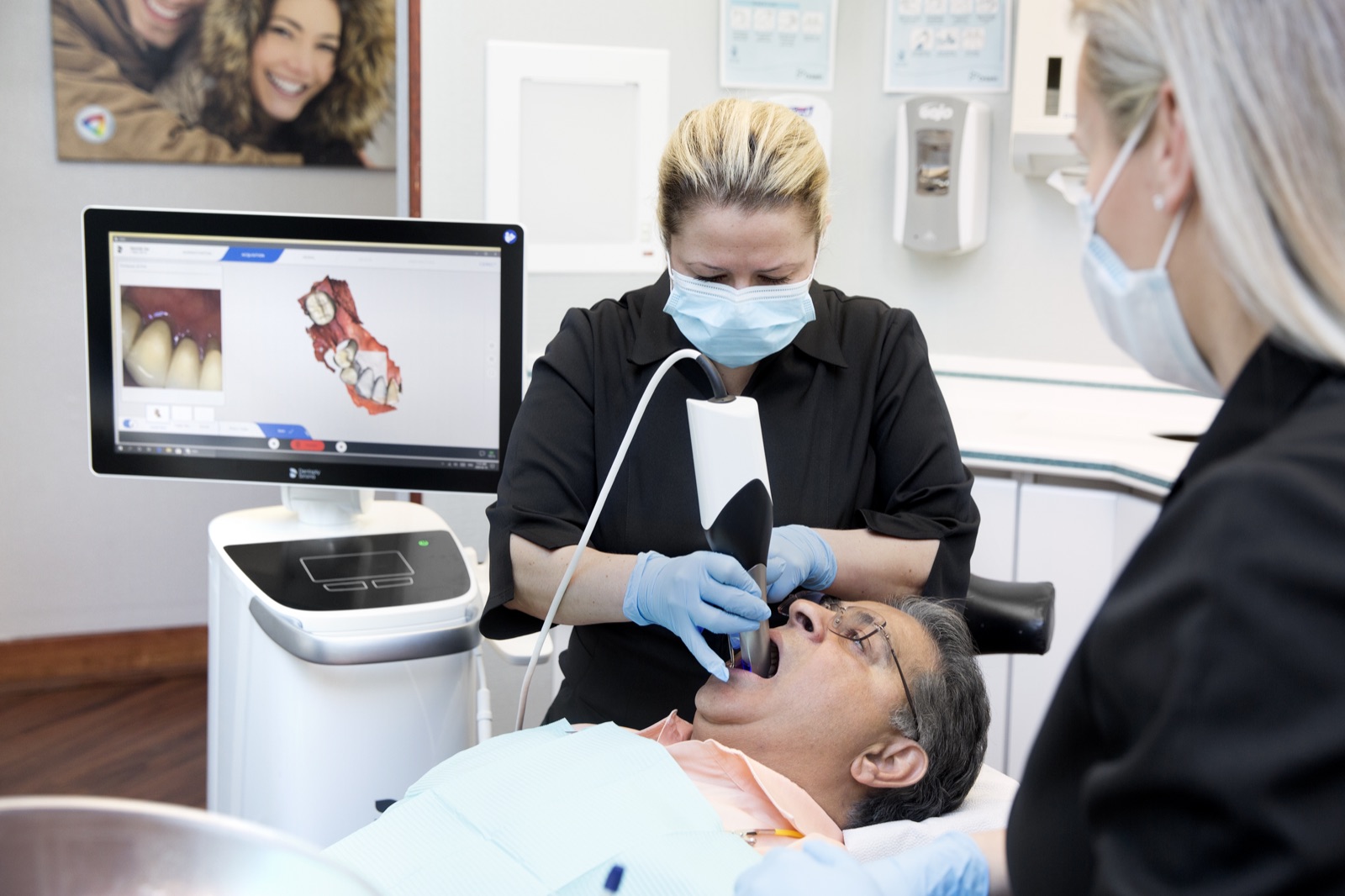
Tooth-coloured composite resin, applied directly to the tooth, sculpted by hand, and hardened with a light. One appointment, usually under an hour for one or two teeth, and often without any anaesthetic because nothing is being drilled.
The surface is lightly etched so the resin grips. In most cosmetic cases no healthy tooth structure is removed at all — which means if you dislike the result, it can be polished off and you are back where you started.
The limitation is the material. Composite is softer than porcelain, it is slightly porous, and it is shaped in your mouth rather than made under laboratory conditions. It does an excellent job on a small area. Over a whole front tooth, it is harder to make it look convincing.
What veneers are
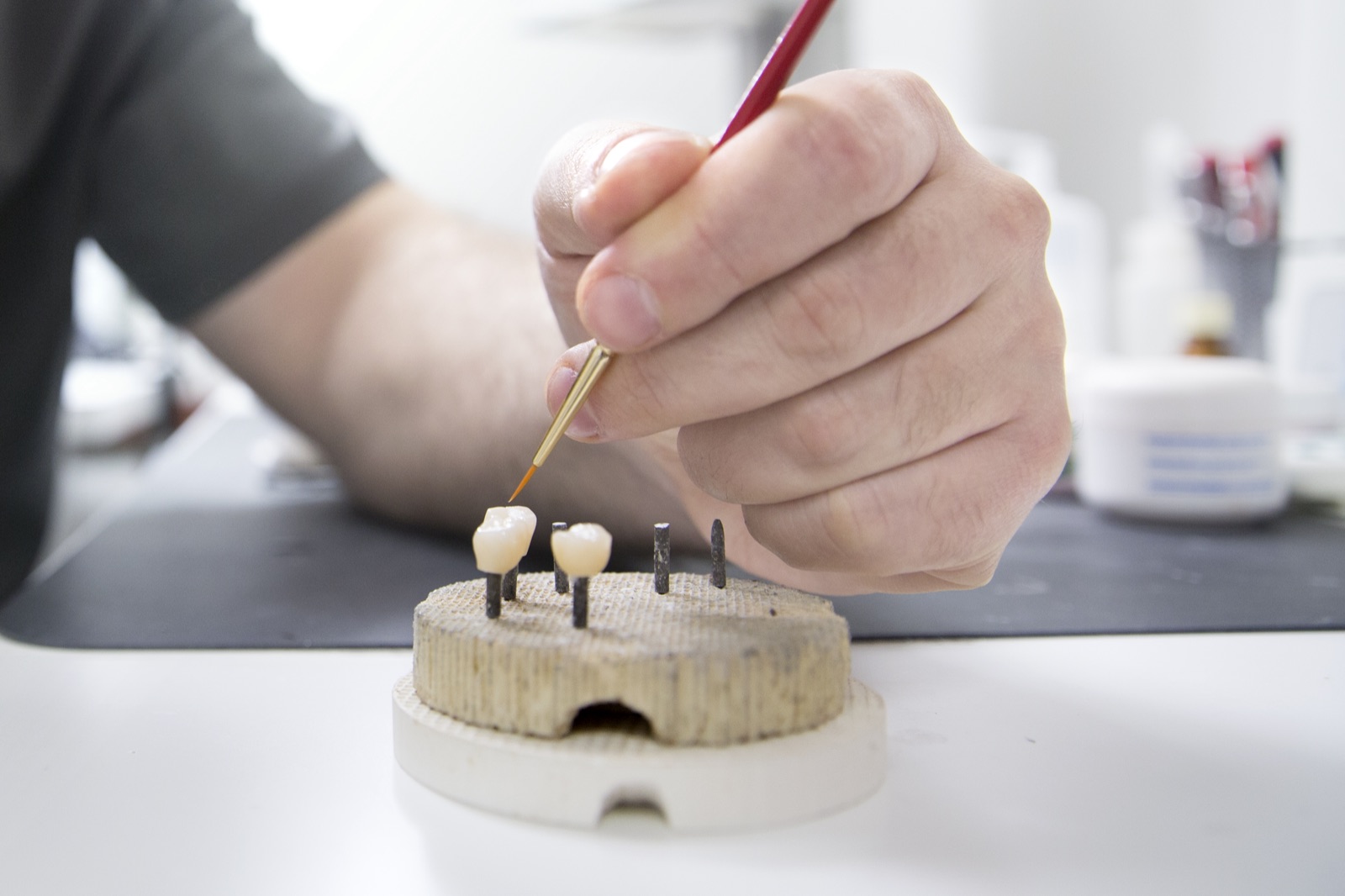
Thin shells of porcelain, made in a laboratory to a design, and bonded to the front of the teeth.
Usually a small amount of enamel is removed first — often under a millimetre — so the veneer sits flush rather than making the tooth look bulky. That enamel does not grow back. Once a tooth is prepared for a veneer, it needs a veneer or a crown on it from then on. This is the single most important thing to understand before agreeing to them.
Two appointments at minimum: preparation and impressions, then fitting, usually with temporaries in between. You see a try-in or a mock-up before anything is made permanent, and that is the moment to be particular.
Porcelain is harder, holds a polish, and does not absorb stain. It reflects light in a way composite does not quite manage, which is why it looks more like enamel.
Side by side
Appointments. Bonding: one. Veneers: two or more.
Tooth removal. Bonding: usually none. Veneers: a thin layer, permanently.
Reversibility. Bonding: yes. Veneers: no.
Lifespan. Bonding: several years typically, sometimes less on a biting edge. Veneers: considerably longer, often well over a decade.
Staining. Bonding picks up colour from coffee, tea, red wine and tobacco. Porcelain does not.
Repairs. Bonding chips are patched in minutes. A cracked veneer usually means replacing it.
Cost. Bonding is a fraction of the price per tooth.
When bonding is the better answer
- A single small chip on an otherwise good tooth
- Closing a small gap between two front teeth
- Reshaping a slightly uneven edge
- A worn edge from grinding, where a conservative repair makes sense
- You are young, and preserving enamel matters over a lifetime
- You want to see what a change looks like before committing to it
That last one is under-appreciated. Bonding is an excellent way to try a shape or a closed gap before making an irreversible decision.
When veneers are the better answer
- Several front teeth being changed together, where consistency matters
- Deep discolouration that whitening cannot shift — tetracycline staining, for instance
- A tooth that is significantly misshapen
- Existing bonding that has stained or been repeated repeatedly
- You want the longest-lasting result and accept the trade-off
Veneers come into their own across multiple teeth. Matching six teeth in composite, freehand, in one sitting is demanding; six porcelain veneers designed together in a laboratory will generally look more uniform.
What neither will fix
Both are cosmetic surfaces. Neither addresses the underlying problem when there is one.
Significant crowding or protrusion is an orthodontic issue. Veneers placed over badly aligned teeth require more enamel removal, and sometimes root canal treatment on teeth that would not otherwise have needed it. Aligning first and then bonding or veneering conservatively is nearly always the better sequence, even though it takes longer.
Untreated grinding will break both. If your teeth are worn from clenching, that is addressed — usually with a night guard — as part of the plan, not afterwards.
Gum disease or decay is treated first. Cosmetic work on unhealthy foundations does not last.
A practical way to decide
Three questions.
How many teeth? One or two, bonding often wins. Six or eight, veneers usually do.
How certain are you? If you are unsure about the shape or the change, bonding first costs less and commits nothing.
How is your enamel? If it is healthy and intact, there is a real argument for keeping it. If teeth are already heavily restored, the case for preserving enamel is weaker because much of it has gone.
Cost
Bonding is priced per tooth and is modest. Veneers are priced per tooth and are several times more. For a full set of upper front teeth the difference runs into thousands.
Worth calculating over time rather than per appointment. Bonding replaced every several years across a decade narrows the gap, though it rarely closes it entirely. And a poorly chosen veneer is a more expensive mistake than a poorly chosen bonding.
Neither is covered by insurance when done purely for appearance. Where bonding repairs actual damage — a fracture, significant wear — a claim may succeed. Submit a predetermination.
Deciding with your own teeth in front of you
This is a conversation that works much better looking at your actual teeth and, often, a mock-up of the proposed result. Book a consultation and we will show you both options on your own smile before you commit to either.
Common questions
Can bonding look as good as veneers?
On one or two teeth, in skilled hands, very close. Across several teeth, porcelain generally looks more uniform and stays that way longer.
Do veneers ruin your teeth?
They permanently remove a thin layer of enamel, so the tooth will always need a covering. That is a commitment rather than damage — but it is a real one.
Can bonding be whitened?
No. Whitening works on natural enamel only. Whiten first, then match the bonding to the new shade.
How long does bonding last?
Usually several years. Less on a biting edge, less if you grind, less if you drink a lot of coffee or red wine.
Can I switch from bonding to veneers later?
Yes, easily. That is one of bonding's advantages.
Do either hurt?
Bonding generally needs no anaesthetic. Veneer preparation usually does, and is not uncomfortable.
Will they match my other teeth?
That is the skill in both. Shade is chosen against your natural teeth in daylight, and for veneers you approve the appearance at try-in before they are fitted.
What if I don't like the result?
Bonding can be removed. Veneers cannot be undone, which is why the mock-up and try-in stages exist and why you should use them properly.

Free Dental Implant Seminar — No Obligation, No Pressure
"Everything You Need to Know About Today's Dental Implant Treatments" — held monthly at our Markham clinic.
Explore Topics
Written by
Dentistry at Vitality Health
Content creator and writer sharing insights and stories.