Are Full Mouth Dental Implants Painful? The Truth About Recovery and Comfort
This is usually the first question, and it often goes unasked because people feel silly asking it. It is not a silly question. You are considering having teeth removed and implants placed in your jaw, and you want to know what it will actually feel like.
This is usually the first question, and it often goes unasked because people feel silly asking it. It is not a silly question. You are considering having teeth removed and implants placed in your jaw, and you want to know what it will actually feel like.
Here is a straight answer, without the reassurance that makes these pages useless. Some of it is easier than people fear. Some of it is genuinely uncomfortable, and you should plan for that rather than be surprised by it.
The short version
- During surgery you will feel pressure and movement, not pain. That part is reliable.
- The evening of surgery, once the freezing wears off, is uncomfortable. Have the medication ready before then.
- Swelling peaks around day three, not day one. Knowing that in advance stops it feeling like something has gone wrong.
- Most people take three to five days off. Some need a week.
- Bone integrating with the implant is not something you feel. The healing you notice is gum tissue.
During the surgery
You will not feel pain. That is not a sales line — it is what local anaesthetic does, and jaw surgery is very reliably numbed.
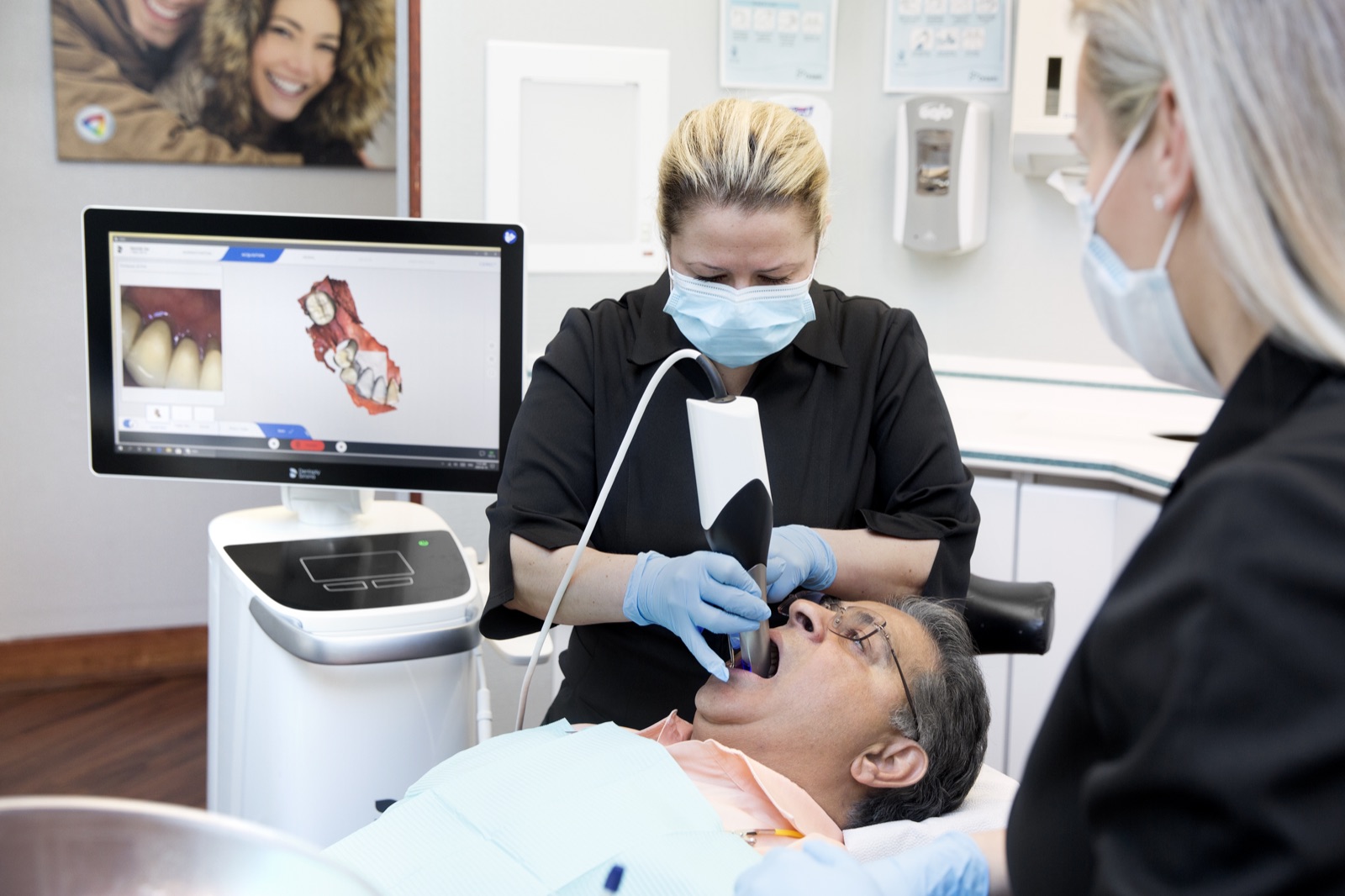
What you will feel is pressure, vibration and movement. Implant placement involves firm, deliberate force. You will hear it and feel it through your skull. People often find the sound more unsettling than the sensation.
Most people also have sedation, which matters more for the experience than for pain. Oral sedation makes you drowsy and indifferent. IV sedation puts you in a twilight state where you can respond to instructions but generally remember little afterwards. Neither is general anaesthesia — you are breathing on your own and can be roused.
Full-arch surgery takes a few hours. With sedation, most people describe it as having passed quickly.
Is six implants worse than four?
Not proportionally. Two extra sites in an arch that is already open adds little. What affects how you feel afterwards is how long the surgery took, how much bone work was needed, and how many teeth were removed — not the implant count.
The first evening: the honest part
The anaesthetic wears off four to six hours after you leave. This is the point people are least prepared for.
It is uncomfortable. Not usually sharp — more a deep, throbbing ache across the jaw, with a raw feeling in the gums. If teeth were removed as well, that adds to it. Most people describe the first night as the worst of it.
The single most useful thing you can do is take pain relief before the freezing goes, not after. Staying ahead of it is far easier than catching up once it has set in. We will tell you exactly what to take and when, and it is usually a combination of ordinary over-the-counter medication rather than anything stronger.
Sleep propped up on an extra pillow. Keep ice on the outside of your face in twenty-minute stretches. Both help more than people expect.
The first week, day by day
Day 1. Ache and swelling begin. Some oozing is normal. Rest, ice, stay ahead of the medication, liquids and very soft food.
Day 2. Swelling increases. This is normal and not a sign of a problem.
Day 3. Usually the peak. Your face may be visibly swollen, bruising may appear, and opening your mouth may be stiff. People who have not been told this is coming often think something has gone wrong. It has not — this is the expected arc.
Days 4 to 5. It turns. Swelling recedes, the ache becomes background, and most people stop needing regular pain relief.
Days 6 to 7. Tenderness where the gums are healing, and jaw stiffness. Most are back at work by now.
Bruising down the neck or jawline is common and looks worse than it is. It can take two weeks to fade.
What is not normal
Knowing what should worry you is as useful as knowing what should not. Call us if you have:
- Pain that gets worse after day three rather than better
- Pain that ordinary medication no longer touches
- A fever
- Bleeding that does not settle with firm pressure
- A bad taste or smell, which can indicate infection
- Numbness in your lip or chin that persists beyond the first day
None of these are common. All are worth a phone call. We would much rather see you unnecessarily than have you wait.
The longer healing period
After the first week or two, discomfort largely stops. What remains is a set of restrictions rather than pain.
The bone is integrating with the implants over three to six months. You will not feel this happening — there are no nerve endings reporting on it. The only sign is that you are asked to keep eating soft food while it does.
That is the part people find hardest, not because it hurts but because it goes on. Several weeks of soft food gets dull. Plan for it: soups, eggs, fish, pasta, yoghurt, anything you can manage without real chewing.
The temporary bridge fitted on surgery day may rub in a spot or two as the gums settle and change shape. That is expected, easily adjusted, and worth going back for rather than putting up with.
Compared with what
Worth some perspective. Most people having full-arch treatment are not coming from comfort — they are coming from failing teeth, abscesses, or a denture that rubs.
Patients frequently say the week after surgery was easier than the months before it. That is not an argument that surgery is pleasant. It is a reminder that the comparison is not with feeling fine.
What actually helps
- Take the medication on schedule for the first two days, not when it starts to hurt.
- Ice for the first 48 hours, twenty minutes on, twenty off. After that it stops helping.
- Sleep elevated for the first few nights.
- Salt-water rinses from day two — gentle, not vigorous.
- Do not exert yourself for two or three days. Raising your blood pressure will make your jaw throb.
- No smoking. It genuinely affects healing, and this is the period where it matters most.
- Have the soft food in the house beforehand. You will not want to shop.
If it is the fear rather than the pain
For a lot of people, the anxiety is the harder part, and it is often built on a bad experience years ago.
Say so. It changes what we offer — more sedation, longer appointments, breaks, explaining as we go or not at all, whichever you prefer. There is nothing unusual about it and nothing to apologise for.
Talking it through
If you are weighing this up, a consultation will tell you what your own case involves — how many teeth need removing, whether grafting is needed, how long the surgery will take. All of that affects the week afterwards, and none of it can be answered generically.
We have been doing this in Markham since 1985, and we will give you a realistic account rather than a comfortable one. Book a consultation whenever you are ready.
Common questions
Will I be asleep?
Not fully. Most full-arch surgery is done with local anaesthetic plus IV or oral sedation — deeply relaxed, responsive to instruction, usually remembering little. General anaesthesia is occasionally used but is rarely necessary.
How long will I need off work?
Three to five days for most people. Take a week if you can, particularly if your work is physical or public-facing — the day-three swelling is visible.
What is the worst day?
The first evening for pain; day three for swelling and stiffness. After that it improves steadily.
Will ordinary painkillers be enough?
Usually, yes, when taken on schedule rather than reactively. Stronger prescriptions are sometimes given for the first day or two. If you are still needing them beyond that, tell us.
Does the bone healing hurt?
No. Osseointegration produces no sensation. What you feel in the first fortnight is gum tissue healing, and that settles well before the bone has finished.
Will the implants feel strange afterwards?
The bridge feels bulky for a week or two, and speech takes a few days to adjust. After that most people stop noticing. Because it is fixed rather than removable, there is none of the rubbing or movement that makes dentures uncomfortable.
Is the abutment stage painful?
Barely. By then the implants have integrated and the work is at gum level. Local anaesthetic is used for comfort, and most people find it one of the easier appointments.
What if I am very anxious about dental treatment?
Tell us at the consultation rather than on the day. It changes the sedation we plan, how we pace appointments, and how much we talk you through. It is a common enough reason people have avoided treatment for years.

Free Dental Implant Seminar — No Obligation, No Pressure
"Everything You Need to Know About Today's Dental Implant Treatments" — held monthly at our Markham clinic.
Explore Topics
Written by
Dentistry at Vitality Health
Content creator and writer sharing insights and stories.