Full Arch Implant Surgery: The Definitive Guide to Restoring Your Smile in 2026
Most of the anxiety about full-arch surgery is about not knowing what the day looks like. Not pain — people generally accept that will be managed — but the shape of it. How long. Who drives. What happens in what order. Whether you will walk out looking like you have had surgery.
Most of the anxiety about full-arch surgery is about not knowing what the day looks like. Not pain — people generally accept that will be managed — but the shape of it. How long. Who drives. What happens in what order. Whether you will walk out looking like you have had surgery.
So this is the day itself, in order, plus the fortnight of preparation before it.
The short version
- Plan for most of the day, though the surgery itself is a few hours.
- You need someone to drive you home if you are sedated. This is not negotiable.
- You leave with fixed temporary teeth the same day.
- Get the prescriptions filled and the shopping done before, not after.
- Take four or five days off. Most people are back sooner and are glad not to have had to be.
Two weeks before
Medication review. Tell us everything you take, including supplements. Blood thinners, bisphosphonates and some diabetes medications affect planning. Do not stop anything yourself — some need adjusting, most do not, and that is a conversation with us and your physician.
Stop smoking if you possibly can. This is the single clearest factor in whether implants integrate. Even stopping for the surgical period and the months after measurably improves the odds.
Arrange the driver. If you are having IV or oral sedation you cannot drive, and you cannot take a taxi alone. Someone has to collect you. Book them now.
Arrange the time off. Four or five days for most work; a week if it is physical.
The week before
Fill the prescriptions. Painkillers, any antibiotics, the prescribed mouthwash. Collecting these while recovering is a miserable errand.
Do the shopping. Yoghurt, soup, eggs, smoothie ingredients, protein powder, mashed potato, ice cream, tinned fruit. A stick blender if you do not have one. Our guide to eating afterwards has a full list.
Set up where you will rest. Extra pillows — sleeping propped up for the first few nights reduces swelling noticeably. Ice packs in the freezer.
The night before
Follow the fasting instructions you are given exactly; they depend on your sedation. For IV sedation this normally means nothing to eat or drink for a set number of hours.
Take your usual morning medications with a sip of water unless told otherwise.
Sleep if you can. Most people do not sleep well and it makes no difference to the day.
The day, in order
Arriving
Wear comfortable clothes with sleeves that roll up. Leave jewellery at home. Bring your driver or arrange for them to be reachable.
We confirm the plan with you one more time and answer anything you have thought of overnight. This is a reasonable moment to ask a question you have been sitting on.
Sedation
Depending on what you have chosen: local anaesthetic alone, oral sedation taken beforehand, or IV sedation placed through a cannula in your arm. Under IV sedation most people remember very little of the procedure, which for many is the point.
Extractions
Any remaining teeth in the arch are removed and the sockets cleaned of infected tissue. In a mouth with several failing teeth this takes a while and is the part that produces most of the later swelling.
Preparing the bone
The ridge is smoothed and levelled so the bridge will seat correctly. Grafting, if planned, may be done here.
Placing the implants
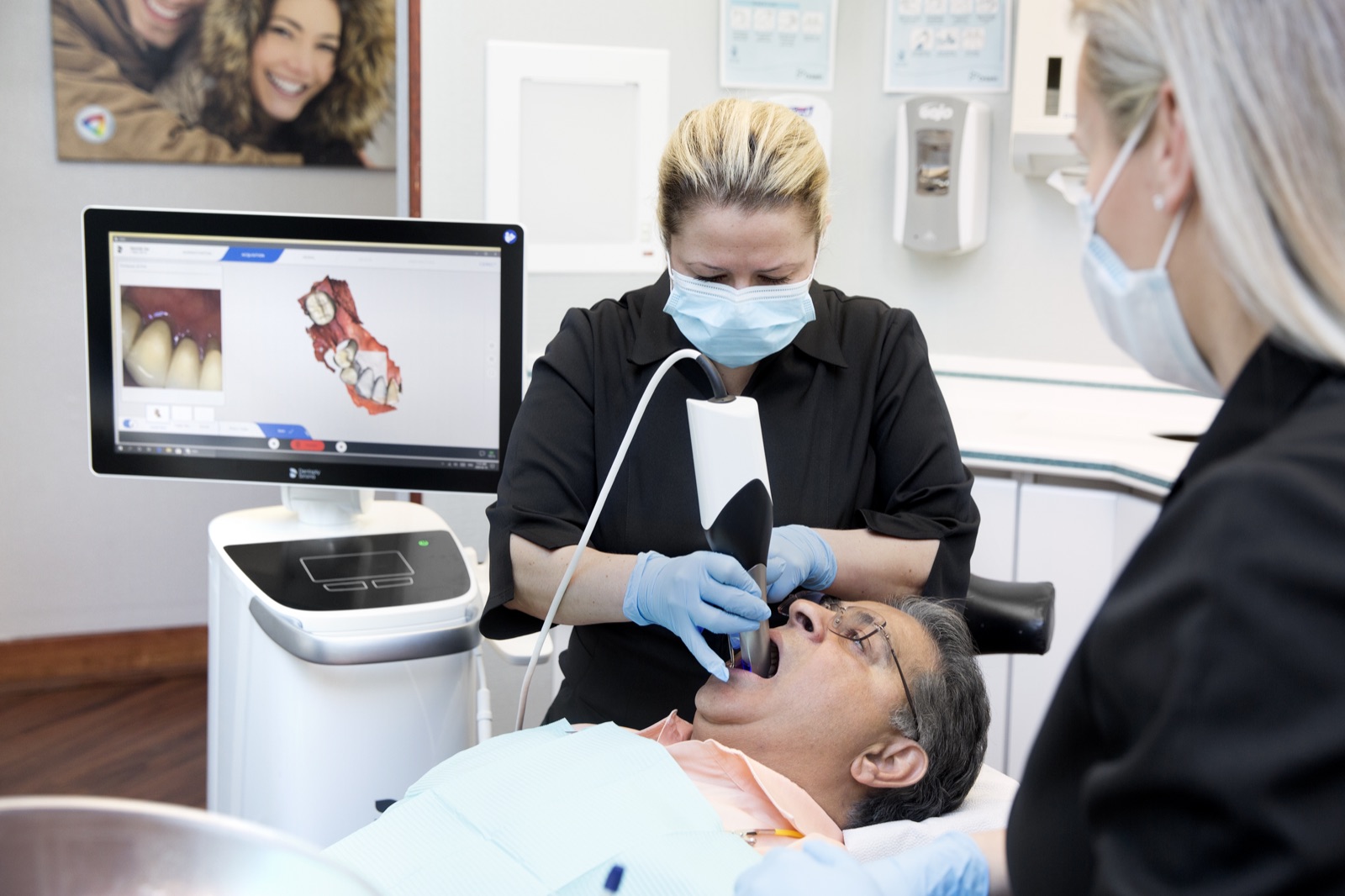
The surgical guide is seated and checked. The implants are placed through it — in an All-on-4, two upright at the front and two tilted backwards. Each is tested for initial stability, which determines whether a temporary bridge can be attached the same day.
Fitting the temporary bridge
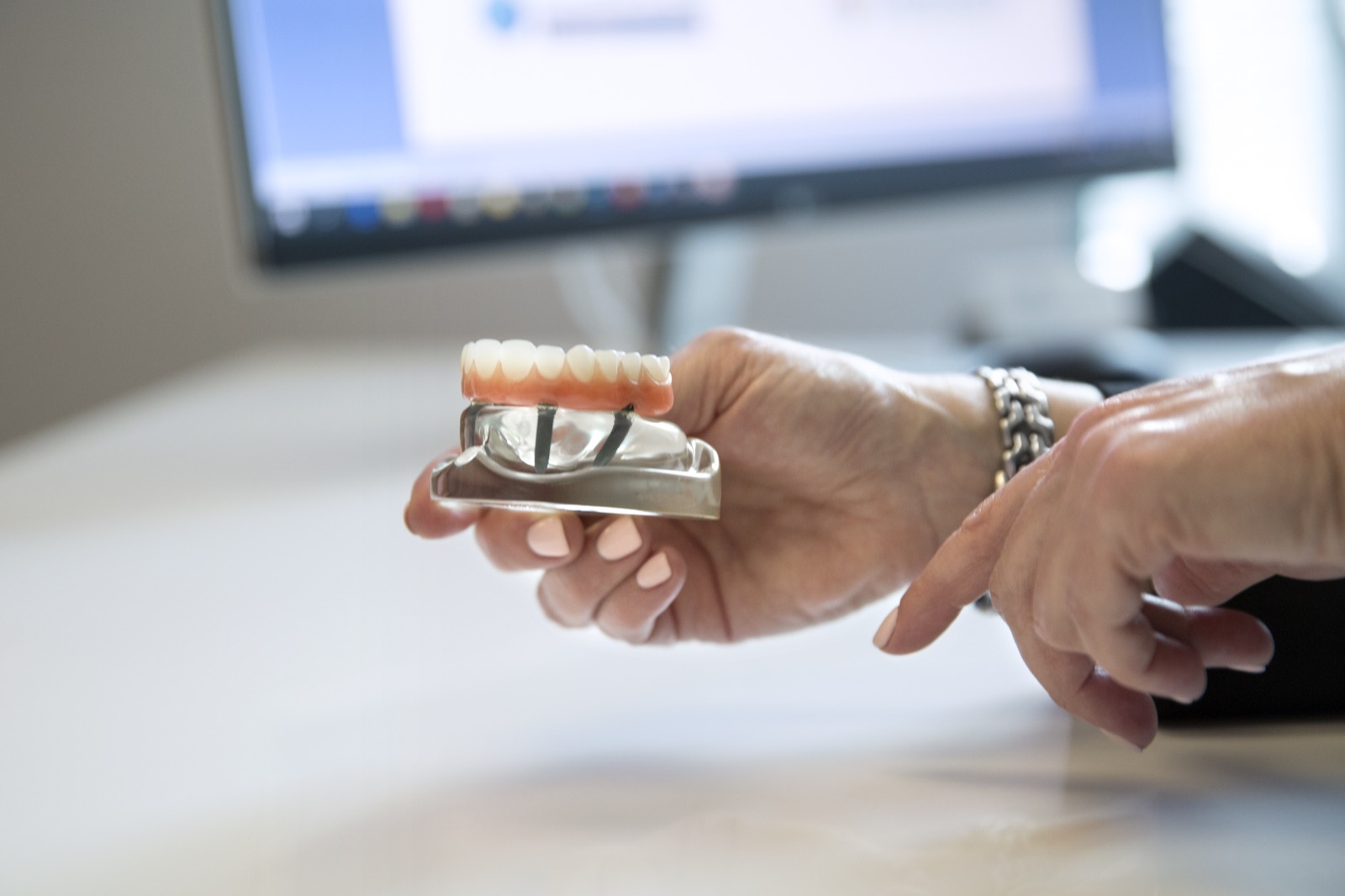
Abutments are attached and the temporary bridge — designed in advance from your scan — is screwed on and adjusted so your bite meets evenly. This adjustment matters, and it is why the last part takes longer than you might expect.
Leaving
You are monitored until you are steady, given written instructions and your first dose of painkillers, and your driver takes you home. You will be numb, tired, and have teeth.
Total: most of a day. The surgical part is a few hours of it.
That evening
Ice on and off, twenty minutes at a time. Sleep propped up. Soft cold food — yoghurt, ice cream, cool soup. Take the painkillers on schedule rather than waiting for pain to arrive; staying ahead of it is much easier than catching up.
Expect some oozing for the first day, which looks worse mixed with saliva than it is. No rinsing, no spitting, no straws on day one.
Most people describe that first evening as strange rather than painful — the anaesthetic is still working, and the reality of having new teeth has not landed yet.
What follows
Swelling peaks around day three, then improves. Most people are back at work by day four or five. Soft food for around three months while the implants integrate, then the final bridge between months four and six.
Our recovery guide covers that longer stretch, and our piece on pain covers what the first week genuinely feels like.
If you are having both jaws
It is commonly done in one session, which is more efficient and means one recovery rather than two. It is also harder: there is no unaffected side, swelling is greater, and the soft-food period is less forgiving.
Worth discussing honestly rather than defaulting either way. Some people would rather get it over with; others would rather keep one side working.
Before you decide
A consultation and a scan will tell you what your own surgery would involve — how many implants, whether grafting is needed, what the day would look like for you. Book one and you will leave knowing.
Common questions
Will I feel anything?
No. You are fully anaesthetised, and under IV sedation most people have little memory of it.
How long am I there?
Plan for most of the day. The surgery is a few hours; the rest is preparation, adjustment and recovery.
Can I drive myself home?
Only with local anaesthetic alone. With any sedation, someone must collect you.
Will I leave with teeth?
In the great majority of cases, yes — a fixed temporary bridge, fitted the same day. Occasionally, if an implant is less stable than hoped, we wait. We would tell you at the time.
What if I am very anxious?
Say so plainly. It changes the sedation discussion, and it is an extremely common reason people delay treatment for years.
Should I eat before?
Follow the fasting instructions for your sedation exactly. With local anaesthetic only, a normal light meal beforehand is sensible.
When do I come back?
Two weeks for review, stitches and bite adjustment. Sooner if anything concerns you.
What is the most common thing people get wrong?
Not arranging the driver, and not doing the shopping beforehand. Both are entirely avoidable and both make the first days much worse.

Free Dental Implant Seminar — No Obligation, No Pressure
"Everything You Need to Know About Today's Dental Implant Treatments" — held monthly at our Markham clinic.
Explore Topics
Written by
Dentistry at Vitality Health
Content creator and writer sharing insights and stories.