Who Are the Best Candidates for Full Arch Dental Implants? A 2026 Patient Guide
A lot of people arrive at this question having already been told no. Not enough bone. Too old. Diabetic. A smoker. Gum disease. Sometimes the no was right at the time; often it was based on what was possible ten or fifteen years ago.
A lot of people arrive at this question having already been told no. Not enough bone. Too old. Diabetic. A smoker. Gum disease. Sometimes the no was right at the time; often it was based on what was possible ten or fifteen years ago.
This is an honest account of what actually determines whether full-arch implants will work for you — including the things that genuinely do rule it out, because pretending everyone is a candidate would not help you.
The short version
- Most people who have lost, or are about to lose, all the teeth in an arch can be treated. Bone loss is usually a planning problem rather than a barrier.
- With medical conditions, what matters is whether they are stable and controlled, not whether you have them.
- Active gum infection has to be treated first. That is not negotiable — infected bone does not heal onto titanium.
- Smoking meaningfully raises the risk of failure. It is not an automatic no, but you should know the number before deciding.
- A CBCT scan is what turns all of this from guesswork into an answer.
Who full-arch treatment is actually for
Broadly, three groups.
People who have already lost all the teeth in an arch and are wearing a denture they dislike — usually because the lower one moves, or the upper one covers the palate and dulls taste.
People whose remaining teeth are failing. Advanced gum disease, or teeth that have been crowned, root-treated and patched until there is nothing left to work with. This group often does best, because treating while teeth are still present means less bone has been lost.
People with an existing bridge or partial denture that has failed and who do not want to repeat the cycle.
If you still have a reasonable number of healthy teeth, full-arch treatment is usually the wrong answer. Removing sound teeth to fit a full-arch bridge is over-treatment. A good assessment should tell you if that is your situation.
Bone: the thing everyone worries about
"You don't have enough bone" is the most common reason people give up on implants, and it is the one most often out of date.
Bone recedes after teeth are lost — most in the first year, then more slowly. After a decade in dentures there may be very little height left, particularly at the back of the upper jaw where the sinus sits.
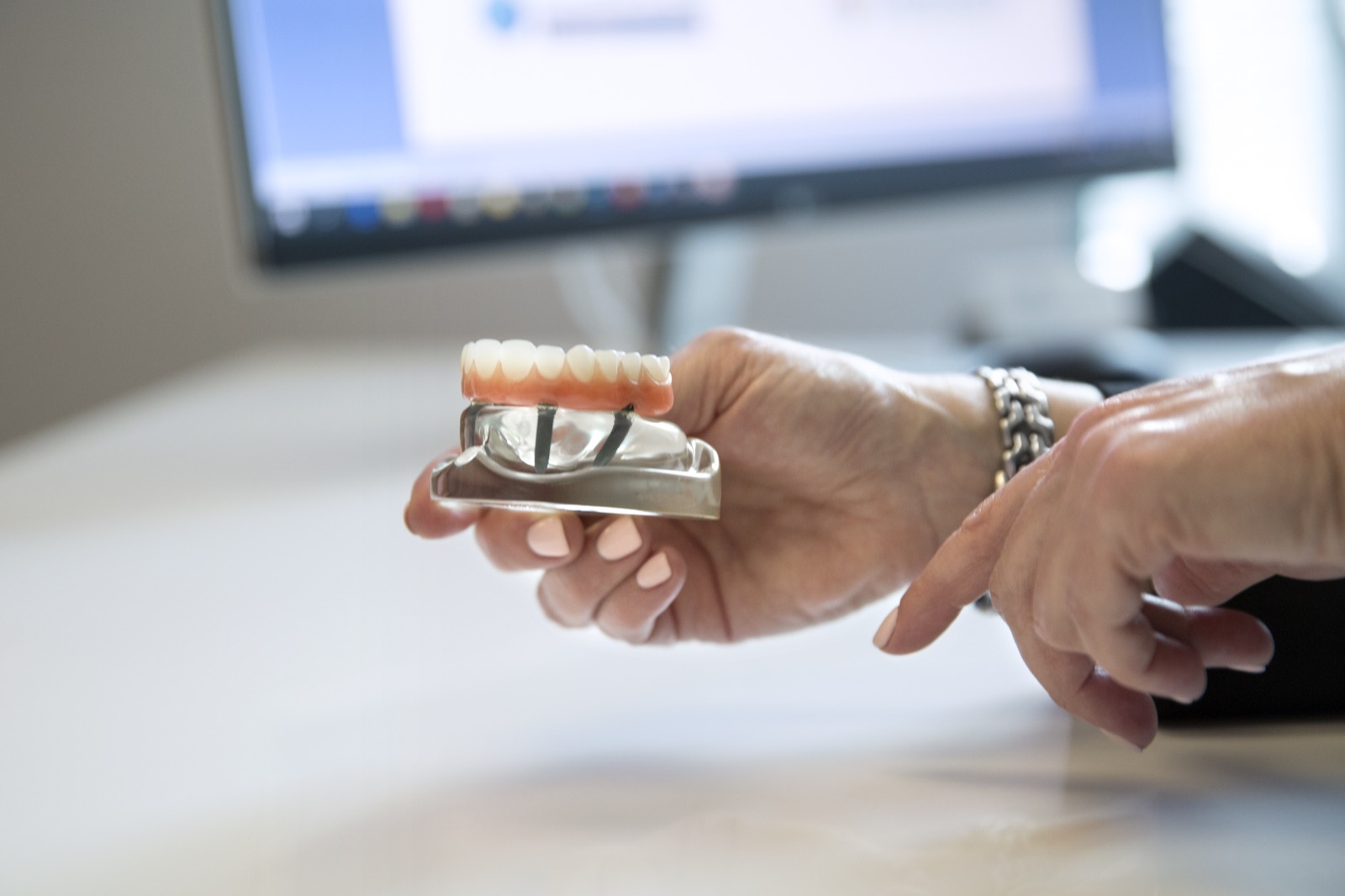
What has changed is that we no longer need bone everywhere. Angling implants forward reaches the denser bone at the front of the jaw, which tends to survive longest. That is the principle behind All-on-4, and it is why people who were told they needed extensive grafting can often now be treated without it.
Where bone is genuinely inadequate, grafting or a sinus lift can build it back. That adds months, and cost, and is worth saying plainly rather than glossing over.
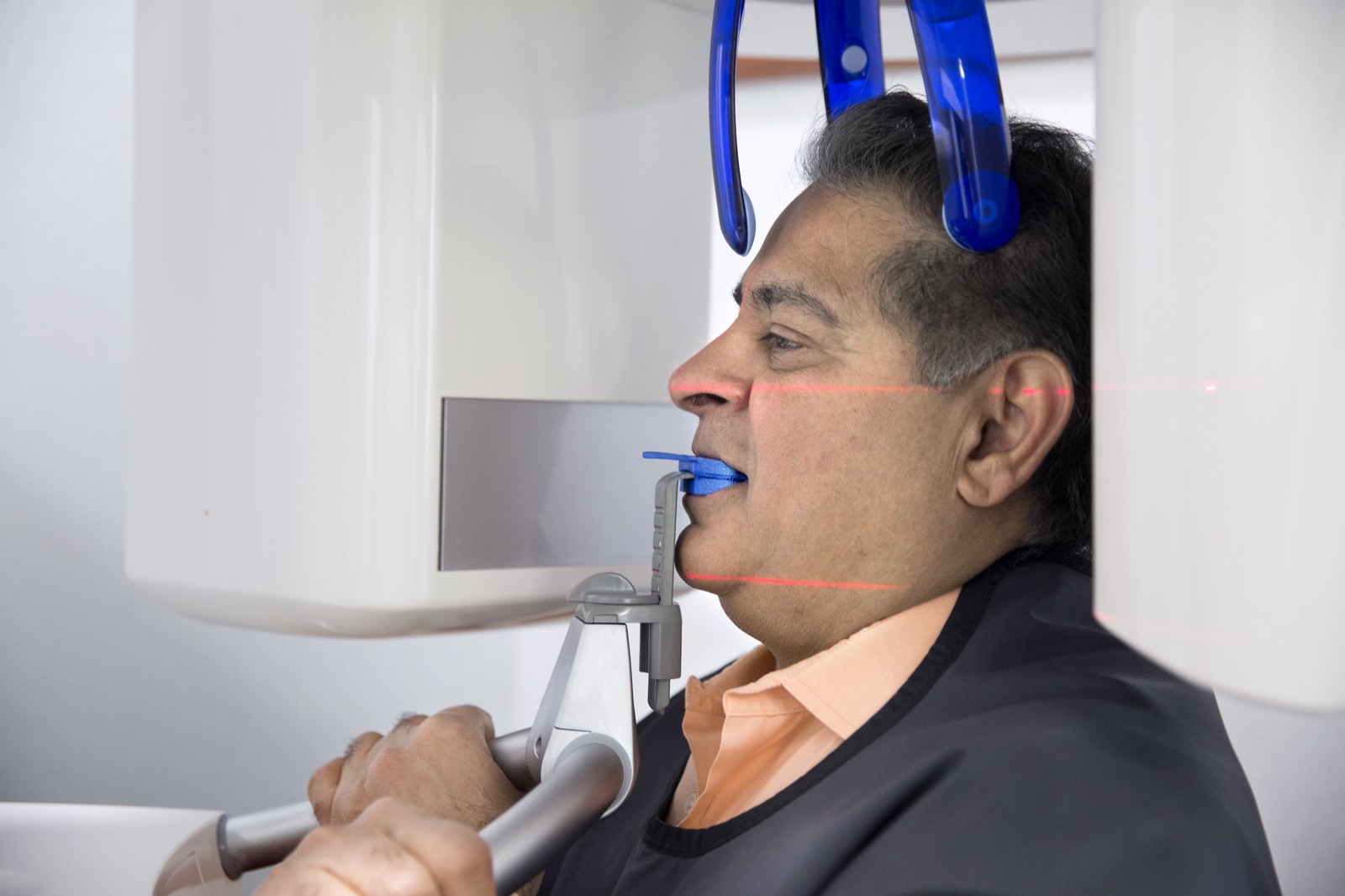
What settles it is a CBCT scan showing bone height, width and density in cross-section. A flat X-ray cannot answer this. If someone has told you no without a 3D scan, that opinion was formed without the necessary information.
Medical conditions
The useful question is not what you have been diagnosed with but whether it is under control.
Diabetes
Well-controlled diabetes is not a barrier. Poorly controlled diabetes is, because high blood sugar impairs healing and raises infection risk. What matters is your HbA1c and whether it is stable. We will ask, and we may ask to speak to your physician. That is not obstruction — it is how you get a predictable result.
Osteoporosis and bone medication
Osteoporosis itself is usually manageable. The medication needs care. Bisphosphonates and related drugs change how bone remodels, and in a small number of people — particularly those who have had them intravenously for cancer — jaw healing after surgery can be seriously impaired.
This is one of the few areas where the honest answer is sometimes no, or not without input from your physician and, in some cases, a referral. Tell us every bone medication you have taken, including ones you stopped years ago, because the effect persists.
Heart conditions, blood thinners, immune conditions
Most are compatible with treatment given planning. Blood thinners rarely need stopping. Some conditions and medications slow healing and are worth knowing about in advance.
Age
Age alone is not a factor. We treat people in their eighties and nineties routinely. Health matters; the number does not.
Gum disease and infection
This one is firm. Active infection has to be resolved before implants go in.
Bone that is infected will not integrate with titanium, and the bacteria responsible for periodontal disease can go on to affect implants — peri-implantitis, which behaves much like gum disease and can lose you the implant.
The good news is that the teeth causing the problem are usually the ones being removed. Extracting infected teeth and allowing the site to settle often resolves it. Sometimes a course of periodontal treatment is needed first.
This is also a cost factor. If there is infection to clear, that is work before the implant work.
Smoking
Smoking is the single lifestyle factor with the clearest effect on implant outcomes. Nicotine constricts blood vessels, and healing bone needs blood supply. Smokers have a higher rate of early failure and of later complications.
We do not refuse to treat people who smoke. We do tell them the risk is higher, and we ask for a pause — ideally two weeks before surgery and eight weeks after, which covers the period when blood supply matters most.
If you cannot stop, say so. We would rather plan around it honestly than have you tell us what you think we want to hear.
What you are taking on
Candidacy is not only clinical. A full-arch bridge is a long-term commitment.
The first months. A soft diet while the implants integrate — several weeks at minimum. Not painful, but a real change.
Daily cleaning. Under the bridge, every day, with a water flosser and interdental brushes. It takes a few minutes. People who do not do it develop inflammation around the implants, which is the main cause of late failure.
Regular maintenance. The bridge is unscrewed and cleaned underneath professionally, usually once or twice a year. It is not optional and it is an ongoing cost.
A night guard if you grind. Grinding transfers force straight into implants, with no ligament to absorb it.
If that sounds manageable, you are a good candidate in the way that matters most. Implants fail far more often from neglect than from surgery.
What the assessment involves
A proper evaluation is about an hour, and it covers:
- Medical history in detail — conditions, medications, previous surgery
- Examination of remaining teeth, gums and existing dentures
- A CBCT scan, and a digital scan of your mouth
- A conversation about what you want, which matters more than it sounds
You should leave knowing whether you are a candidate, which approach suits your jaw, roughly what it costs, and how long it takes. Full-arch treatment here ranges from $18,000 to $36,000 per arch, depending on implant count, bridge material, grafting, extractions, infection to be cleared, and sedation.
If we do not think this is right for you, we will say so and explain why. Being told no by someone who has looked at your scan is more useful than being told yes by someone who has not.
The genuine disqualifiers
For balance, the situations where the answer is usually no:
- Recent or ongoing intravenous bisphosphonate treatment, typically in cancer care
- Radiotherapy to the jaw, depending on dose and timing
- Uncontrolled diabetes that cannot be stabilised
- Active, untreated infection that cannot be resolved
- An inability or unwillingness to maintain the bridge daily
Most of these are temporary or manageable. Only a few are absolute.
Where to start
If you have been told no before, it is worth asking whether that was based on a 3D scan. If it was not, the picture may be different now.
We have been treating patients in Markham since 1985, and planning, surgery and the bridge are handled in the same building. Book a consultation and we will give you a straight answer about your own jaw.
Common questions
Am I too old?
Almost certainly not. Health and healing capacity matter; age by itself does not. We treat people well into their nineties.
I was told I don't have enough bone. Has that changed?
Possibly. Angled implant placement reaches bone that vertical placement cannot, and many people once told they needed extensive grafting can now be treated without it. A CBCT scan will tell you.
Can I have implants with diabetes?
Yes, if it is well controlled. Stability matters more than the diagnosis. We will want to know your HbA1c and may speak to your physician.
What about osteoporosis medication?
Tell us everything you have taken, including drugs stopped years ago. Most oral bisphosphonates are manageable; intravenous ones used in cancer care are a genuine risk to jaw healing and need to be discussed with your physician before any surgery.
Does smoking rule me out?
No, but it raises the failure rate and you should know that before deciding. Stopping two weeks before and eight weeks after surgery makes a real difference.
What if I have gum disease?
It must be treated first. Often the teeth causing it are the ones being removed, which resolves it. Sometimes periodontal treatment is needed before implant planning begins.
Will I be without teeth?
Usually not. A temporary fixed bridge is normally placed the same day as surgery. It is not the final restoration, but you will not leave without teeth.
What if an implant does not integrate?
Uncommon, but it happens. The implant is removed, the site heals, and a replacement is placed — usually a few months later. Ask in advance who bears that cost; it is a fair question and the answer should be clear.

Free Dental Implant Seminar — No Obligation, No Pressure
"Everything You Need to Know About Today's Dental Implant Treatments" — held monthly at our Markham clinic.
Explore Topics
Written by
Dentistry at Vitality Health
Content creator and writer sharing insights and stories.