Common Problems with Implant-Supported Dentures: A Guide to Risks and Solutions
Most problems with implant-supported dentures are small, common, and fixable in one appointment. The trouble is that people put up with them for months, assuming this is just what it is like now.
Most problems with implant-supported dentures are small, common, and fixable in one appointment. The trouble is that people put up with them for months, assuming this is just what it is like now.
It usually is not. Here is what goes wrong, what it means, and which ones need attention quickly.
The short version
- A denture that has loosened almost always means worn inserts — a quick, cheap fix.
- Sore spots are adjustment problems, not something to tolerate.
- Bleeding around an implant is the one sign not to wait on.
- Clicking, whistling and food trapping all have straightforward causes.
- Most of these get worse and more expensive if left.
It has got loose
By far the most common complaint, and usually the least serious.
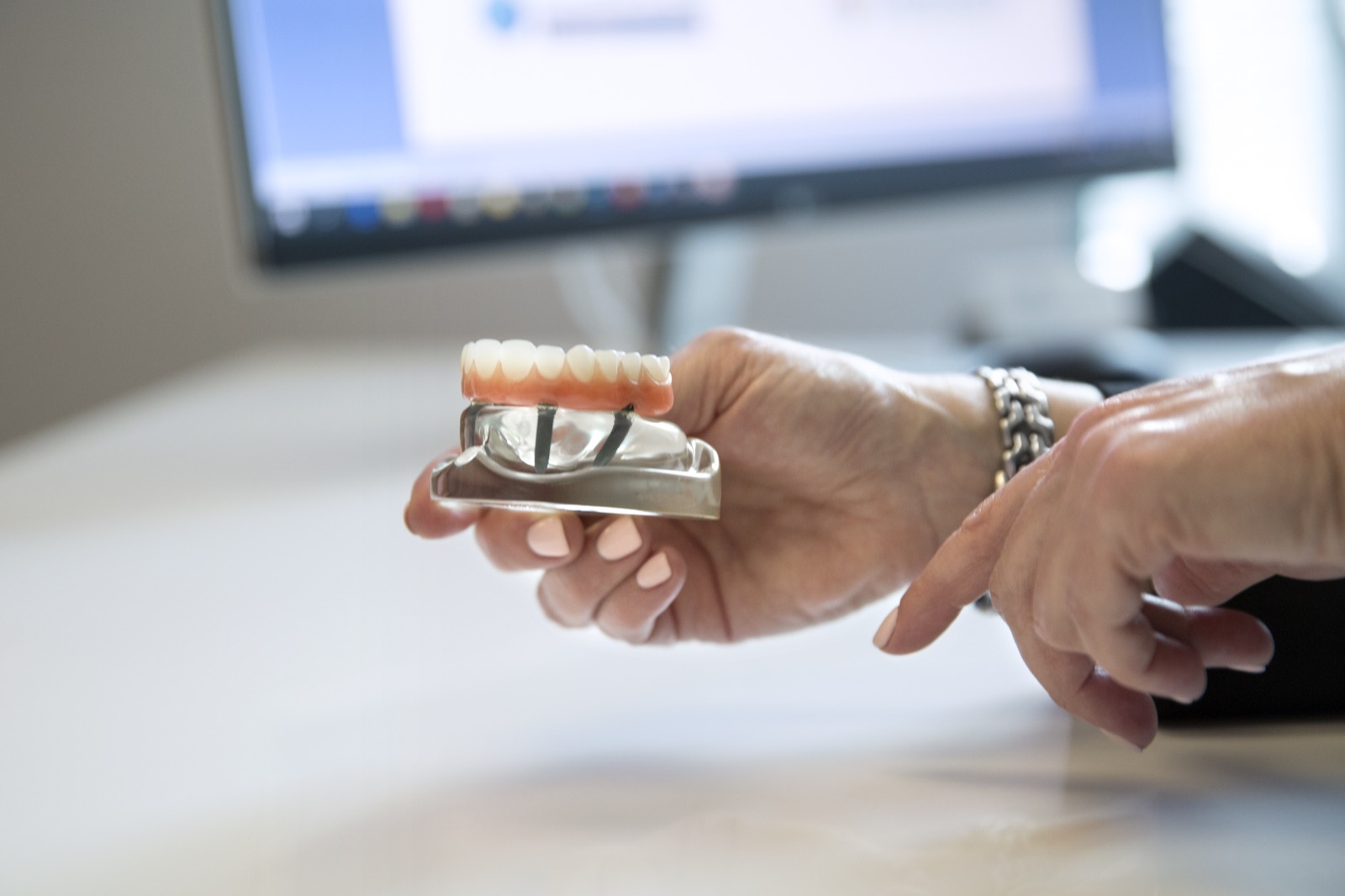
Worn inserts. The nylon inserts that grip the locator attachments wear out with use — months to a couple of years depending on how often you take the denture in and out and how hard you chew. They are replaced in a short appointment for a small cost. If your denture felt secure a year ago and does not now, this is almost certainly why.
The ridge has changed shape. Bone continues to remodel where the denture bears on it. The denture becomes less well adapted and rocks slightly. The fix is a reline — the fitting surface is rebuilt to match the current shape.
A loose attachment. Occasionally the abutment on the implant itself has loosened. This needs checking promptly, because a loose component under load can damage the connection.
Do not solve looseness with more adhesive. Adhesive masks a cause that is still progressing, and it is usually covering something that takes ten minutes to correct.
Sore spots
Localised soreness in one or two places, usually on the ridge or in the cheek.
New dentures often need two or three adjustment visits in the first weeks. That is normal and expected — the denture is pressing somewhere it should not, and a small adjustment relieves it.
What is not normal is soreness that appears in a denture you have worn comfortably for a year. That usually means the fit has changed, the bite has altered, or an insert has worn on one side so the denture is seating unevenly.
Leaving a sore spot leads to an ulcer, and in the longer term to thickened, inflamed tissue that itself needs treating. Come in.
Bleeding or swelling around an implant
This is the one not to leave.
Bleeding when you clean around an implant, tenderness, swelling, or a persistent bad taste are signs of inflammation in the tissue around it. Caught early — as gum inflammation — it is reversible with cleaning and a hygiene appointment. Left to progress into bone loss around the implant, it is much harder to treat and sometimes not reversible.
It is usually painless until it is advanced, which is precisely why people ignore it.
Clicking and whistling
Clicking while eating or talking generally means the denture is lifting slightly and reseating — worn inserts again, or a bite that meets unevenly so the denture tips.
Whistling on S sounds is usually an upper denture issue: the palate contour or tooth position is deflecting air. Adjustable, though it sometimes takes a couple of attempts.
A new clicking or grinding noise from the joint rather than the denture is a different matter and worth mentioning.
Food getting underneath
Some is normal. A lot means the fit has changed.
A denture that seals well against the ridge should not admit much. Persistent trapping usually points to a reline being due, or to the ridge having resorbed unevenly.
Bar-retained dentures trap more than locator ones by design, because of the space under the bar. That space needs cleaning daily with an interdental brush.
Cracks and fractures
The denture cracks. Usually along the midline of an upper, or around the housings where the acrylic is thinnest. Often it indicates the denture needs reinforcing or remaking rather than just repairing — a crack that has happened once in that spot tends to happen again.
Repairs are possible and reasonable as a stopgap. Do not attempt one at home; household adhesives are not safe in the mouth and make a professional repair harder.
A tooth comes off the denture. Straightforward to replace.
An attachment breaks or the abutment loosens. Needs seeing promptly.
Losing an implant
Uncommon, and manageable when it happens.
With a two-implant lower overdenture, losing one is significant — the remaining implant cannot retain the denture properly on its own, so it is normally replaced after the site heals. With four, the denture usually functions on three in the interim.
Early failure, in the first months, means the implant never integrated. Late failure, years on, is almost always peri-implantitis — which loops back to the cleaning and the review appointments.
What prevents most of this
Take it out at night. The tissue needs the rest, and leaving it in raises inflammation risk.
Clean the denture and the attachments separately. Brush the fitting surface of the denture, and brush around each implant attachment in your mouth with a soft brush.
Keep the review appointments. The implants are checked, the inserts assessed, the fit and bite reviewed. This is where small problems get caught while they are still small.
Expect inserts to need replacing. It is maintenance, not failure.
If something is not right
Most of what is described above takes one appointment to resolve. If your denture has loosened, rubs, clicks, or bleeds when you clean around it, book an appointment — including if the original work was done elsewhere.
Common questions
My denture has got loose. Is the implant failing?
Almost never. It is nearly always worn inserts, and it is a short appointment to fix.
How often do inserts need replacing?
Typically every several months to a couple of years, depending on use.
Can I use denture adhesive with implants?
You should not need to. If you do, something needs adjusting — adhesive is covering a cause rather than treating it.
Is bleeding when I brush around the implants normal?
No. It is the earliest sign of inflammation and the point at which it is easiest to reverse.
Why does it hurt on one side only?
Usually uneven seating — a worn insert on that side, or a bite that meets harder there. Both are adjustable.
Can I fix a cracked denture myself?
No. Household adhesives are not safe in the mouth and complicate a proper repair.
How long should an implant overdenture last?
The implants are intended to be long-lasting. The denture itself is a wearing part, usually replaced after several years, with relines in between.
I had this done elsewhere. Will you see me?
Yes. Bring any records you have, including which implant system was used, as it determines which components fit.

Free Dental Implant Seminar — No Obligation, No Pressure
"Everything You Need to Know About Today's Dental Implant Treatments" — held monthly at our Markham clinic.
Explore Topics
Written by
Dentistry at Vitality Health
Content creator and writer sharing insights and stories.