What to Expect at Your First Dental Implant Consultation
Nervous about your first implant consultation? Here is exactly what happens during the appointment, what questions to ask, and how to know if implants are right for you.
For many patients, the first dental implant consultation is the moment everything changes. It is the appointment where "I have been thinking about this for years" becomes a concrete plan with a timeline, a cost, and a clear path forward.
But if you have never had an implant consultation before, it is natural to wonder what actually happens in the room. What will the dentist examine? Will there be any discomfort? How long does it take? And most importantly — will you leave knowing whether implants are right for you?
This guide walks you through the entire process, step by step, so you can arrive prepared and leave with answers.
Before the Appointment: What to Bring
A productive consultation starts before you walk through the door. To give you the most accurate assessment possible, it helps to bring:
- A list of current medications, including supplements and blood thinners — some affect healing and implant integration
- Any recent dental X-rays from another practice, if you have them (though we will take our own imaging)
- Your medical history, including any conditions such as diabetes, osteoporosis, or autoimmune disorders that may affect candidacy
- A list of questions — more on those below
- Your insurance details, if applicable
If you wear a denture or partial, bring it to the appointment. Seeing how it fits and functions gives us useful information about your jaw structure and bite.
Step One: A Conversation About Your Goals
The consultation does not begin with X-rays or instruments. It begins with a conversation.
Your implant dentist will ask about your situation: how long you have been missing teeth, what you have tried before, what is bothering you most, and what you are hoping to achieve. This is not small talk — it is essential clinical information.
Understanding your goals shapes the entire treatment plan. A patient who wants to eat steak again has different priorities from one who is primarily concerned with appearance. A patient who has been wearing an ill-fitting denture for a decade has different bone loss patterns from one who lost a tooth recently. The conversation helps us tailor the recommendation to you specifically.
This is also your opportunity to share any anxieties about the procedure. If dental fear has been part of why you have delayed treatment, say so. We offer sedation options and can walk you through exactly what the surgical process involves so there are no surprises.
Step Two: Clinical Examination
After the initial conversation, your dentist will examine your mouth thoroughly. This includes:
Soft tissue assessment — the health of your gums matters significantly. Active gum disease must be treated before implants can be placed, as the bacteria responsible for gum disease are the same ones that cause peri-implantitis (infection around an implant). If gum disease is present, it is not a barrier to implants — it simply means that step comes first.
Remaining teeth — if you still have natural teeth, their condition is assessed. Teeth adjacent to the implant site need to be healthy and stable.
Bite analysis — how your upper and lower teeth meet affects implant placement, prosthesis design, and long-term load distribution. An uneven bite can place excessive stress on implants over time.
Jaw structure — the shape and volume of your jaw, assessed visually and by feel, gives a preliminary indication of bone availability before imaging confirms it.
Step Three: 3D Imaging
This is where modern implant dentistry truly separates itself from what was possible even ten years ago.
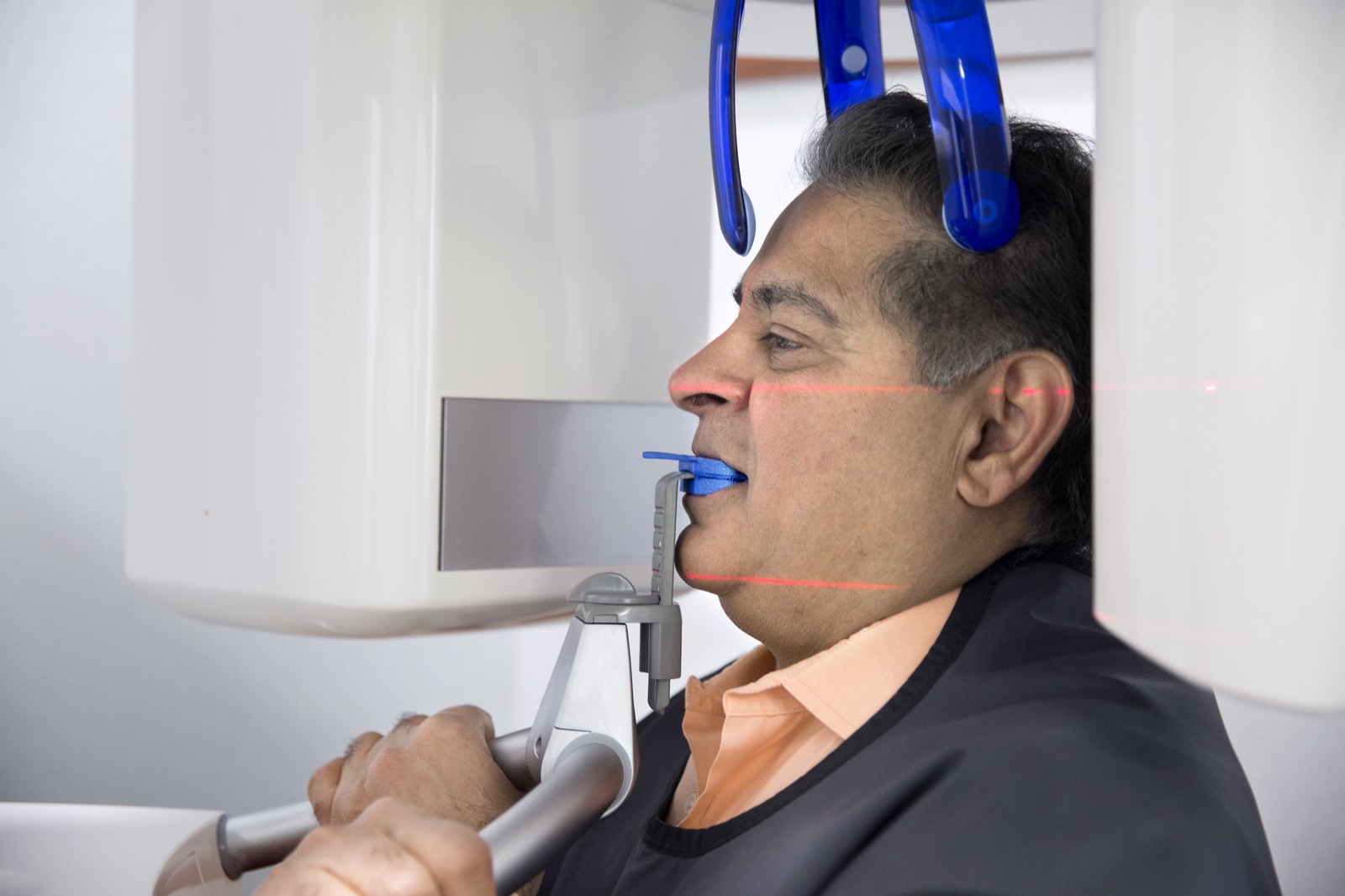
At Dentistry at Vitality Health, we use cone beam computed tomography (CBCT) — a 3D imaging system that produces a precise, three-dimensional map of your jaw in a single scan. Unlike a standard dental X-ray, which shows a flat two-dimensional image, CBCT imaging shows:
- Bone height, width, and density at every potential implant site
- The exact location of the inferior alveolar nerve (critical for lower jaw implants)
- The position of the sinus cavities (relevant for upper back implants)
- Any pathology — cysts, infections, or other issues that may not be visible on a standard X-ray
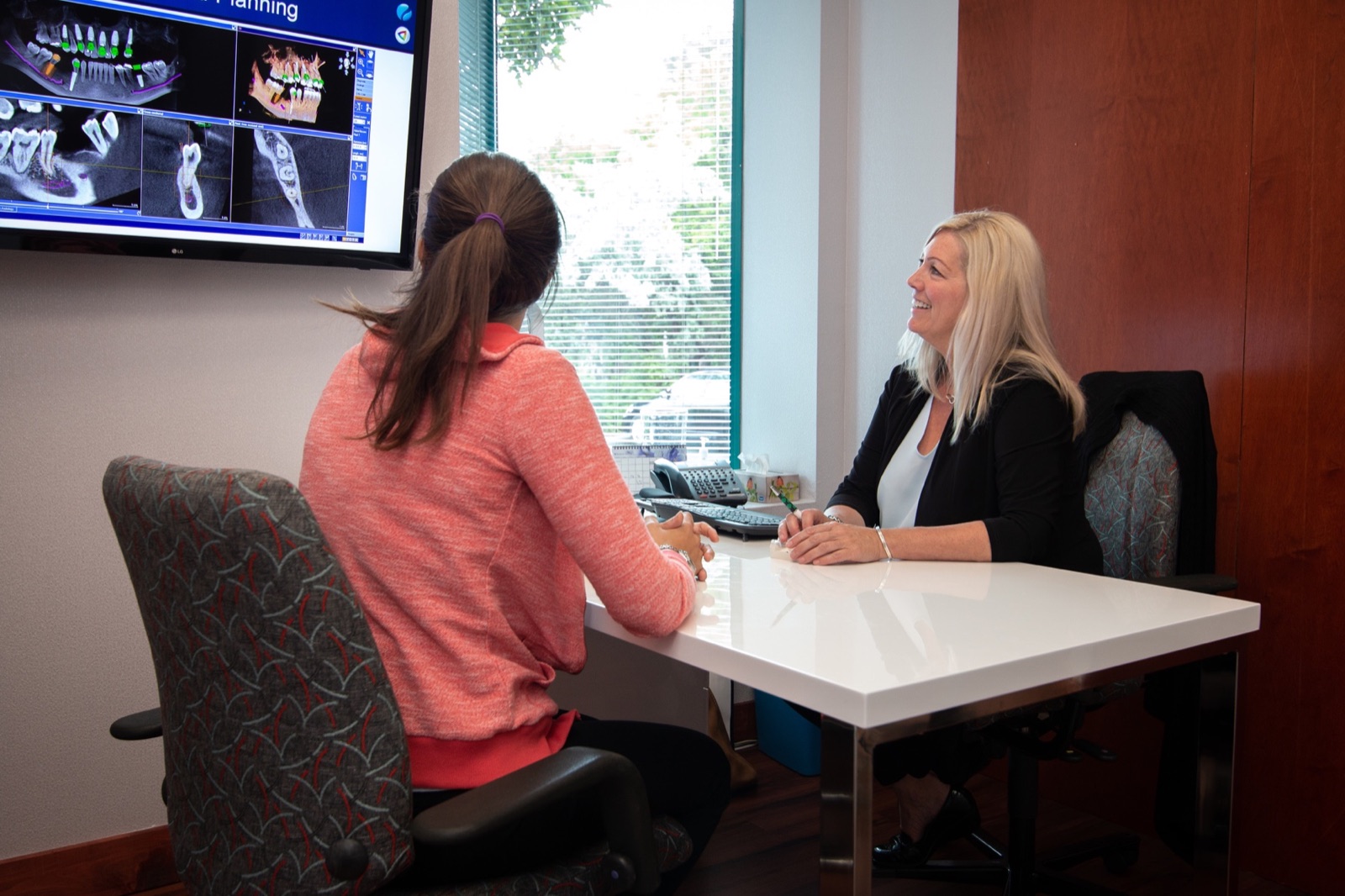
This imaging allows us to plan implant placement with computer-guided precision before surgery begins. We know exactly where each implant will go, at what angle, and to what depth — which means the surgical procedure is faster, more predictable, and safer.
The CBCT scan takes less than a minute and involves no discomfort. The radiation dose is significantly lower than a medical CT scan.
Step Four: Candidacy Assessment
With the examination and imaging complete, your dentist will give you a clear picture of your candidacy. Most patients are good candidates for implants — but the assessment matters because it determines which solution is right for you and whether any preparatory treatment is needed first.
Factors that support strong candidacy:
- Adequate bone volume and density at the implant site
- Good general health and no uncontrolled systemic conditions
- Non-smoker, or willingness to stop smoking around the time of surgery
- Healthy gums or gum disease that has been successfully treated
- Realistic expectations about the process and timeline
Factors that may require additional steps:
- Bone loss — if the jawbone has resorbed significantly, a bone graft may be needed to create a stable foundation. This adds time to the treatment but does not prevent implants in most cases.
- Sinus proximity — for upper back implants, a sinus lift procedure may be required if the sinus cavity sits too close to the implant site.
- Uncontrolled diabetes or osteoporosis — these conditions affect healing and bone integration. They require management before implant treatment proceeds, often in coordination with your physician.
- Active smoking — smoking significantly increases the risk of implant failure by impairing blood flow and healing. We will discuss this honestly and work with you on a plan.
The goal of the candidacy assessment is not to find reasons to say no — it is to find the safest, most effective path to yes.
Step Five: Treatment Planning and Options
Once candidacy is established, your dentist will present your treatment options with a clear explanation of what each involves.
For a single missing tooth, this is typically straightforward: one implant, one crown, placed in a single site.
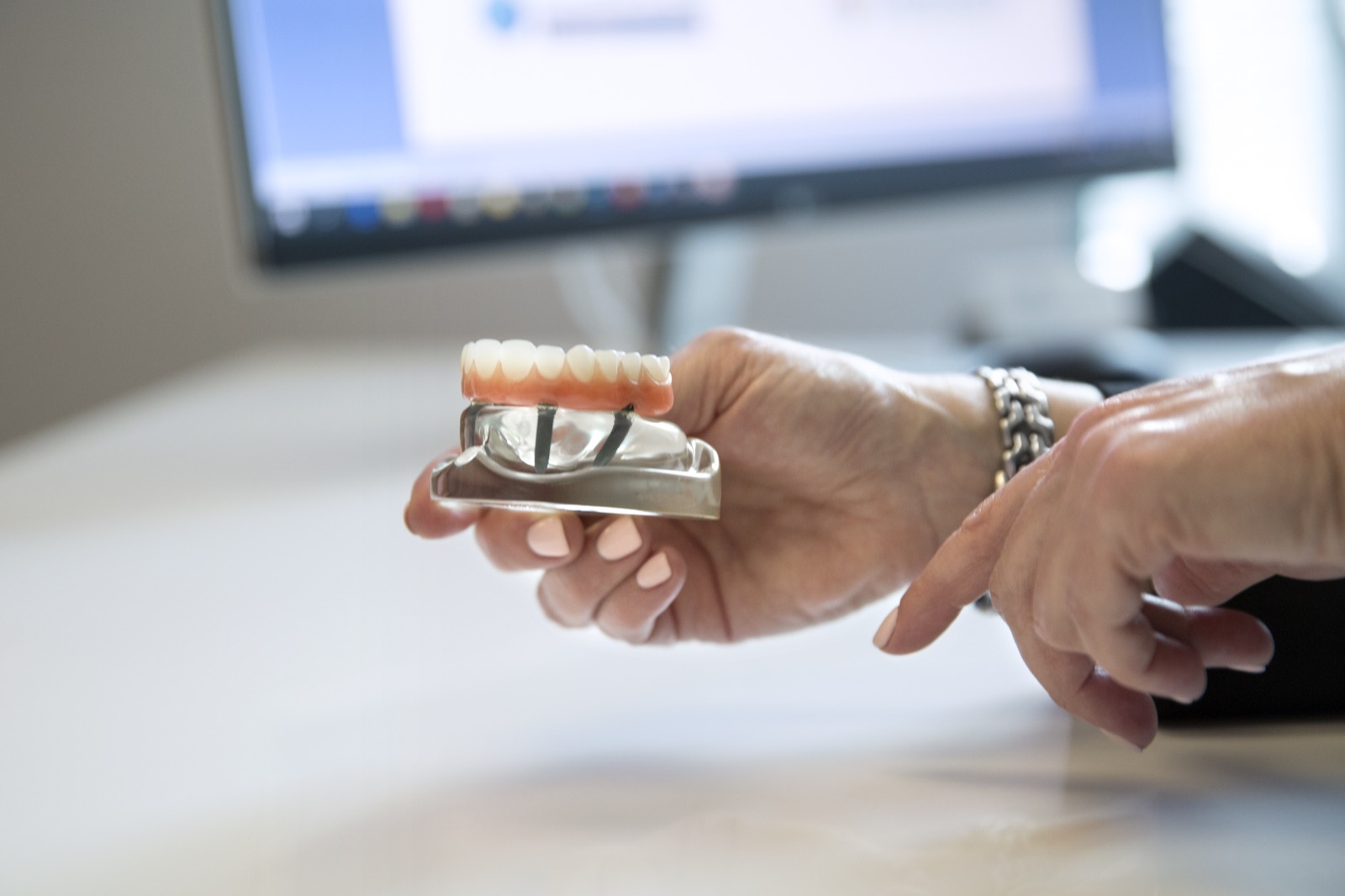
For multiple missing teeth or full-arch replacement, the options are broader — and this is where the conversation about All-on-4 versus All-on-6, or individual implants versus an implant-supported bridge, becomes relevant. Your dentist will explain the trade-offs of each option in the context of your specific imaging and clinical findings.
You will receive a written treatment plan that outlines:
- The recommended procedure or sequence of procedures
- The timeline from start to finish
- The total cost, broken down by phase
- Any preparatory treatment required (extractions, bone grafting, gum treatment)
- What the healing and recovery process looks like
There is no pressure to decide on the day. Many patients take the treatment plan home, review it, ask follow-up questions, and book their next appointment when they are ready.
Questions Worth Asking
A good consultation is a two-way conversation. Here are questions that will help you leave fully informed:
- How many implant procedures have you performed? Experience matters significantly in implant dentistry.
- Will you be performing the surgery yourself, or referring me to a specialist? At Vitality Health, our implant procedures are performed in-house by our experienced team — no referrals needed.
- What happens if an implant fails? Understand the practice's policy on implant failure and what the resolution process looks like.
- What does the healing process involve? Ask about activity restrictions, diet, and what to expect in the days and weeks after surgery.
- What does the final prosthesis look like and feel like? Ask to see examples of completed cases.
- What are my financing options? Implants are an investment — ask about payment plans if cost is a consideration.
How Long Does the Consultation Take?
A thorough implant consultation — including the conversation, examination, CBCT imaging, and treatment planning discussion — typically takes 60 to 90 minutes. It is not a quick appointment, and it should not be. The decisions made in this room will affect your oral health for decades.
If you are considering full-arch replacement (All-on-4 or All-on-6), allow a little more time. The treatment planning discussion is more involved, and there is more to cover.
What Happens After the Consultation?
You will leave with a written treatment plan, a clear understanding of your options, and no obligation to proceed immediately. Most patients find that the consultation itself is a significant relief — the uncertainty of "I don't know if I'm a candidate" or "I don't know what it costs" is replaced by concrete information.
When you are ready to move forward, the next step is typically scheduling any preparatory treatment (if needed) or booking the implant surgery directly. Our team will guide you through every step from there.
A Good Time to Start Is Now
One of the most consistent things we hear from patients after completing implant treatment is: "I wish I had done this sooner." The longer a tooth is missing, the more bone loss occurs — and bone loss makes future treatment more complex and costly.
If you have been thinking about implants, the consultation costs you nothing but an hour of your time. And it may be the appointment that changes everything.

Free Dental Implant Seminar — No Obligation, No Pressure
"Everything You Need to Know About Today's Dental Implant Treatments" — held monthly at our Markham clinic.
Explore Topics
Written by
Dentistry at Vitality Health
Content creator and writer sharing insights and stories.