
Why gums bleed when you brush, and what it means
Most adults in Canada have gums that bleed when examined, and most do not notice. What the bleeding usually means, what else can cause it, and when to have it looked at.
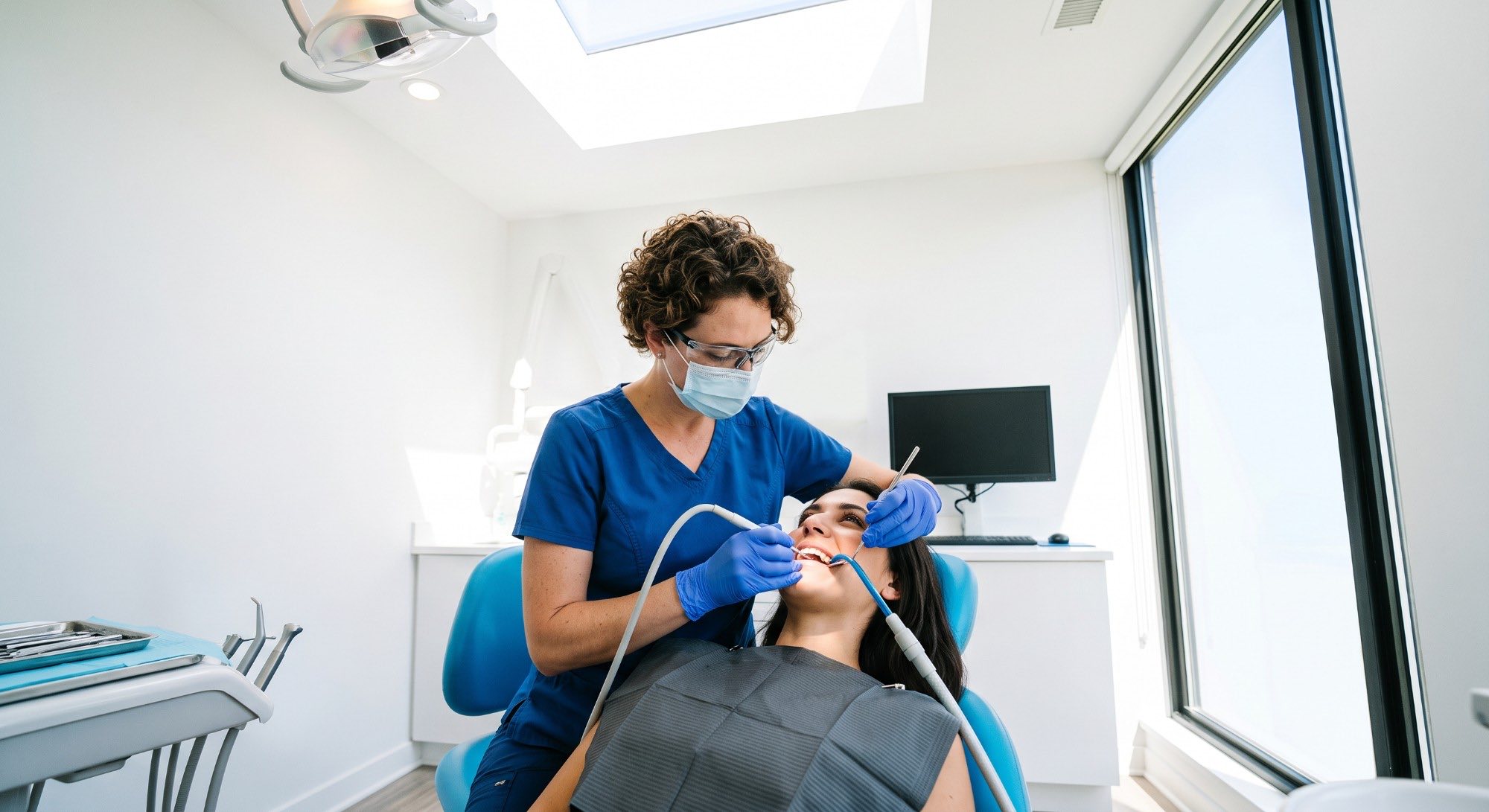
You rinse after brushing and there is pink in the sink. Maybe it has happened a few times now, or only when you floss, which you do not do every day. Most people in that position wonder whether it matters, and most decide it probably does not.
It usually matters a little, and it is usually fixable. Most of the time the cause is ordinary, and a couple of weeks of the right cleaning will tell you a lot.
You are in the majority
Between 2022 and 2024, Statistics Canada examined adults across the country as part of the Canadian Health Measures Survey. When examiners gently measured around the teeth, 83% of adults aged 20 to 79 had gums that bled at one tooth or more. Among people aged 20 to 39, it was 90%.
Yet when Health Canada's Canadian Oral Health Survey asked adults in 2023 and 2024 whether their gums bled when they brushed, only about one in four said they did.
The two surveys measured different things, so the numbers do not line up exactly. Even so, the gap says something: bleeding gums are very common, and most people who have them either do not know or have stopped noticing.
What it usually means
The most common cause, by a long way, is plaque sitting along the gumline. Plaque is the soft film of bacteria that builds up on teeth every day. Where it is left in place, especially between the teeth where a brush does not reach, the gum next to it becomes inflamed. Inflamed gum bleeds when it is touched.
That early stage is called gingivitis. It affects the gum only, and nothing underneath has been damaged. Take the plaque away and keep it away, and the gum goes back to normal. Our bleeding gums page covers this in more detail.
How quickly this happens was shown in a well-known 1965 study by Harald Löe and colleagues in the Journal of Periodontology. Volunteers with healthy gums stopped cleaning their teeth, and all of them developed gingivitis within about three weeks. Once they started cleaning again, their gums returned to health within about a week.
Gingivitis rarely hurts, which is part of why it is easy to ignore. The gums may look a little red or puffy, or they may look completely ordinary.
Why brushing less makes it worse
When a spot bleeds, the natural instinct is to leave it alone. That keeps the bleeding going, because the plaque stays and so does the inflammation.
The same is true of flossing. If you start cleaning between your teeth after a long break, expect some bleeding at first. The inflammation was already there; the floss is just showing you where. Cleaning gently every day, most people find it settles within a week or two.
Other things that make gums bleed more easily
Plaque is almost always part of the picture. A few other things make the gums react to it more strongly, or bleed more readily:
- Pregnancy. Hormonal changes make the gums more reactive. A 2013 review of 33 studies by Figuero and colleagues in the Journal of Clinical Periodontology found gum inflammation rises during pregnancy even though the amount of plaque does not. Our page on dental care during pregnancy covers what is safe and when.
- Blood thinners. Medications such as warfarin, apixaban or daily low-dose aspirin can make gums bleed more than usual. Please do not stop or change them because of it. Tell us what you take, and if the bleeding is heavy, speak to the doctor who prescribed them.
- Brushing too hard. A hard brush or a heavy hand can injure the gum directly. A soft brush, angled toward the gumline and moved in small strokes, does the job with less wear.
Smoking can hide it
If you smoke, your gums may bleed less than a non-smoker's with the same amount of inflammation. A 2004 study by Dietrich, Bernimoulin and Glynn in the Journal of Periodontology found smoking has a strong suppressing effect on gum bleeding, and the more someone smoked, the stronger it was. The inflammation is still there; it just shows less.
This catches people out in the other direction too. The European Federation of Periodontology notes that gums often start to bleed again in the first couple of months after someone quits. People sometimes read that as quitting having made things worse, when it is the gums reacting normally again.
When it may not be your gums
Now and then, bleeding gums are linked to how the blood clots rather than to the gums themselves. If you also bruise easily, get frequent nosebleeds, or find that small cuts take a long time to stop bleeding, mention it to your family doctor as well as to us.
And do not wait out the two weeks described below if your gums are very sore and swollen or a tooth feels loose. Those are worth a prompt appointment.
What bleeding cannot tell you
Bleeding tells you the gums are inflamed now. It does not tell you whether the inflammation has gone on long enough to affect the bone around the teeth. That is the point where gingivitis becomes periodontitis, which can be stopped but not fully reversed.
The same Statistics Canada survey found that just over a third of adults had at least one gum pocket 4 millimetres or deeper, compared with one in five in 2007 to 2009. You cannot see that in a mirror, and early periodontitis feels much like gingivitis. We explain the difference, and what treatment can and cannot do, in Can gum disease be reversed? and on our gum disease page.
What we check
At an examination we measure the small space between each tooth and the gum with a thin probe, at several points around every tooth. Healthy readings are about 1 to 3 millimetres and do not bleed. Where they are needed, we also take X-rays, because bone level is something an X-ray can show and a mirror cannot.
If it is gingivitis, a professional cleaning removes the hardened tartar that brushing cannot shift, and what happens at home does the rest. If there are signs of bone loss, the next step is a deeper cleaning below the gumline, which is described on our periodontal treatment page.
What a cleaning cannot do on its own
A cleaning removes what has built up, and plaque starts to form again the same day. As the Löe study showed, gums can be inflamed again within weeks if nothing changes at home. That is why we spend time on technique with you rather than only handing over a new toothbrush.
What to do this week
- Brush twice a day with a soft brush, aiming the bristles at the line where tooth meets gum.
- Clean between your teeth once a day with floss or small interdental brushes, whichever you will actually keep using. Our home care page shows both.
- Keep going on the spots that bleed. Be gentle, but do not skip them.
- Give it two weeks. If the bleeding has not settled by then, or it is getting worse, book an examination.
If it has been more than a year since your last check-up, it is worth booking one either way. If the bleeding has been going on for a long time, a few measurements will show whether anything below the gumline has been affected.
Common questions
Is it normal for gums to bleed when you floss?
It is common, especially if you have not flossed for a while, but healthy gums do not bleed. Keep flossing gently every day. If the bleeding has not settled after about two weeks, have it checked.
Do bleeding gums mean I have gum disease?
Usually they mean gingivitis, the earliest stage, which reverses with good cleaning. Whether it has gone further can only be found by measuring the gums and, where needed, looking at X-rays.
Should I stop my blood thinner if my gums bleed?
No. Do not stop or change a prescribed medication without talking to the doctor who prescribed it. Tell us what you take, and mention heavy or long-lasting bleeding to your doctor.
Will a harder toothbrush clean better?
No. A soft brush angled at the gumline removes plaque without injuring the gum. Hard bristles and heavy pressure can irritate the gum and make it bleed more.

Free Dental Implant Seminar — No Obligation, No Pressure
"Everything You Need to Know About Today's Dental Implant Treatments" — held monthly at our Markham clinic.
Explore Topics
Written by
Dentistry at Vitality Health
Content creator and writer sharing insights and stories.