
Implant Surgery & Support
Bone grafting and sinus lifts
Where bone volume is insufficient for implants, grafting and sinus lift procedures restore the structure needed for secure, long-lasting placement — often using minimally invasive guided surgery.
Types of bone grafting
Autogenous — Your Own Bone
Harvested from your jaw, chin, or hip. Offers the highest biological compatibility of the graft options, because it contains your own living cells. Dr. Tocchio uses minimally invasive donor site techniques to reduce recovery time.
Allograft — Donor Bone
Processed human bone from tissue banks. Eliminates the need for a second surgical site, which reduces both discomfort and recovery time, while providing excellent integration.
Xenograft — Bovine Matrix
Sterilised bone from bovine sources, serving as a scaffold for your own bone to grow into. Cost-effective with strong clinical outcomes, often combined with growth factors to enhance regeneration.
Sinus lift expertise
The maxillary sinus naturally expands as we age, reducing the bone height available in the upper back jaw. A sinus lift elevates the sinus membrane and fills the space below with graft material, creating the height implants require.
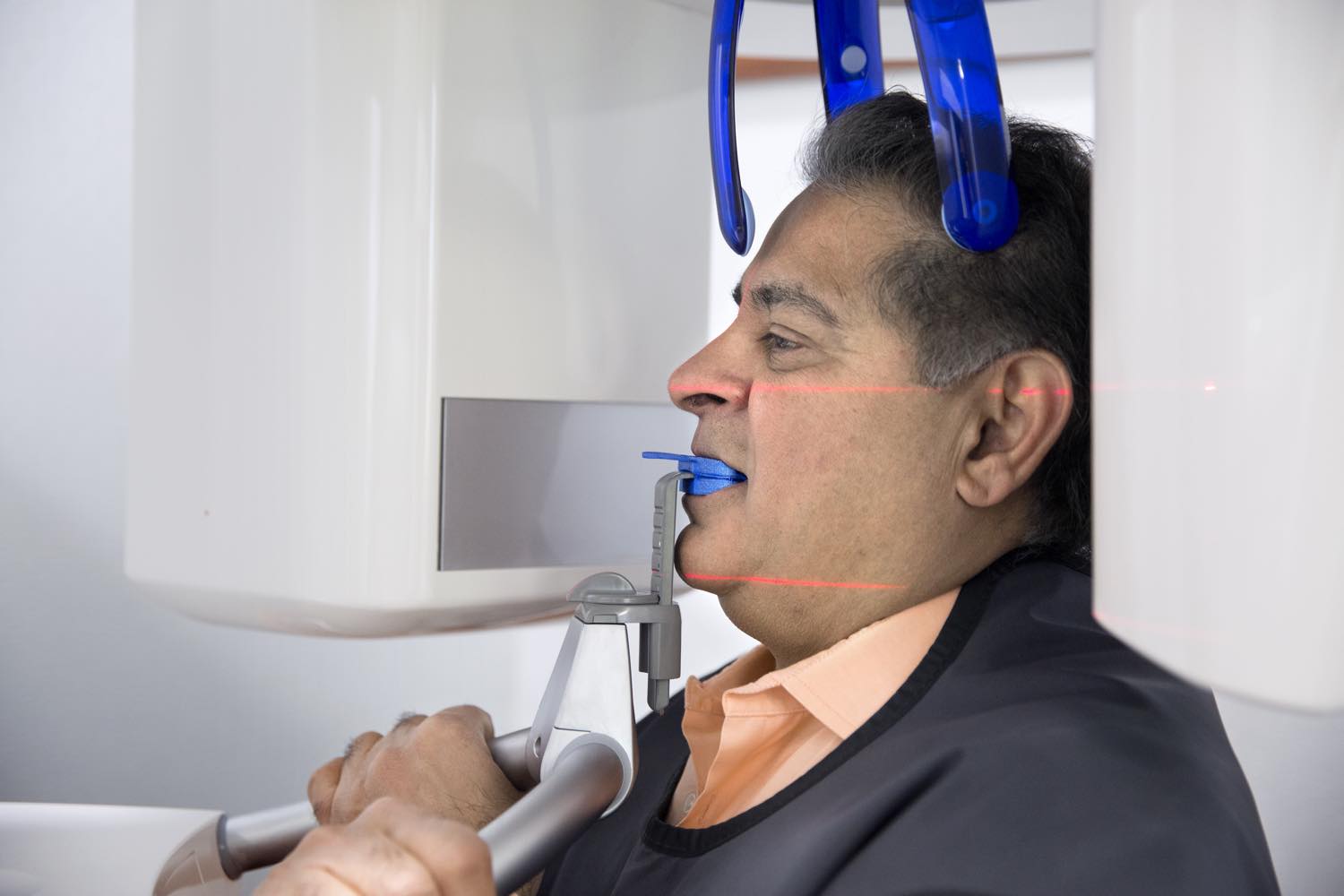
Dr. Tocchio performs both traditional and minimally invasive sinus lifts using 3D guided surgery. Your CT scan is used to plan the exact entry point and graft volume before surgery, which is what makes the result predictable rather than improvised.
What to expect afterwards
Weeks 1-2 — Initial healing
Avoid strenuous activity and keep the area clean. Swelling and discomfort peak around day three or four, then improve steadily. Follow post-operative instructions carefully — this stage is where compliance matters most.
Months 1-3 — Bone integration
Graft material becomes integrated with your natural bone and new bone formation begins. You return to normal activities gradually, attending follow-ups as scheduled.
Months 3-6 — Maturation
Bone continues to strengthen. Dr. Tocchio takes follow-up CT scans to confirm adequate volume, and implants can usually be placed by month four to six.
Year 1 — Stabilisation
Bone fully remodels and stabilises around your implants. Ongoing maintenance is what secures long-term success.
Bone grafting FAQs
Will I feel pain during the procedure? +
No. The area is fully numbed with local anaesthetic, and IV sedation is available if you would rather not be aware of the procedure at all.
How long until implants can be placed? +
Most patients are ready four to six months after grafting. We monitor integration with CT scans rather than assuming readiness from the calendar.
What are the risks? +
Bone grafting is very safe. Rare complications include infection or graft failure, in roughly 1 to 5 percent of cases, minimised through sterile technique and proper aftercare.
Does insurance cover it? +
Many dental plans cover bone grafting as a necessary prerequisite for implants. Check with your provider, and we are happy to discuss financing.
Can I choose the graft material? +
Yes. Dr. Tocchio will recommend the best option based on the extent of your bone loss, then let you decide.
Questions about your procedure?
Call (905) 479-7777 to book a reconstruction assessment.