Composite resin is applied to the edges of the teeth either side of the gap, widening them to close the space. Completed in a single visit and the most conservative option available — usually with no drilling at all.
Porcelain Veneers
More durable and more natural in appearance over the long term, and the better choice where the gap is part of a broader smile makeover involving shape and shade as well as spacing.
Invisalign
Rather than making the teeth wider, aligners move them together. This addresses the underlying cause where the gap results from an alignment issue, and leaves the teeth themselves untouched.
Widening teeth versus moving them
Bonding and veneers close a gap by making the adjacent teeth wider. That works beautifully for small gaps, but for a large diastema it can leave the front teeth looking disproportionately broad.
Orthodontics moves the teeth into contact instead, keeping their natural proportions. It takes months rather than an hour, but for larger gaps it usually produces the better-looking result — and sometimes the two are combined.
Why the gap is there matters
Gaps have several causes: teeth that are small relative to the jaw, a prominent labial frenum between the front teeth, missing teeth elsewhere allowing drift, or gum disease causing teeth to migrate.
That last one is important. A gap that has appeared recently in an adult mouth, rather than having always been there, warrants a periodontal assessment before any cosmetic work.
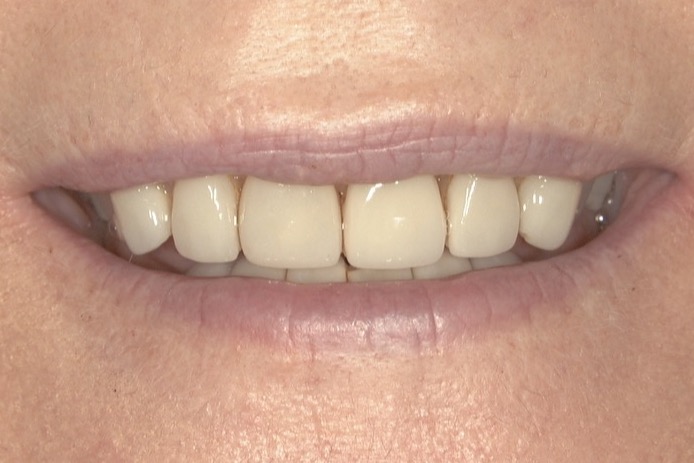
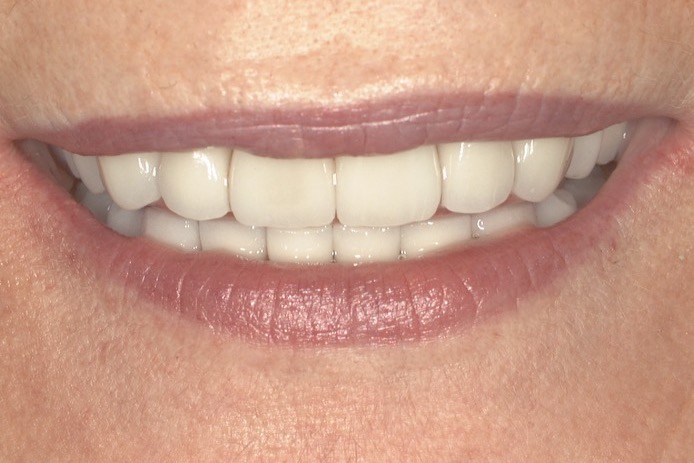
Both of these patients had spacing between the front teeth closed. Individual results vary.
Before
After
Full Mouth Rehabilitation with Crowns and Veneers
Upper & Lower Arches — no implants
Porcelain crowns and veneers across both arches, rebuilding teeth that had worn down over years. Restoring the height of the bite returns comfortable function and supports the proportions of the lower face.
Before
After
Eight Veneers and Two Crowns
Upper arch
Eight porcelain veneers and two crowns across the upper arch, evening out shade, length and alignment while keeping the lower teeth as they were.