
Full Mouth Restoration on All-on-6 Implants
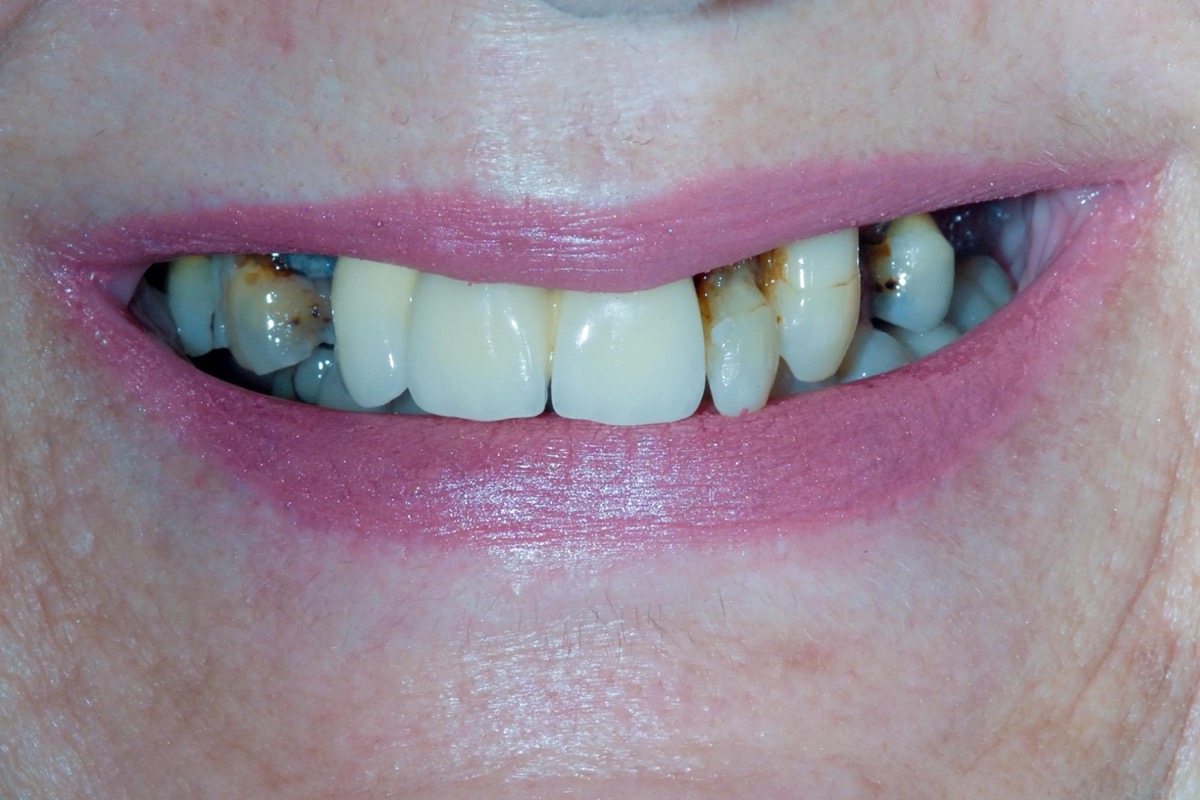
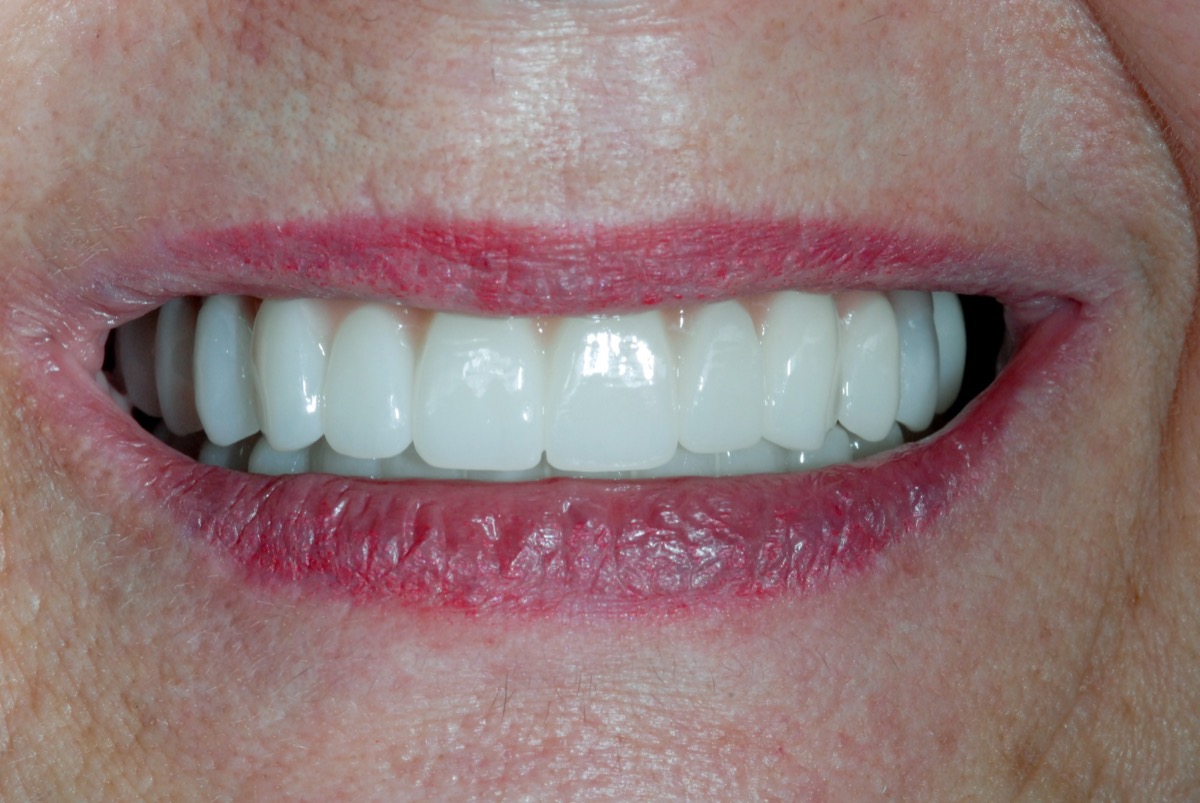
Upper and lower arches on All-on-6 implants
Heavily decayed and discoloured teeth replaced with fixed restorations carried on six implants in each arch, rebuilt to an even shade and alignment.

Dental Conditions
A permanent tooth should not move. Whether it can tighten again, and whether it can be kept, depends on why it moved and on how soon it is assessed.
Periodontitis is the most common cause. As the infection destroys the bone supporting the tooth, the tooth loses its anchorage and begins to move.
A blow to the mouth damages the periodontal ligament and sometimes the surrounding bone. Prompt splinting can allow re-attachment where the damage is not severe.
Sustained excessive force breaks down the bone and ligament around a tooth over time, even where gum health is otherwise good.
Where decay has destroyed enough tooth structure, the remaining tooth becomes unstable regardless of the health of its foundation.
We ask this before anything else, because the two answers lead to different problems and different treatment.
A tooth that was solid last week and moves today has almost always been injured. The ligament holding it in its socket has been stretched or torn, and sometimes the bone around it has been broken as well. The tooth itself is usually still healthy. That is a same-week problem and often a same-day one.
Gradual loosening — over a year, or five — is a different picture. Nothing has happened to the tooth. What holds it has been quietly disappearing, which is almost always bone lost to gum disease, sometimes with the bite making it worse. That is not an emergency in the way a blow to the mouth is. It is also not something to keep an eye on, because bone does not come back on its own.
A knock to the mouth can loosen a tooth without breaking it. The damage is to the ligament, and sometimes to the wall of the socket. Left alone, some of these teeth tighten again by themselves; others need to be put back where they belong and held there while the ligament reattaches. Which one you are dealing with is not something you can tell by looking.
The examination is there to work out which injury it is, because the treatment is different for each. We look at how far the tooth moves and in which direction, whether it has shifted position, how it now meets the tooth above or below it, and whether the nerve still responds. We take radiographs from more than one angle, because a root that has been pushed sideways or a fractured socket wall does not always show on a single film.
Where the tooth has only been loosened and is sitting where it should, the starting point in the international guidelines is that no treatment is needed — a flexible splint for up to two weeks, and only if the movement is enough to be sore when you bite. Where the tooth has been partly pulled out of its socket, it is eased back and splinted for two weeks. Where it has been driven sideways and the socket wall has given way, four weeks, sometimes longer. The splint is deliberately flexible rather than rigid: holding a tooth completely still works against the ligament rather than for it.
The frustrating part, unfortunately, is that the tooth usually feels normal again long before the story is over. The nerve inside a tooth can die months after the knock that injured it, with no pain at all — the first sign is often a change in shade, or a shadow on a radiograph. The root can also begin to resorb. Neither is common, and both are much easier to deal with early, which is why the guideline follow-ups run at two weeks, four weeks, eight weeks, four months and a year. They are worth keeping especially when nothing hurts. That is rather the point of them.
One thing we do not do as a matter of routine is prescribe antibiotics. The evidence for them after this kind of injury is limited, so we prescribe them when there is a reason to, not as a precaution.
A tooth is not set into the jaw like a post in concrete. It hangs in its socket on a ligament, and the socket is bone. When the bone recedes, the ligament has less to hold on to and the tooth begins to move. By the time you can feel that movement with your tongue, a fair amount of the bone around that tooth has usually gone.
The usual cause is periodontitis, the advanced form of gum disease. The disease is slow, and for most people it causes no pain at all, which is exactly why it gets this far. The signs that come before the movement are easy to explain away: bleeding when you brush, gums that have crept back so the teeth look longer, a taste or an odour that will not shift, a bite that feels slightly different from how it used to.
More people have it than you would guess, and the number is rising. Statistics Canada's 2022–2024 Canadian Health Measures Survey — the first clinical oral-health measurements taken in this country in more than fifteen years — found that 83% of adults aged 20 to 79 had gums that bled on probing at one tooth or more, and that just over a third had periodontal pocketing of 4 mm or deeper, against one adult in five in 2007–2009.
The other cause worth naming is force. Dentists call it occlusal trauma, and what matters is whether the foundation underneath the tooth is intact.
Where the bone is healthy and one tooth is simply taking more load than it should — a tooth standing slightly proud of its neighbours, a filling or crown built a little high, a clenching or grinding habit — the ligament widens to absorb the force and the tooth loosens. Take the excess load away and it usually settles.
Where the bone has already been reduced by gum disease, an ordinary bite is more than the support that remains can manage, and the tooth loosens under forces it would once have shrugged off. That is the version behind most of the teeth people describe as having been going for years.
We should be accurate about what the bite does and does not do. The review underpinning the current international classification of periodontal diseases concluded that occlusal trauma does not start periodontitis and does not on its own cause loss of attachment; where periodontitis is already present, the evidence that excessive force speeds it up is weak. So adjusting a bite is not a treatment for gum disease and we will not present it as one. It is worth doing because it reduces movement and makes a tooth comfortable to eat on. Treating the gum disease is a separate job, and it still has to be done.
Things that point towards the bite rather than the gums:
Telling the gums from the bite — or finding that both are involved — takes periodontal probing at six points around every tooth and radiographs of the bone level, not an opinion formed by looking. When gum disease is the cause and enough support remains, treating the disease is what stabilises the tooth; splinting makes it comfortable in the meantime.
Less often, a single loose tooth turns out to be something else entirely: a cracked root, an abscess draining beside the tooth, normal movement during orthodontic treatment, or the gum changes that come with pregnancy. That is why the assessment comes before the plan.
Bone lost to periodontal disease does not regenerate spontaneously. Every month a loose tooth continues untreated is more support lost — not just for that tooth, but often for its neighbours.
There is also a replacement consideration. A tooth removed while there is still reasonable bone around it leaves a site suitable for an implant. A tooth left until it falls out often leaves a site that needs grafting first.
Most people who notice a tooth moving assume they are about to lose it. The honest answer is more encouraging than that.
A 2024 systematic review pooled eleven long-term studies — 1,883 patients and 18,918 teeth, followed for between ten and twenty-five years — to ask what mobility actually predicts. Teeth with no detectable movement were lost 5.9% of the time. Teeth with slight movement, 11.8%. Teeth with marked movement, meaning more than a millimetre sideways or any give when pressed downwards, 40.3%.
So movement does matter, and more of it matters more. The figure worth sitting with is the middle one: a tooth that moves a little is still kept almost nine times in ten. And the authors' conclusion was that most teeth are kept in the long run, and that mobility on its own should not be treated as a reason to take a tooth out.
We read it the same way. A loose tooth is a reason to find out what is happening underneath it. It is not, by itself, a verdict, and on its own it is not a reason to remove a tooth that could be kept.
Joining a mobile tooth to its neighbours is a reasonable thing to do, and we do it. Splinting stops the movement, which makes the tooth comfortable to chew on and stops it being nudged further every time you eat. What it does not clearly do is make the tooth last longer: the studies comparing splinted with unsplinted teeth in advanced gum disease have not shown a survival difference, and there are not many of them. We offer splinting for comfort and function, and after an injury to hold a repositioned tooth while it heals. We do not offer it as a cure.
We will say so directly rather than attempt something we do not expect to hold. Where a tooth has to go, there is usually a choice about timing: in some cases an implant can be placed the same day the tooth is removed, and in others the site needs a few months to heal first. That depends on how much bone remains and whether infection is present, both of which we assess on a 3D scan before recommending anything. Should the site need to heal first, we usually graft the socket at the time of the extraction, which keeps the ridge closer to its original shape than letting it collapse and rebuilding it later.
The replacement options, and how they compare:
Which of these is sensible is a conversation, not a recommendation we make before we have looked. More on what happens when gum disease costs you teeth and on replacing missing teeth.
The treatments that address this.
Both of these patients came to us with teeth that could no longer be saved. Individual results vary.
Upper and lower arches on All-on-6 implants
Heavily decayed and discoloured teeth replaced with fixed restorations carried on six implants in each arch, rebuilt to an even shade and alignment.
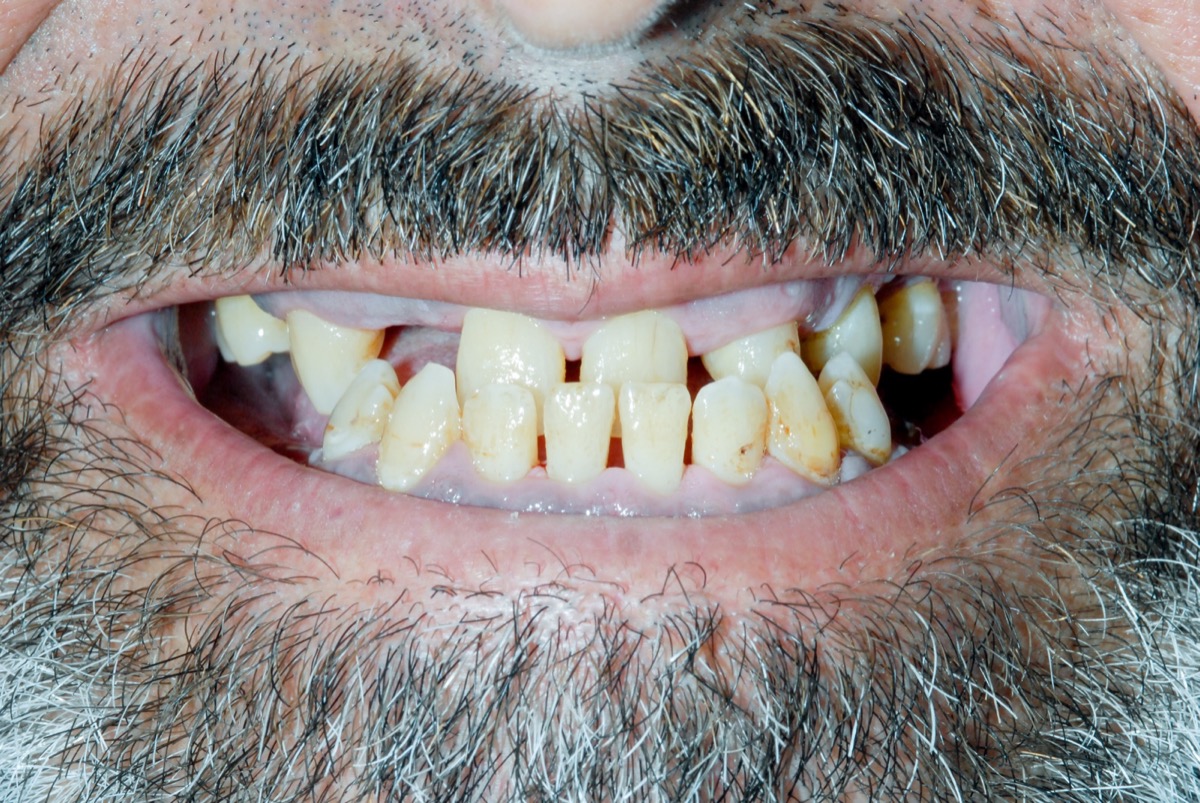
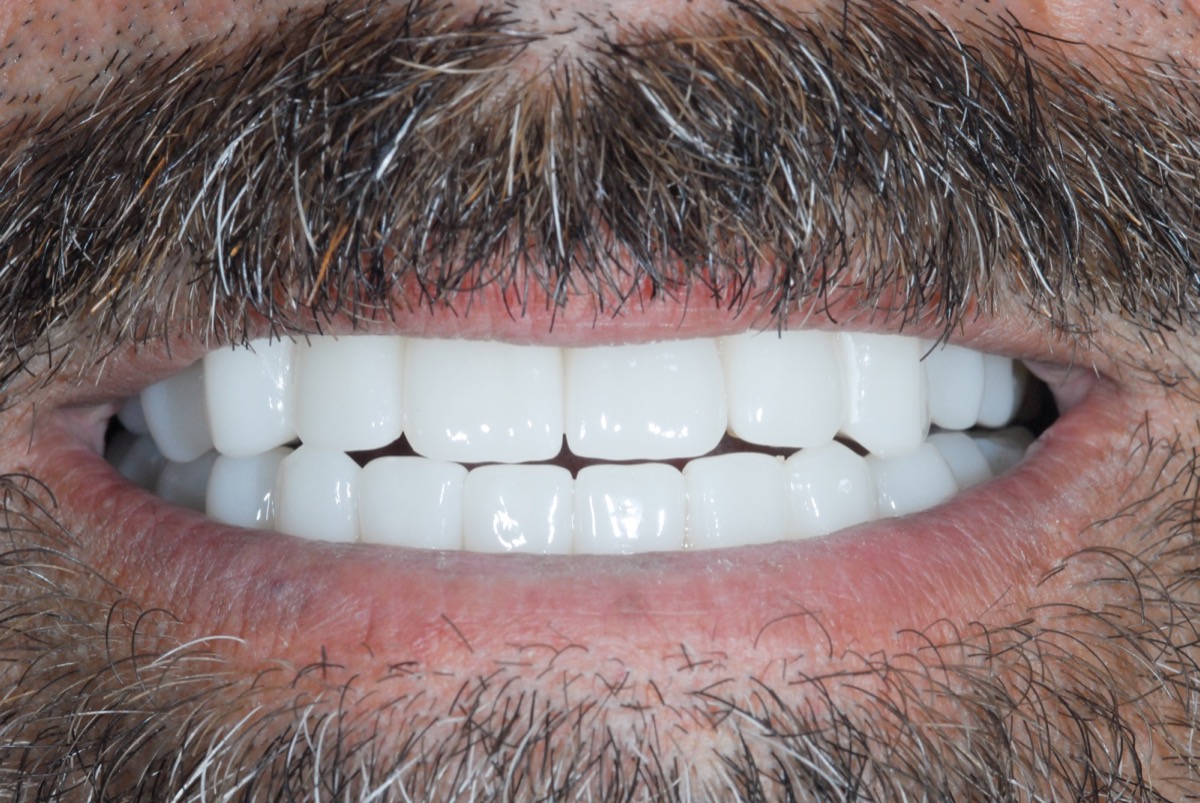
Upper and lower all-on-6 implant-supported restorations
A complete full-arch rehabilitation, restoring chewing ability and improving aesthetics using upper and lower all-on-six implant solutions
No. If the tooth has been displaced it does need to be repositioned, but that is done under local anaesthetic and the tooth then has to be held there with a flexible splint while the ligament reattaches. Pushing it yourself tends to tear more of the ligament and it will not stay put. Leave the tooth where it is, keep it out of your bite, and call us the same day.
No, but if it loosened gradually rather than after an injury, gum disease is the most likely explanation. Bite force can loosen a tooth on its own where the bone is healthy, and a cracked root, an abscess or orthodontic movement can all do it too. Probing and radiographs settle the question; looking at the tooth does not.
Sometimes. A tooth loosened by a knock, where the ligament was stretched but the tooth was not displaced, often firms up on its own within a few weeks. A tooth that is loose because the bone around it has been lost to gum disease will not go back to how it was, because the bone does not regrow by itself — but treating the disease can stop it getting worse, and some of the movement caused by inflammation settles as the gums heal.
Unfortunately not. Periodontitis is largely painless until very late, and a nerve injured by a blow can die quietly months afterwards. Absence of pain tells you about the nerve endings, not about the bone.
Splinting reliably does one thing: it stops the tooth moving, which makes it comfortable to eat on. Whether it makes the tooth last longer is much less clear — the studies in advanced gum disease have not shown a survival difference. We use it for comfort and function, and after trauma to hold a repositioned tooth, and we will tell you which of those we are doing.
That depends on the gap and on what is around it. A single tooth is most often replaced with an implant, or with a bridge where the neighbouring teeth already need crowns. Several teeth in a row may suit a bridge, a partial denture, or implants. A whole arch can be restored with a complete denture or with a fixed set of teeth on four or six implants. Where bone has already been lost, grafting may be needed first — which is one more reason to be assessed while there is still bone to preserve.
Book an assessment now rather than waiting. Call (905) 479-7777.