
Emergency Guide
Knocked-out tooth: what to do in the first hour
An adult tooth that is knocked out can often be saved if it is put back within the hour. Follow these steps, then call us: (905) 479-7777.
Reviewed by Dr. Raj Singh, Implant Dentist, Dentistry at Vitality Health
If an adult tooth is knocked out, find it, pick it up by the white crown (not the root), rinse it very briefly in milk or saline if it is dirty, and put it straight back into the socket if you can. If you cannot, keep it in milk or in the person's saliva, never in water or a dry tissue, and get to a dentist within 30 to 60 minutes. Baby teeth are not put back in.
A knocked-out tooth (the dental term is an avulsed tooth) is one of the few true dental emergencies where minutes matter. The living cells on the root surface begin to die as soon as the tooth dries out. Put back within about 15 minutes, a tooth has an excellent chance of reattaching. After an hour dry, the odds fall sharply. What you do at the scene decides more than anything we do afterwards.
Call us on the way: (905) 479-7777. If it is outside our hours, go to the nearest emergency dental service or hospital emergency department and follow the same steps. This guide is based on the International Association of Dental Traumatology guidelines.
Why does the first 60 minutes matter?
A tooth is held in its socket by a thin living ligament on the root surface. When the tooth comes out, those cells survive only while they stay moist. Replanting the tooth within 15 minutes gives the ligament the greatest chance of healing and the tooth of lasting for many years. Kept moist in milk, the cells survive for an hour or so. Left dry, most are dead within 30 to 60 minutes, and a replanted tooth is then likely to be lost later even if it seems to take at first.
So: speed, and moisture. Everything else is secondary.
The first hour, on one page
Print this and keep it in the first-aid kit. If you coach or run a club, it is worth having on the wall — the people who need it are rarely the people who have read the rest of this page.
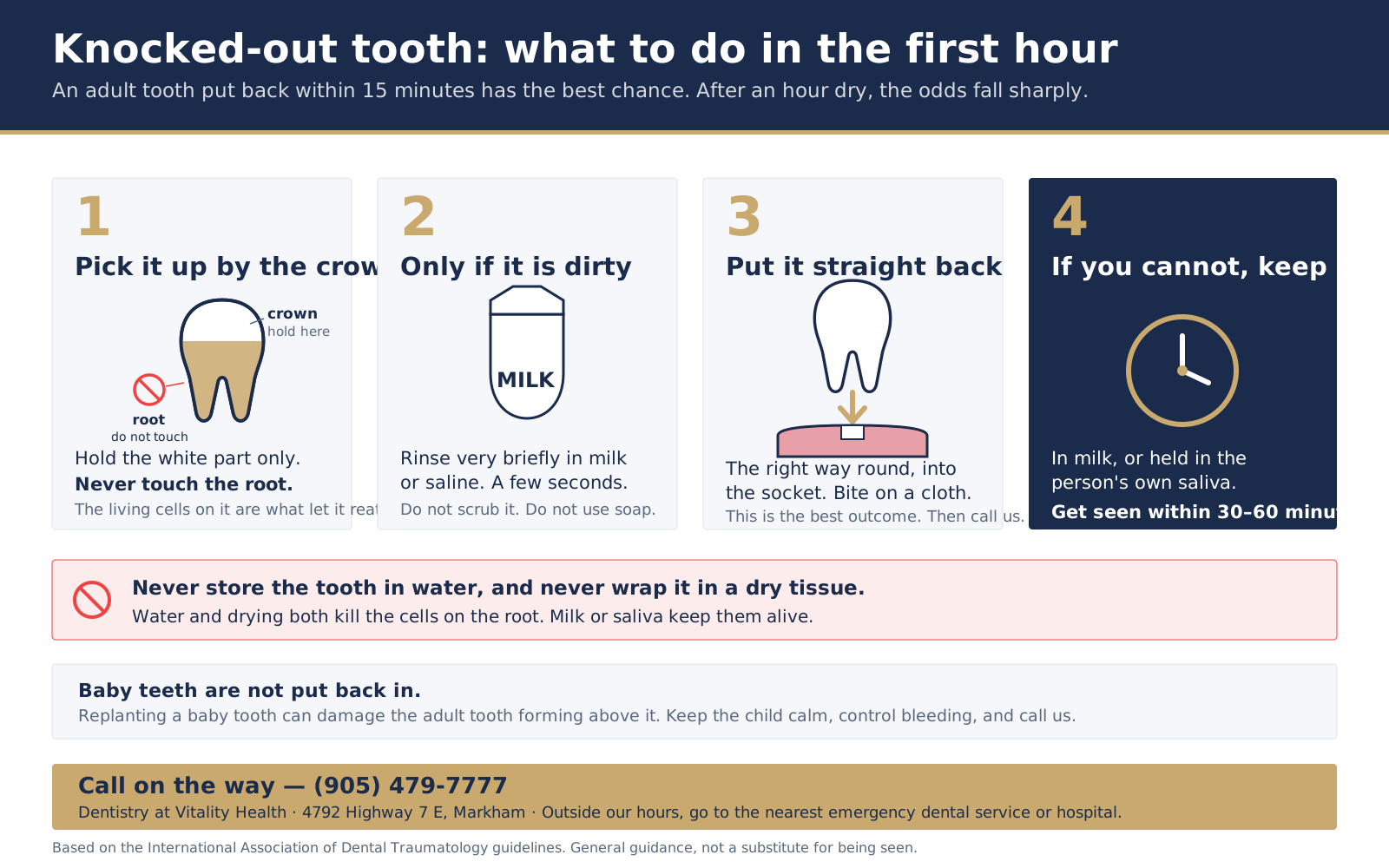
What should I do, step by step?
- Stay calm and find the tooth. Check the ground, clothing and the mouth. Make sure the person has not swallowed or inhaled it.
- Pick it up by the crown, the white part you normally see. Do not touch, scrub or scrape the root.
- If it is dirty, rinse it for a few seconds in milk, saline (contact lens solution works) or the person's own saliva. Do not use tap water if you can avoid it, do not use soap or disinfectant, and do not dry it.
- Put it back in the socket if you can. Check it is facing the right way (the flat side faces the lip on front teeth), push it gently but firmly into place with your fingers, and have the person bite softly on a clean cloth or handkerchief to hold it. This is the single most useful thing you can do.
- If you cannot put it back, keep it moist. Options, in order of preference: cold milk, a tooth-preservation kit if one is to hand (some sports first-aid kits include one), or the person's own saliva (in the cheek, for an adult who will not swallow it, or in a cup they spit into). Never water, and never wrapped in tissue or left dry.
- Get to a dentist within 30 to 60 minutes. Call ahead so we are ready.
Children: baby teeth are not put back in
If a baby tooth is knocked out, do not try to replant it. Pushing it back can damage the adult tooth developing in the bone above it. Control any bleeding with a clean cloth, comfort your child, keep the tooth so we can confirm it is whole, and call us. We will check that no pieces remain, that the neighbouring teeth are stable, and talk to you about whether a space maintainer is needed.
If you are not sure whether the tooth is a baby tooth or an adult tooth, children under about six almost always have baby front teeth; between six and twelve it can be either. When in doubt, keep the tooth in milk and call us immediately; we will tell you what to do.
What if the tooth is loose or pushed out of position, not knocked out?
A tooth that has been knocked loose, pushed sideways, pushed up into the gum or partly out of the socket is also urgent, though less time-critical than a fully avulsed tooth. Do not try to move it back yourself unless it is hanging out of position and about to fall out, in which case gentle finger pressure to reposition it is reasonable. Bite gently on a cloth to hold it still, avoid eating on it, and see us the same day. We will reposition it, splint it to the neighbouring teeth for a few weeks, and check the nerve over the following months.
A tooth that has been hit but looks fine can still be damaged. Any blow hard enough to hurt should be checked, and any tooth that later darkens, becomes painful or develops a pimple on the gum above it needs to be seen.
What about a chipped or broken tooth?
Find and keep the broken piece, in milk or saliva. Larger fragments can sometimes be bonded back onto the tooth, which gives the most natural result. Rinse your mouth with warm water, cover any sharp edge with sugar-free gum or orthodontic wax to protect your tongue, and see us within a day or two, or the same day if the tooth is painful, which suggests the nerve is exposed. See chipped tooth and cracked or broken tooth for more.
What happens when you arrive?
If the tooth is in your hand, we will check it, gently flush the socket, and replant it, usually within minutes of your arrival. If you have already replanted it, we will confirm the position with an x-ray. Either way the tooth is then splinted: bonded to the neighbouring teeth with a thin flexible wire for about two weeks so it can heal in place. You will be given advice on soft foods, gentle cleaning and a mouth rinse, and your tetanus status will be checked if the tooth or the wound touched the ground.
In most cases the nerve inside a replanted adult tooth does not survive, so a root canal treatment is started within about two weeks to prevent infection and to give the root the greatest chance of staying healthy. We then follow the tooth with check-ups and x-rays over the following years.
Sometimes a tooth cannot be saved, because it was dry too long, broken, or because the socket bone was fractured. If that happens, the gap can be restored with a bridge or, once healing is complete and growth has finished, a single tooth implant. We will preserve the socket bone at the time so that option stays open.
How can these injuries be prevented?
Most knocked-out teeth in children and teenagers happen during sport, and most of those are preventable with a properly fitted mouthguard. Hockey, basketball, soccer, rugby, martial arts, skateboarding and cycling all count. A custom guard made from a scan of the teeth fits closely, stays in place when the wearer is talking or breathing hard, and is far more likely to be worn than a bulky boil-and-bite guard. We make guards for children and adults, and remake them as children grow. See custom mouthguards and our children's dentistry page.
Common questions
How long can a knocked-out tooth survive outside the mouth?+
Kept moist in milk or saliva, about an hour with a good chance of success. Dry, the cells on the root start to die within minutes, and after 30 to 60 minutes dry the long-term outlook is poor. Replanting within 15 minutes gives the strongest result.
Why milk and not water?+
Milk has a salt balance and acidity close to the fluid around the root cells, so they survive in it. Tap water has almost no dissolved salts and causes the cells to swell and burst within minutes. If milk and saline are not available, the person's own saliva is the next choice, and water is better only than leaving the tooth dry.
Should I put a baby tooth back in?+
No. Replanting a baby tooth can damage the adult tooth forming above it. Control the bleeding, keep the tooth, and call us.
What if I can't reach you in time?+
Go to the nearest emergency dental service or hospital emergency department; the same steps apply anywhere. The important thing is to keep the tooth moist and to have it replanted as soon as possible, by whoever can do it first. Come to us afterwards for splinting and follow-up if the tooth was replanted elsewhere.
Will the tooth look and feel normal afterwards?+
Often, yes. A successfully replanted tooth can last many years. It will need a root canal in most cases and regular monitoring, and there is a chance it is eventually lost. If it is, an implant is usually the right replacement once growth is complete.
Sources: Fouad AF, Abbott PV, Tsilingaridis G, et al. International Association of Dental Traumatology guidelines for the management of traumatic dental injuries: 2. Avulsion of permanent teeth. Dental Traumatology 2020;36(4):331–342 · Canadian Dental Association: Dental safety and mouthguards
Tooth knocked out? Call now.
(905) 479-7777. Put the tooth back in or keep it in milk, and come straight in. We will make room for you.