
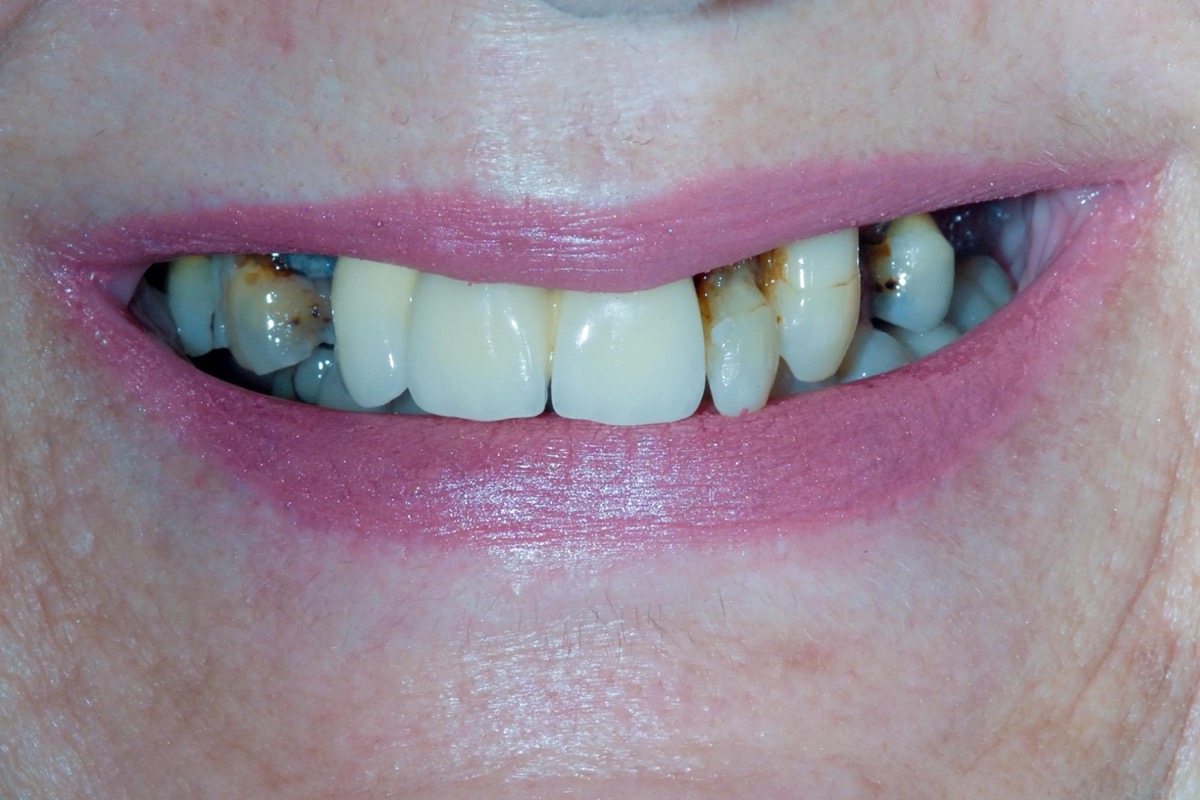
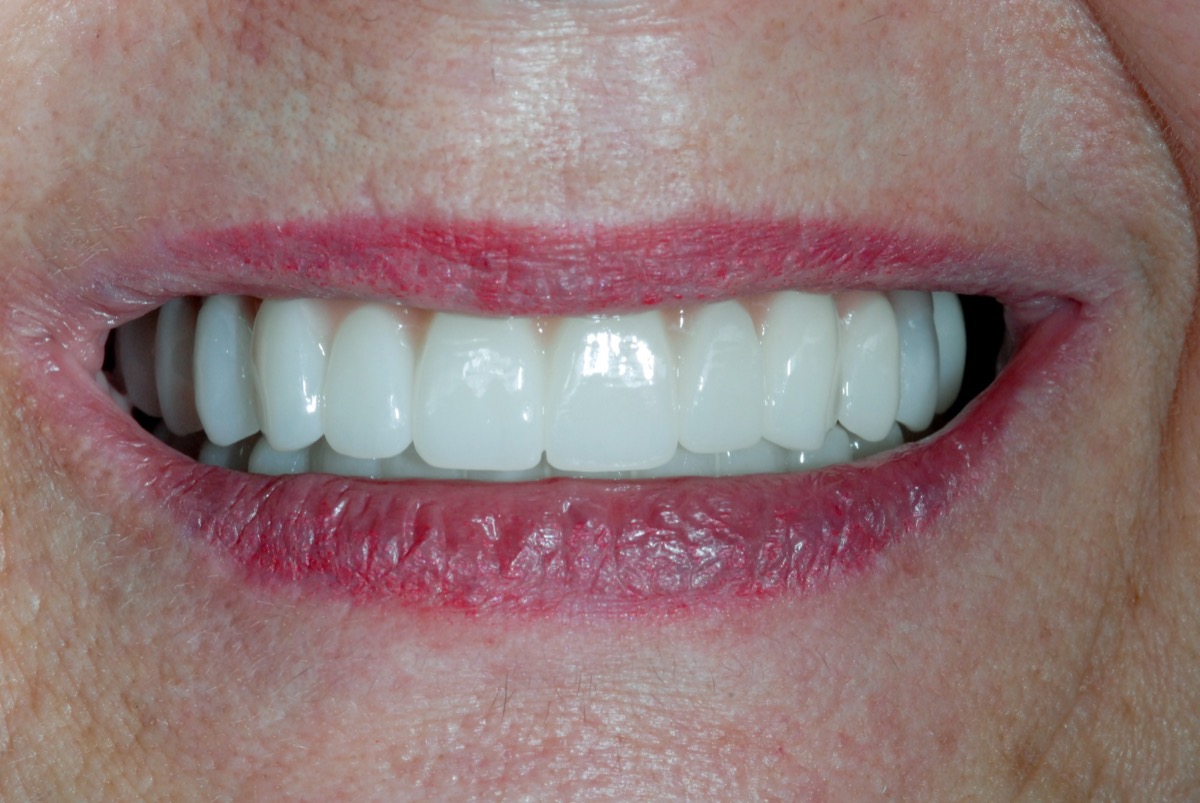
Full Mouth Restoration on All-on-6 Implants
Upper and lower arches on All-on-6 implants
Heavily decayed and discoloured teeth replaced with fixed restorations carried on six implants in each arch, rebuilt to an even shade and alignment.

Dental Conditions
Teeth that have been flattened, thinned, or shortened can be restored to their original height and function — and the cause identified so it does not simply happen again.
Worn teeth are structurally weakened, not merely shorter. They are considerably more susceptible to cracking, and sensitivity increases as thinning enamel exposes the softer dentine underneath. For some patients that sensitivity becomes significant enough to make eating and drinking uncomfortable.
Wear also signals something. Teeth do not flatten spontaneously — grinding, acid erosion, or a bite that loads certain teeth far harder than others is driving it. Restore the teeth without addressing that cause and the restorations wear out the same way.
Bruxism, usually during sleep and usually unnoticed. Produces characteristic flat, polished wear facets that match up between upper and lower teeth.
From diet — citrus, carbonated drinks, wine — or from reflux. Produces a different pattern: cupped, scooped-out surfaces and a glassy appearance.
Where the bite is uneven, a small number of teeth take forces meant to be shared across the whole arch, and wear disproportionately fast.
Restoring worn teeth is more involved than filling a cavity, because rebuilding height changes how the whole bite fits together. It usually requires planning the finished bite first, then working toward it with crowns, onlays, or bonded composite depending on how much structure is left.
A night guard almost always forms part of the plan, protecting the new restorations from the forces that destroyed the originals.
We start by working out what has been wearing the teeth down, because restoring them without answering that question only buys a few years. That means looking at how your teeth meet, checking the wear pattern for the signature of grinding against the signature of acid, and asking about reflux, diet and how you sleep.
You will also be asked how long it has been going on. Most people notice their teeth looking shorter, or a front tooth chipping, long before they come in — and that history tells us how fast it is moving, which matters more than the wear itself.
Rebuilding worn teeth is done in stages rather than in one appointment. The finished bite is planned first, often tested with a temporary version you wear for a few weeks, so that any problem with the new height is found before anything permanent is made. Most cases run over two to four months.
Teeth worn thin are often sensitive, and we will say plainly whether a case needs to be done all at once or can be staged. There is rarely any urgency to decide at the first visit.
The treatments that address this.
Both of these patients came to us with teeth worn down over many years. Individual results vary, and we will tell you honestly what is achievable in your case.
Upper and lower arches on All-on-6 implants
Heavily decayed and discoloured teeth replaced with fixed restorations carried on six implants in each arch, rebuilt to an even shade and alignment.
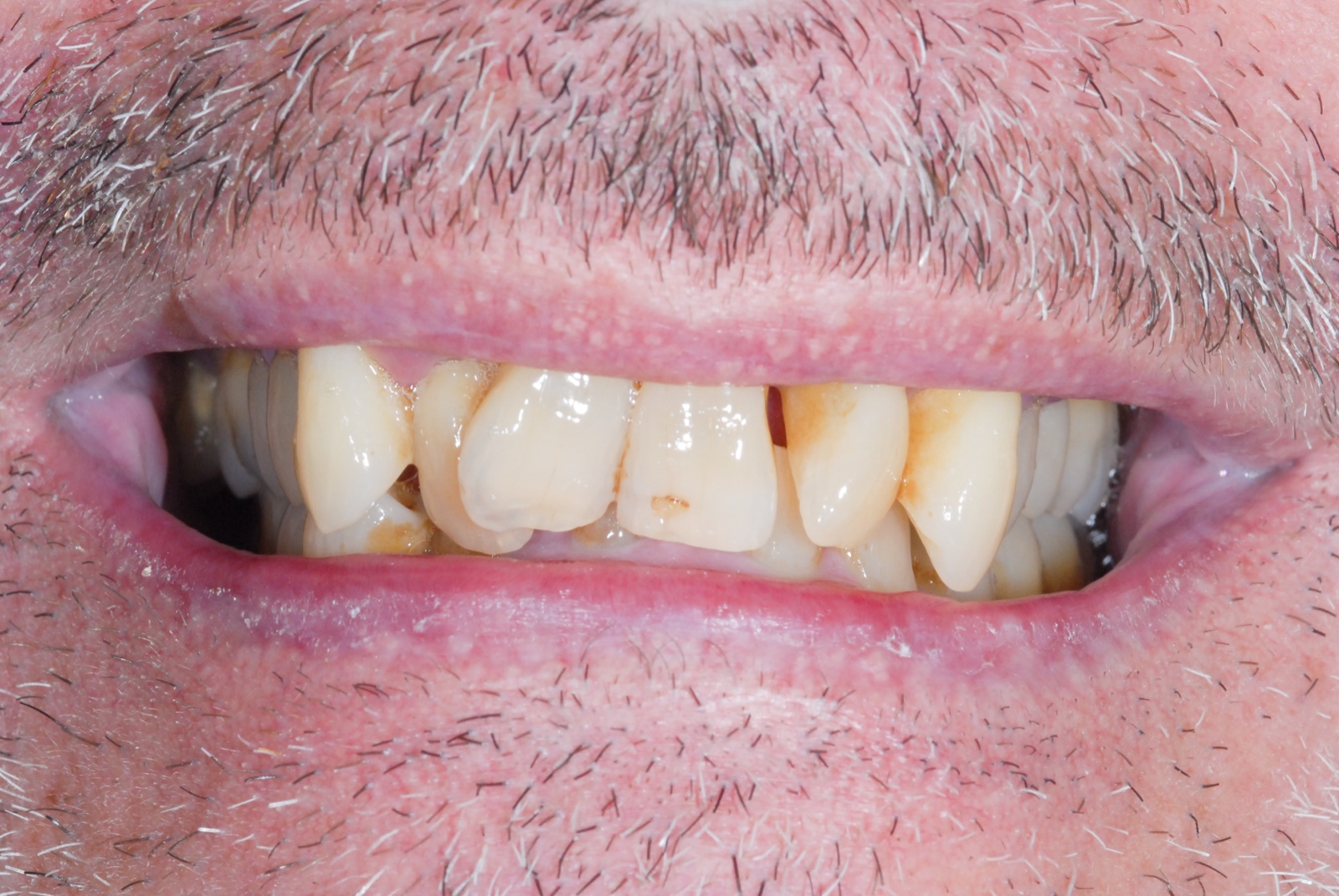
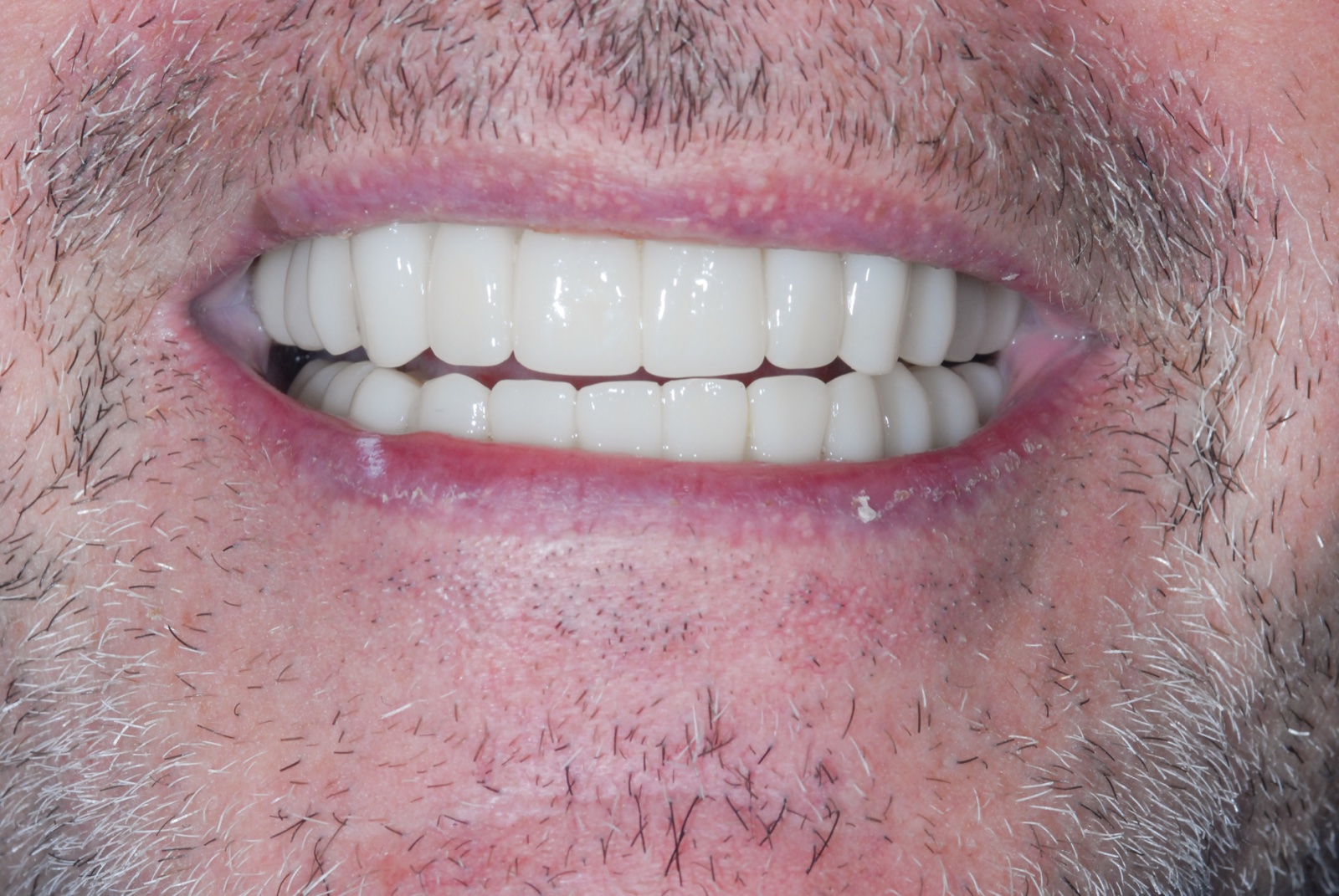
Full Mouth Rehabilitation using Four unit implant bridge; Crowns on remaining teeth
Two implants supporting a four-unit bridge at the front, with crowns on the remaining teeth to complete a full-mouth rehabilitation.
Book an assessment. We will identify the cause before proposing any restoration. Call (905) 479-7777.