All-on-4 Dental Implants Cost in Canada: 2026 Comprehensive Investment Guide
The useful question about All-on-4 is not what it costs. It is what it costs compared with the alternatives, over the years you will actually live with the decision.
The useful question about All-on-4 is not what it costs. It is what it costs compared with the alternatives, over the years you will actually live with the decision.
A conventional denture is a fraction of the price on day one. Twenty years later the arithmetic looks different, and not always in the direction you would expect. Here is an honest comparison, including the cases where All-on-4 is the wrong answer.
The short version
- Full arch in Canada: roughly $18,000 to $36,000 per jaw, spanning All-on-4 through All-on-6.
- Dentures cost far less initially and are relined, remade and adjusted repeatedly over time.
- Replacing teeth individually with implants costs considerably more than a full arch for a whole jaw.
- Prices vary across the country mainly with overhead, not with quality.
- Doing nothing is not free — bone continues to be lost, which narrows the options later.
The four options, honestly
A conventional denture
The cheapest by a wide margin at the outset. It rests on the gums, is removed for cleaning, and is held by suction and the shape of your ridge.
What it costs later: your jawbone shrinks once teeth are gone, because nothing is stimulating it. The denture that fitted this year fits less well in three years. Relines every few years, a remake every five to ten, and adhesive in between. Over twenty years that adds up to a real number, though still generally less than a full arch.
What it costs in other ways: bite force is a fraction of natural teeth. Many people quietly narrow their diet. Lower dentures in particular are difficult, because there is little ridge to hold them. Some people get on with dentures perfectly well and are content; others never do.
An implant-retained overdenture
A middle option that is under-discussed. Two to four implants with attachments; the denture clips onto them and is still removed for cleaning.
Costs meaningfully less than a fixed full arch, and it transforms the stability of a lower denture. It does not give you fixed teeth, and the attachment components wear and need periodic replacement.
For someone whose main complaint is a lower denture that moves, this is often the most proportionate answer.
Individual implants
Replacing each missing tooth with its own implant and crown. Excellent where a few teeth are missing.
For a whole jaw it is not sensible arithmetic — ten or twelve implants with individual crowns costs considerably more than four or six supporting a bridge, needs more bone, and takes longer. All-on-4 exists precisely because a full arch does not need one implant per tooth.
All-on-4 or All-on-6
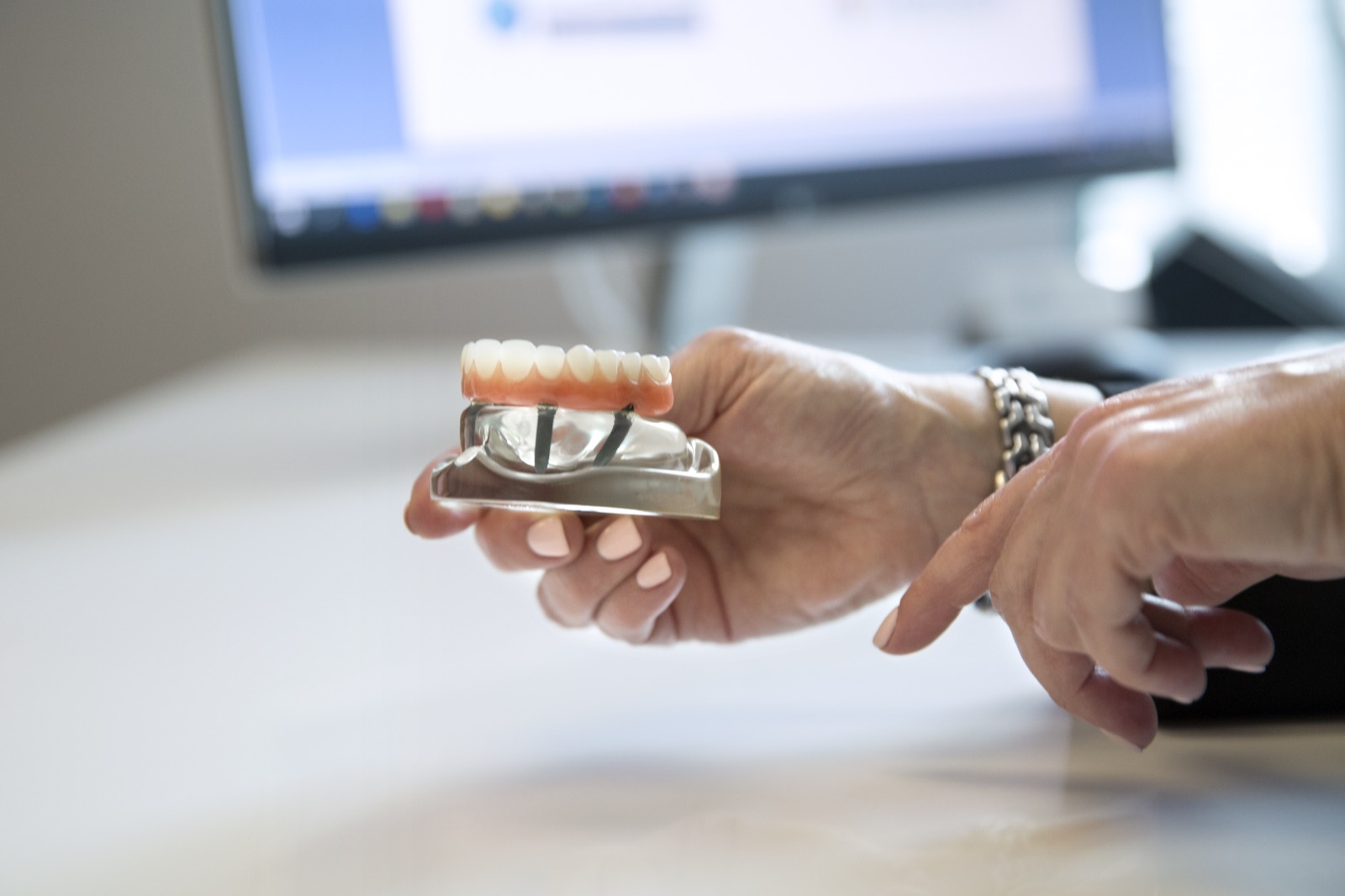
Fixed teeth on four or six implants. Not removed. Bite force much closer to natural teeth. The implants stimulate the bone, so the ridge shrinkage that undermines dentures largely stops.
What it costs later: professional maintenance once or twice a year, and eventual replacement of the bridge — acrylic typically after around a decade, zirconia generally longer. The implants themselves are intended to be long-lasting, and in most people they are.
Over twenty years
Rather than invent figures, here is the shape of it.
Dentures start far lower and accumulate: relines, remakes, adhesive. They remain the cheaper option in cash terms over two decades for most people. What they cost is in function and in bone, and neither shows up on an invoice.
A full arch is front-loaded. The large payment is at the start; afterwards it is maintenance and an eventual bridge replacement. The gap between the two options narrows over time but does not usually close.
So the honest framing is not "implants pay for themselves". Sometimes they do not, financially. What you are buying is fixed teeth, a normal diet, and a jaw that stops shrinking. Whether that is worth the difference is a genuine judgement, and it is yours.
The cost of waiting
This is the one people do not factor in.
Bone loss after tooth loss is fastest in the first year and continues afterwards. The bone you have today is the most you will have. Waiting five years can mean a plan that needed no grafting now needs it, adding cost and months — or, in some cases, moving you from four implants to six, or from fixed teeth to an overdenture.
This is not a reason to be rushed into treatment. It is a reason to get scanned and know where you stand, so that a decision to wait is a decision rather than a drift.
Why quotes vary across the country
Most of the variation is not clinical.
Overhead. Premises in central Toronto or Vancouver cost more than in a smaller centre, and fees reflect it.
What is included. The largest single source of apparent difference. One quote includes the final zirconia bridge, grafting and IV sedation; another covers surgery and a temporary. They are not the same treatment.
Implant system. Established systems cost more than budget ones. This matters less for the surgery and more for the decade after, when a component needs replacing and you need it to still exist.
Whether the laboratory is in-house. Affects cost, and affects how quickly adjustments happen.
Provincial fee guides give a reference point for individual procedures, but full-arch treatment is a combination of many, so guides do not produce a single comparable number.
Treatment abroad
Advertised for considerably less in several countries, and some people do well. Two practical cautions.
Follow-up. This is not a single procedure. It is surgery, a two-week review, months of monitoring, a try-in, a final fit, and lifelong maintenance. Adjustments at month four are hard to arrange from another continent.
Components. If an abutment or screw needs replacing in eight years, it has to be available here. Ask which implant system is being used and whether parts are stocked in Canada. Revising another practice's full-arch work is among the more expensive things in dentistry.
Deciding well
The right answer genuinely differs between people. Someone managing perfectly well with an upper denture may need nothing more than a lower overdenture. Someone who has stopped eating in company needs something else entirely.
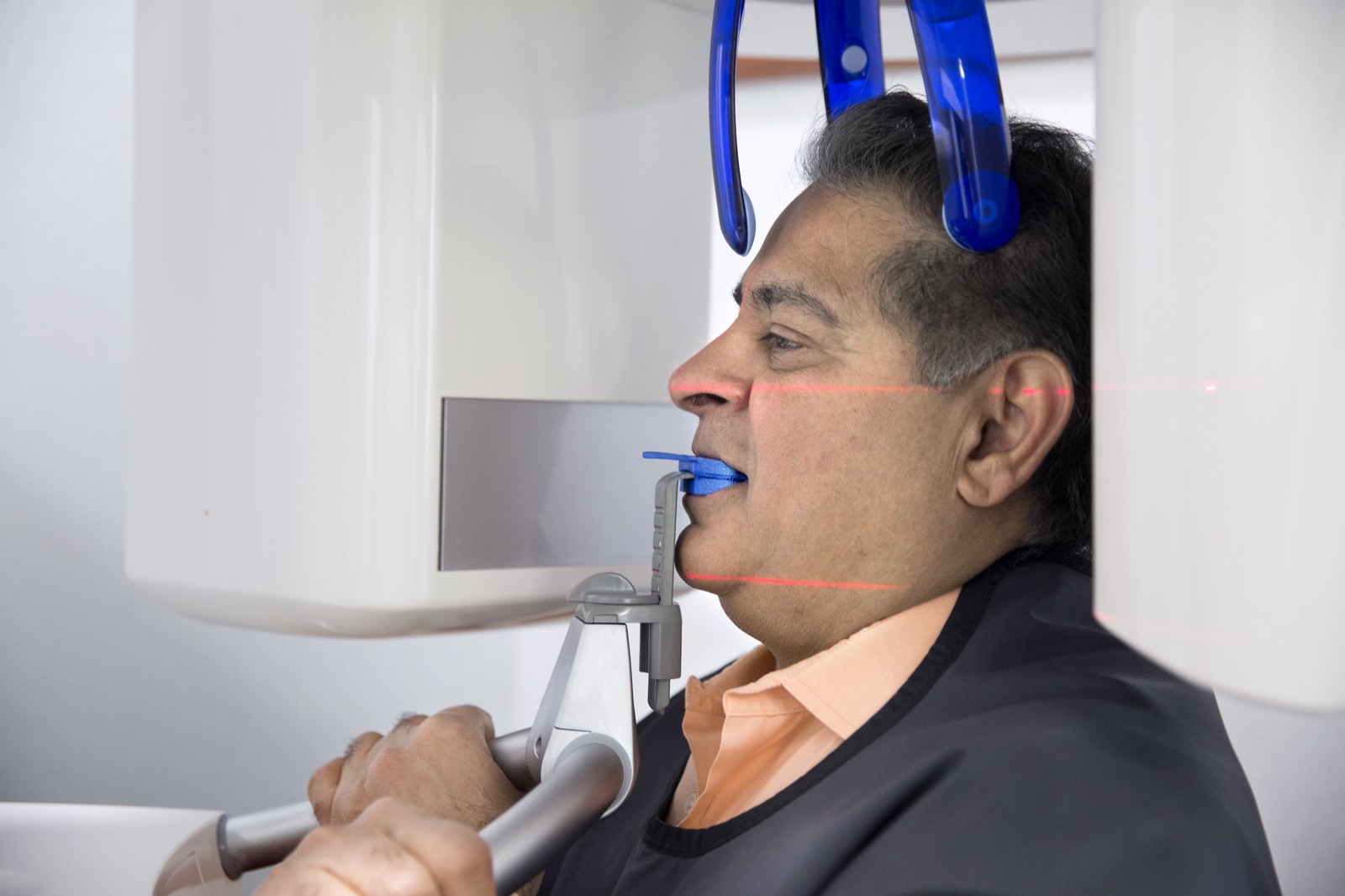
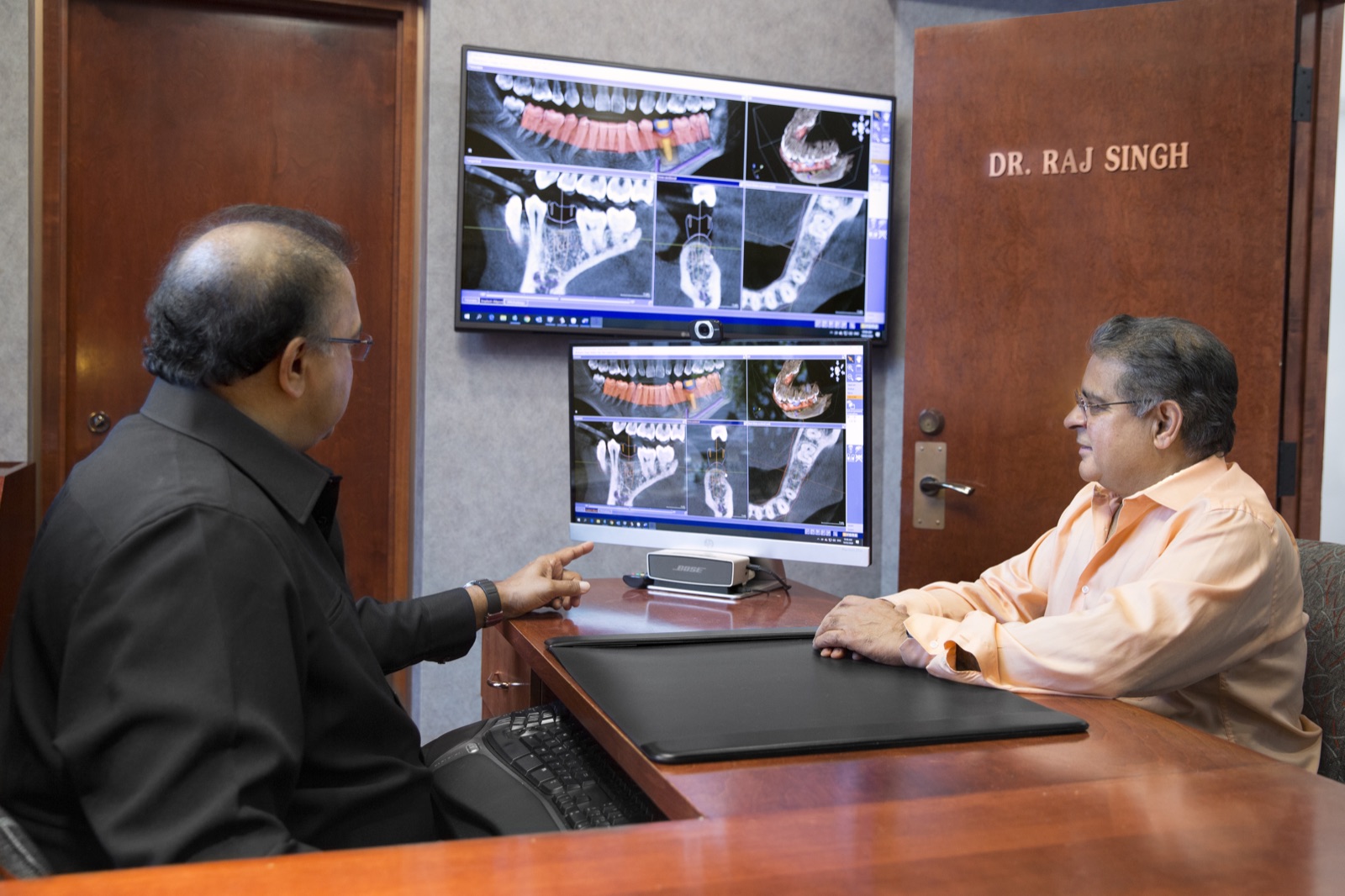
What everyone benefits from is a scan and a plain account of what their own bone allows. Book a consultation and we will give you that, including the option of doing less.
Common questions
Is All-on-4 cheaper than individual implants?
For a full jaw, substantially. Four or six implants supporting a bridge costs far less than replacing every tooth individually.
Do implants work out cheaper than dentures long term?
Usually not, in pure cash terms. Dentures need relining and remaking, but the running costs rarely close a gap that large. The case for implants is function and bone preservation, not savings.
Why is there such a wide price range?
Six variables: implant count, bridge material, grafting, extractions, infection, sedation. They genuinely move the figure that much.
Will my insurance cover it?
Most Canadian plans contribute something; few cover a full arch, because annual maximums sit well below the cost. A predetermination gives you the figure in writing before you commit.
Does the CDCP cover this?
It depends on eligibility and on what is being done; major restorative work carries its own pre-authorisation rules and income-based co-payments. Have it checked rather than assumed.
Is it worth waiting to save up?
Possibly — but get scanned now. Knowing whether your bone is stable or reducing turns waiting into an informed choice.
Are cheaper implant brands a problem?
Not necessarily for the surgery. The risk is later: a component you cannot source in ten years is a much bigger problem than the original saving.
Can I do one jaw now and the other later?
Yes, and many people do. It spreads the cost and leaves you a functioning side while the first heals.

Free Dental Implant Seminar — No Obligation, No Pressure
"Everything You Need to Know About Today's Dental Implant Treatments" — held monthly at our Markham clinic.
Explore Topics
Written by
Dentistry at Vitality Health
Content creator and writer sharing insights and stories.