Computer Guided vs. Freehand Dental Implants: Precision in Modern Restoration
If you have been reading about dental implants, you have probably come across the phrase "computer-guided" presented as though it settles the matter. It is worth understanding what it actually means, because it is a real advance — and because it is not the whole story. An experienced surgeon working freehand places implants successfully every day. What guidance changes is how much of the outcome depends on judgement made in the moment.
If you have been reading about dental implants, you have probably come across the phrase "computer-guided" presented as though it settles the matter. It is worth understanding what it actually means, because it is a real advance — and because it is not the whole story. An experienced surgeon working freehand places implants successfully every day. What guidance changes is how much of the outcome depends on judgement made in the moment.
This is an explanation of the difference, where it matters most, and where it matters less — so you can ask a useful question at your consultation rather than repeating a term back at whoever is treating you.
The short version
- Freehand means the surgeon positions the implant by eye and feel, guided by experience and 2D X-rays.
- Guided means a 3D scan is taken first, the implant position is planned on screen, and a custom guide physically directs the drill on the day.
- Guidance matters most where there is little margin — full-arch cases, thin bone, front teeth, and anywhere close to a nerve or sinus.
- For a straightforward single implant with plenty of bone, a skilled freehand result can be excellent.
- A guide is only as good as the scan behind it, and it has to seat correctly to be worth anything.
What "freehand" actually means
Freehand is not improvised. The surgeon studies X-rays, examines your mouth, and forms a clear plan before starting. What they do not have is a physical constraint on the drill. The angle and depth are controlled by hand, informed by what they can see and feel as they go.
In experienced hands, on a case with generous bone and no nearby structures to avoid, this works well and has done for decades. The limitation is that a two-dimensional X-ray flattens a three-dimensional problem. Bone that looks adequate from the front may be narrow from the side. The surgeon compensates by exposing the bone — lifting the gum to see it directly — which is why traditional implant surgery usually involves an incision and stitches.
What guided surgery adds
Guided surgery moves the difficult decisions out of the operating room and into the planning stage.
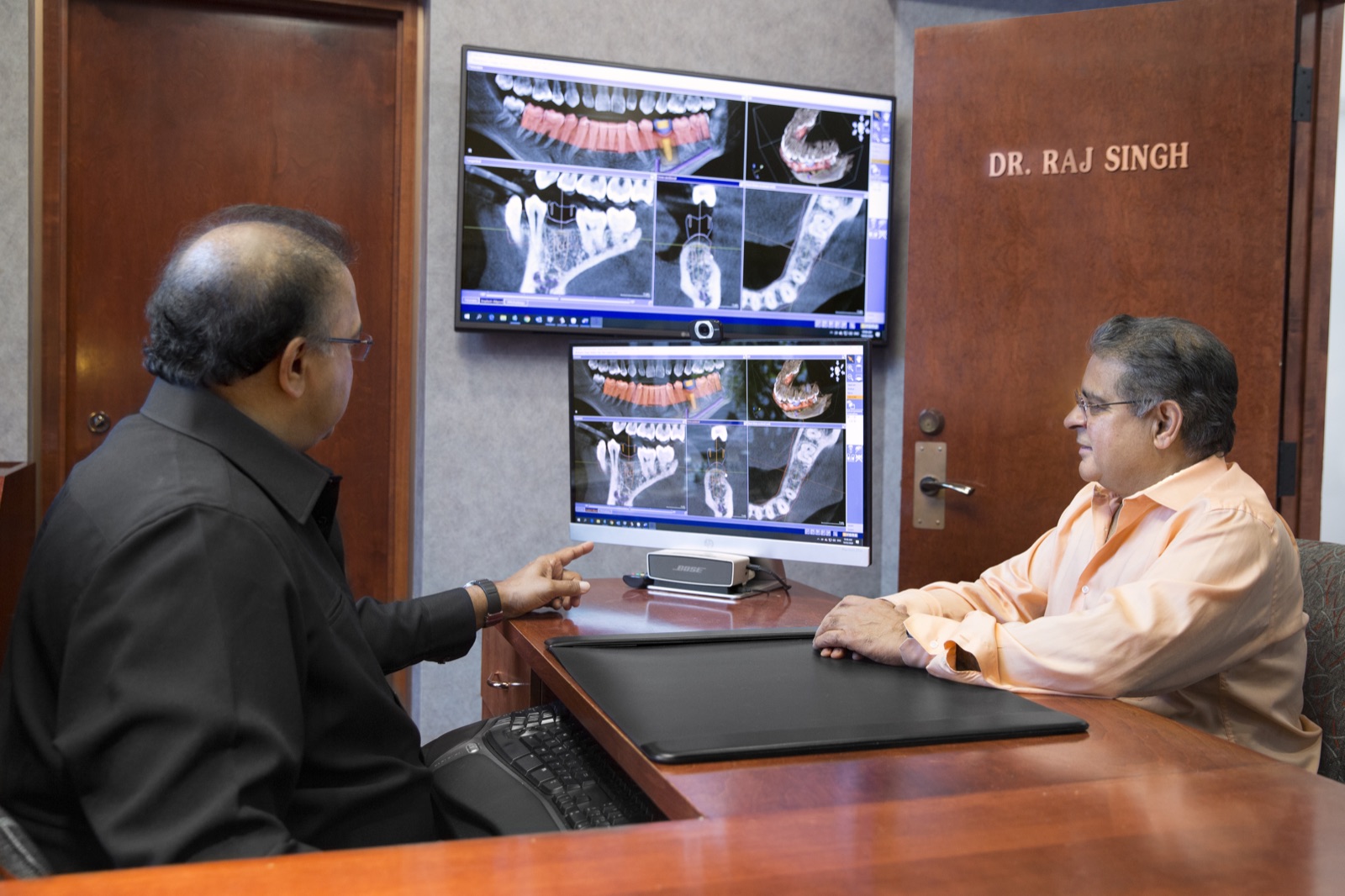
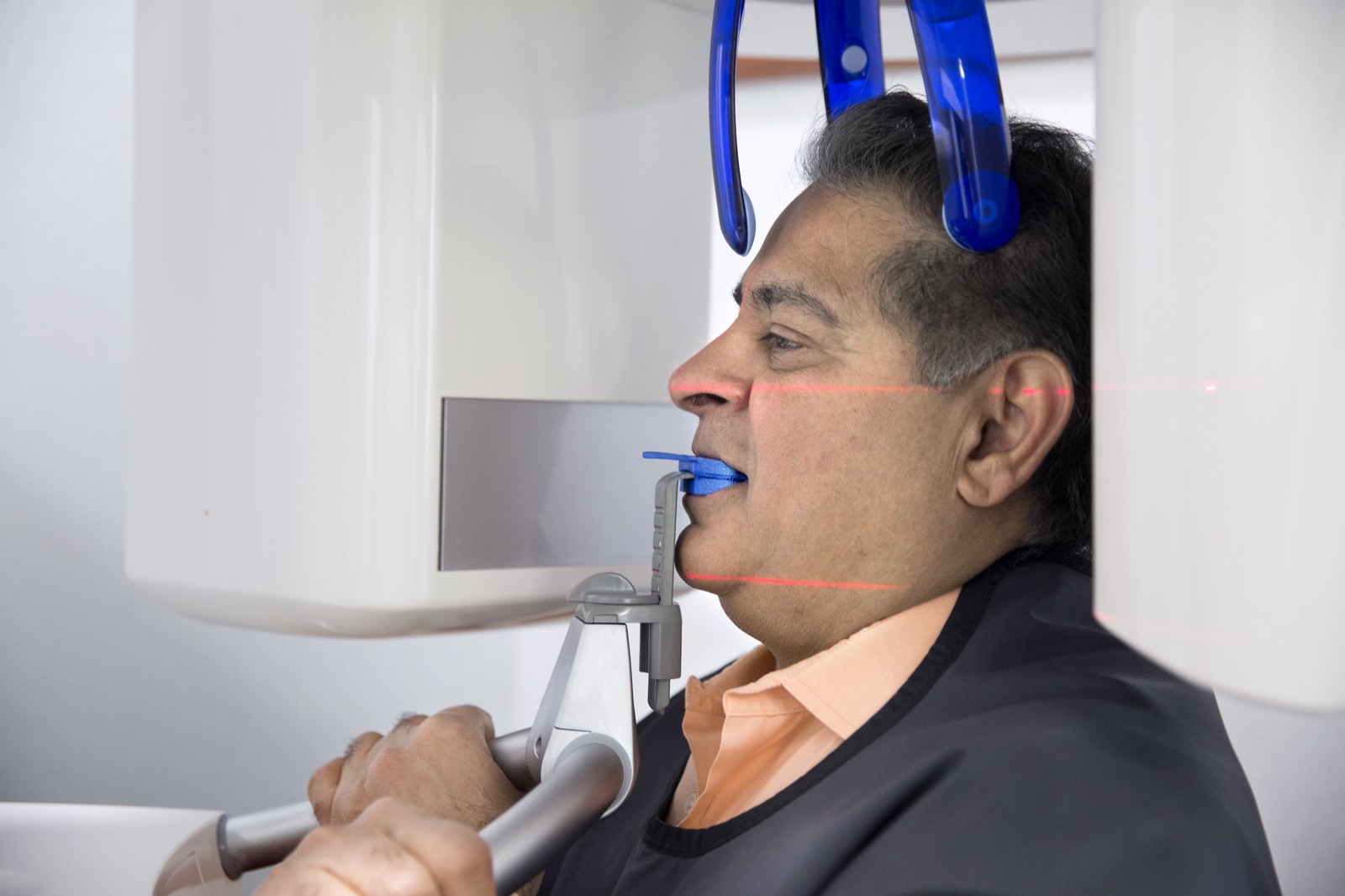
It starts with a CBCT scan — a 3D X-ray showing bone in cross-section, with the sinus and the nerve canal visible. That is combined with a digital scan of your teeth and gums. On screen, the implant is positioned virtually: angle, depth, and how it relates to the tooth that will eventually sit on it.
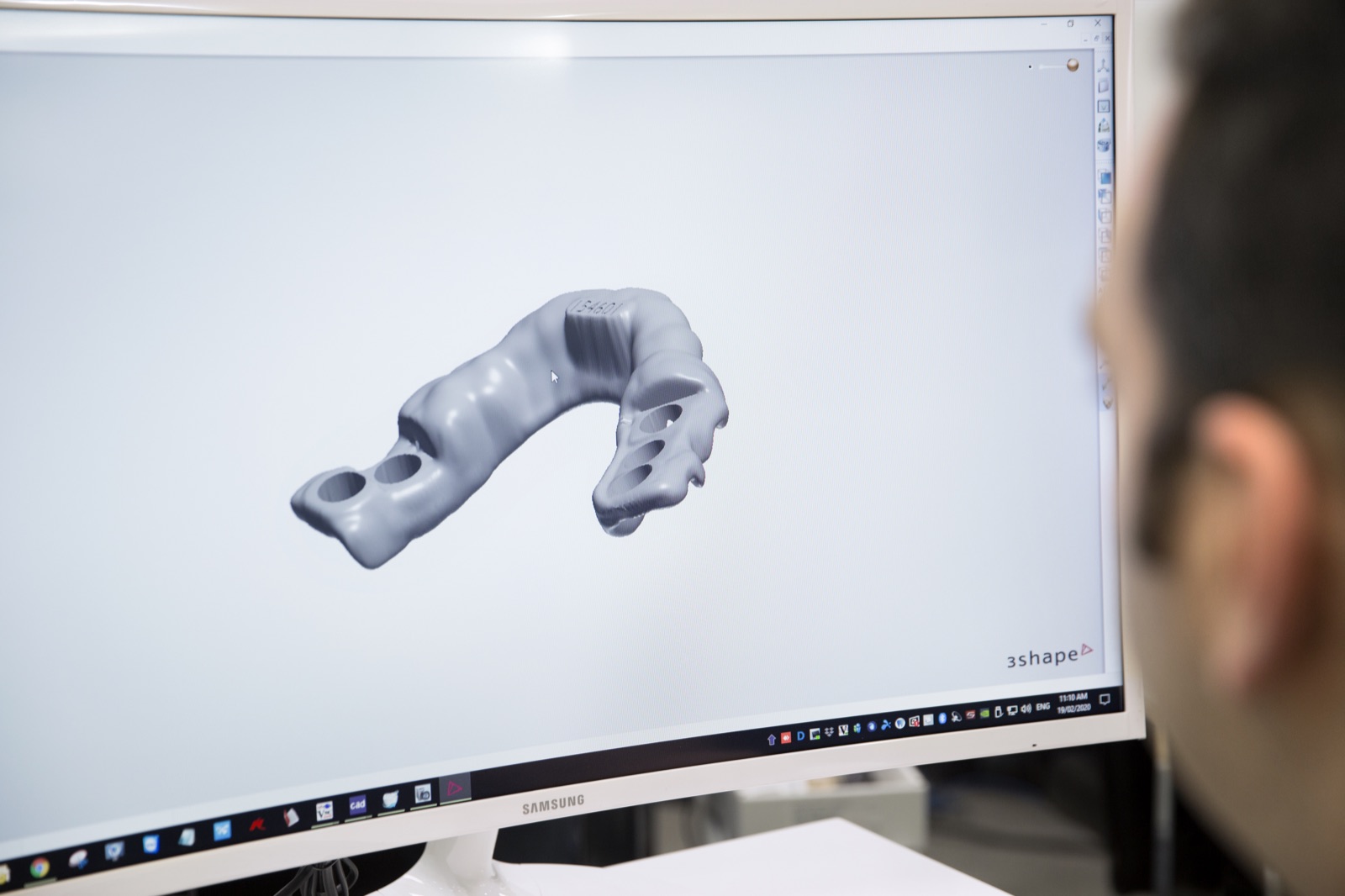
From that plan, a surgical guide is made — a custom-fitted template that sits over the jaw with metal sleeves directing the drill along the planned path. On the day, the guide does the aiming.
Prosthetic-driven planning is the real advantage
The phrase sounds like jargon but the idea is simple, and it is probably the most important difference between the two approaches.
Working freehand, the natural instinct is to put the implant where the bone is best. That gives a stable implant — but the tooth has to be built on top of wherever it ended up, and if that is slightly off, the crown may emerge from the gum at an awkward angle, or need to be shaped in a way that traps food.
Planning digitally, you start from where the tooth needs to be and work backwards to the implant position. You still need bone, and sometimes the ideal position isn't available — but the compromise is made deliberately, on screen, rather than discovered afterwards.
Where it matters most
Guidance is not equally valuable in every case. It earns its keep where the margin for error is smallest.
Full-arch cases. Placing four or six implants that must all support one rigid bridge is a geometry problem. They need to be parallel enough and spread correctly. Getting that right across six sites by eye is demanding; a guide makes it repeatable.
Limited bone. When there is only a narrow ridge to work with, every millimetre counts. Seeing bone width in cross-section before starting is the difference between knowing an implant will fit and hoping so.
Near the nerve or sinus. The nerve running through the lower jaw is the structure everyone wants to avoid. A 3D scan shows exactly where it is; a guide stops the drill short of it.
Front teeth. In the aesthetic zone, a few degrees of angle changes how the tooth emerges from the gum. There is no hiding it.
Where it matters less
It would be misleading to suggest guidance is essential for everything. A single back tooth, in a jaw with plenty of healthy bone, well away from the nerve, placed by someone who has done thousands — that is a case where the guide adds cost and an extra appointment for a benefit that may be small.
The honest position is that guidance reduces variability. It narrows the gap between a good day and an average one. How much that is worth depends on how much room for error the case has to begin with.
The limitations, since they are rarely mentioned
A guide is a physical object made from a digital plan, and both halves can go wrong.
The plan is only as good as the scan. If the scan is distorted — by movement, or by scatter from existing metalwork — the plan inherits the error.
The guide has to seat properly. It is designed to rest on teeth, gum or bone in one specific position. If it rocks or sits high, everything it directs is off. A surgeon should check the fit before drilling and be prepared to stop and work conventionally if it is not right. That is a normal part of the process, not a failure.
And guided placement still requires a surgeon who could do it without the guide. The guide controls the drill; it does not decide whether the bone is sound, manage bleeding, or judge whether an implant has adequate initial stability once placed.
On "flapless" surgery
Guidance often allows the implant to be placed through a small opening rather than by lifting the gum, which usually means less swelling and a more comfortable first week.
It is not automatic, and it is not always preferable. Working without lifting the gum means the surgeon cannot see the bone directly, so it suits cases where the scan shows a comfortable margin. Where bone is tight or gum needs repositioning, opening the site is the better choice.
What about success rates?
You will find figures quoted for both approaches, usually a percentage point or two apart, favouring guidance. Treat them carefully.
Studies differ in which patients they include, how long they follow them, and what counts as success. Guided cases are often the more complex ones; freehand cases are often the simpler ones. Comparing raw survival across those groups does not isolate the technique.
What can be said without a footnote is that implant survival is high with both when the case is well selected, the bone is healthy, and the patient maintains it. The variables that most affect whether your implant lasts — smoking, gum disease, grinding, and how well you clean around it — matter more than which of these two methods placed it.
Cost and time
Guided surgery costs more. The CBCT scan, the planning time, and fabricating the guide all add to it. Surgery itself is often shorter, because there is less deliberation, but the preparation is longer.
For full-arch treatment, guidance is generally part of the plan and included in the overall figure. Full-arch treatment here ranges from $18,000 to $36,000 per arch, depending on how many implants are placed, what the bridge is made of, whether grafting is needed, how many teeth have to be removed, whether there is infection to resolve first, and what sedation is used.
For a single implant, guidance may be a separate line on the estimate. It is a reasonable thing to ask about: whether it is recommended for your case, and why.
What to ask
- Is guidance recommended for my case, and what specifically about it makes the difference?
- Will a CBCT scan be taken, and will you show me it?
- What happens if the guide does not seat correctly on the day?
- Is the implant position being planned around where the tooth needs to be?
A clinician who can answer the first one with reference to your anatomy — rather than a general statement about technology — is telling you they have actually looked.
How we work
We plan full-arch cases digitally as a matter of course, because that is where the geometry is unforgiving and where the benefit is clearest. Planning, surgery and the bridge are handled in the same building, which means the person placing the implants and the person making the teeth are working from one plan.
For single implants we discuss it case by case, and we will say when we think a guide adds little. We have been doing this in Markham since 1985, and the honest answer is sometimes that the simpler route is the right one.
If you would like to know which applies to you, a consultation with a scan will answer it. Book a consultation when you are ready.
Common questions
Is guided surgery safer?
It is more predictable, which in practice usually means safer — particularly near the nerve in the lower jaw, where seeing the exact position beforehand and physically limiting the drill depth removes most of the risk. In a straightforward case with generous bone, the difference is smaller.
Does it hurt less?
Often, because it more frequently allows placement without lifting the gum, which means less swelling and no stitches. That depends on the case rather than the technology — where the gum needs to be opened, it is opened.
Is it more expensive?
Yes, for a single implant: the scan, the planning and the guide all add cost. For full-arch treatment it is usually built into the overall figure rather than charged separately.
Does every dentist offer it?
No. It requires the imaging, the software and training in using both. It is worth asking directly how often a practice plans cases this way, rather than whether they can.
What if the guide does not fit on the day?
The surgeon checks it before drilling. If it does not seat correctly it should not be used, and the procedure continues conventionally or is rescheduled. Knowing your surgeon is equipped to make that call is more reassuring than being told it never happens.
Is it worth it for one tooth?
Sometimes. In the front of the mouth, where angle determines appearance, usually yes. For a molar with plenty of bone around it, an experienced freehand placement may serve you just as well for less.
Does the surgery take less time?
The appointment is often shorter because the decisions are already made. The overall treatment takes slightly longer, because scanning and planning happen first.
Does it change how long the implant lasts?
Good positioning helps — it distributes force sensibly and makes the implant easier to keep clean, which protects the bone around it. But the things that most determine how long an implant lasts are gum health, smoking, grinding and cleaning, and none of those are decided on the day of surgery.

Free Dental Implant Seminar — No Obligation, No Pressure
"Everything You Need to Know About Today's Dental Implant Treatments" — held monthly at our Markham clinic.
Explore Topics
Written by
Dentistry at Vitality Health
Content creator and writer sharing insights and stories.