Digital Dental Implants: The Future of Precision Restorative Dentistry
"Digital dentistry" is a phrase that gets used to mean almost anything. It is worth being concrete about what it actually changes for you, because some of it matters a great deal and some of it is marketing.
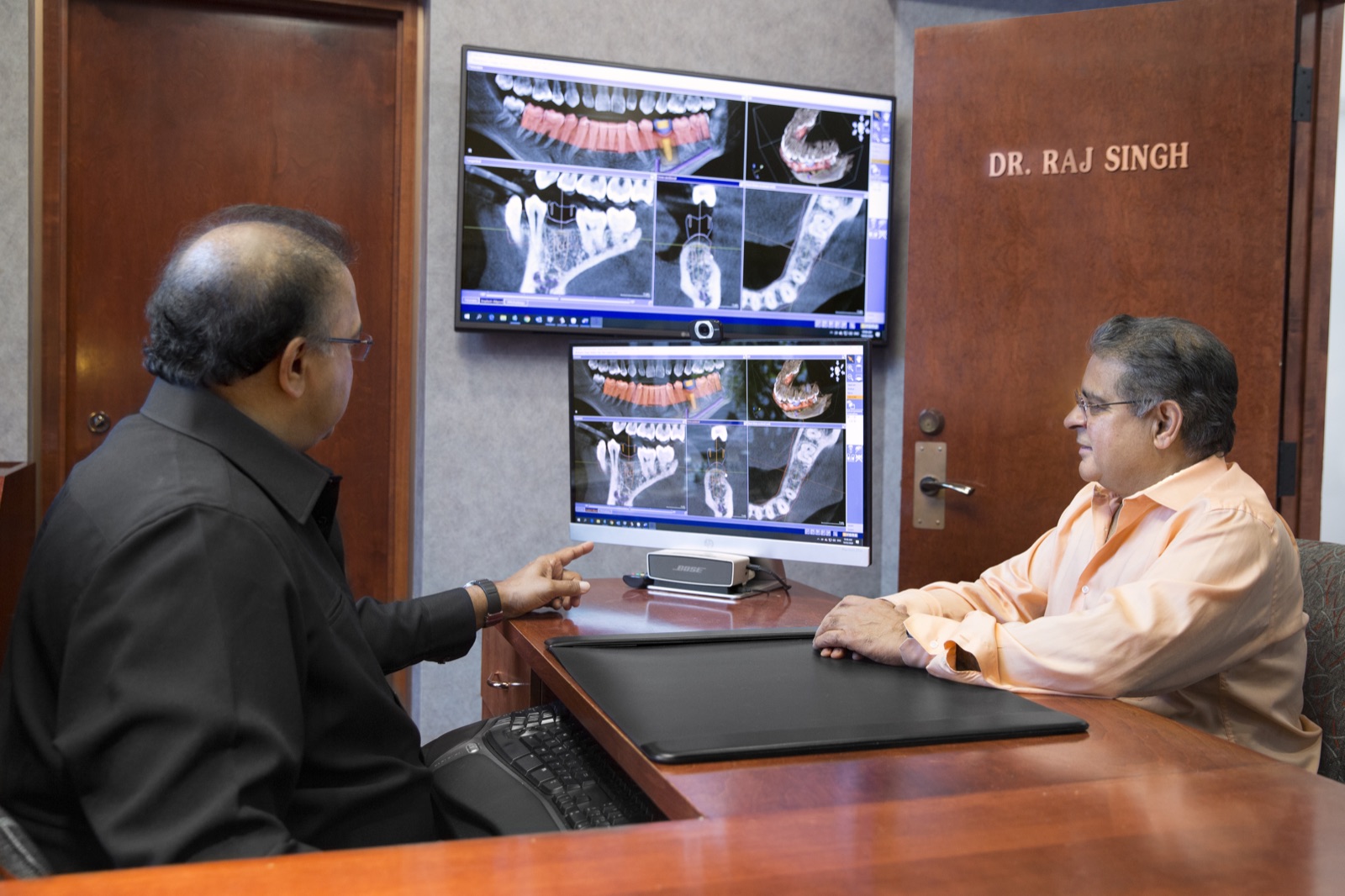
"Digital dentistry" is a phrase that gets used to mean almost anything. It is worth being concrete about what it actually changes for you, because some of it matters a great deal and some of it is marketing.
Here is what the digital workflow looks like from the patient's side — what happens at each appointment, what is genuinely different from how implants were done twenty years ago, and what it does not change.
The short version
- No impression putty. A small camera scans your mouth in a few minutes instead.
- You see your own plan on a screen before anything is done — which is the part patients find most reassuring.
- The plan is turned into a printed guide that positions the implants, so the surgery follows a decision already made.
- Fewer appointments, and less time in the chair at each one.
- It does not change the biology. Bone still takes three to six months to integrate.
The first visit: scanning
Two things are captured.
A CBCT scan — a three-dimensional X-ray of your jaw, taken standing or sitting, over about twenty seconds. Unlike a flat panoramic X-ray it shows bone thickness, density and the position of the nerve canal and sinus floor. It is what tells us whether an implant will fit where a tooth used to be.
An intraoral scan — a wand-sized camera passed over your teeth and gums, building a 3D model on a monitor as it goes. This replaces the tray of putty. If you have a strong gag reflex, this is the single change you will appreciate most; there is nothing in your mouth but a small camera, and you can stop at any point.
Neither is uncomfortable, and both take minutes.
Seeing the plan
This is the part that is genuinely new, and in our experience the part that changes how people feel about the whole thing.
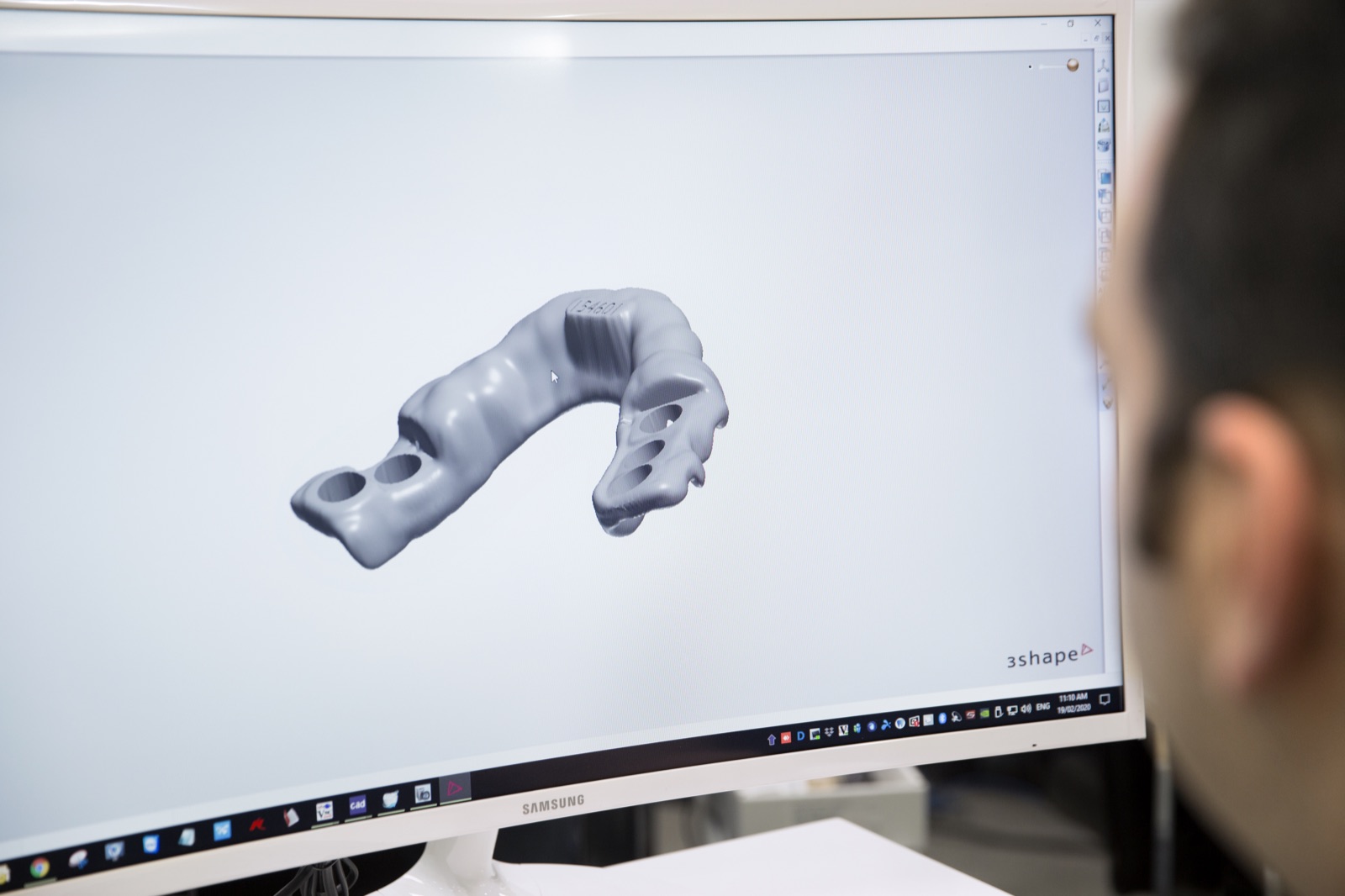
Between appointments, the scans are combined into a single model and the implants are positioned in software — length, diameter, angle, depth, each one placed relative to where the tooth needs to sit rather than where the drill happens to go.
At your next visit you look at it with us on the screen. You can see your own jaw in cross-section, where each implant will sit, how close it comes to the nerve, whether there is enough bone or whether grafting is needed, and what the teeth will look like on top.
People arrive at this appointment anxious and leave it calmer, more often than not. Not because anything has been promised, but because the thing has stopped being abstract. You can see what is being proposed and ask why.
It is also the right moment to disagree. If the plan involves more implants than you expected, or grafting you had not been told about, or a timeline that does not work, this is when to say so.
The surgical guide
Once the plan is settled, it is 3D printed as a guide — a rigid template that seats on your gums or remaining teeth with metal sleeves at each planned implant position.
The guide is why the plan matters. Without it, a plan is a good intention; with it, the drill physically cannot go anywhere other than where the plan put it. The decisions were made in software, unhurried, with the anatomy visible from every angle. The surgery executes them.
We cover the accuracy difference in more detail in our piece comparing guided and freehand placement. The short version: freehand in experienced hands works, and guided placement removes the cases where it does not.
Surgery day
Shorter than most people expect, because the thinking is already done. The guide seats, the implants go in through it, and the temporary bridge — already designed from the same scan — is fitted the same day.
Because the guide allows small openings rather than opening the gum widely, there is generally less swelling afterwards and fewer stitches. Some cases still need a flap raised, particularly where grafting is involved, and we will tell you in advance which yours is.
How the teeth are made
Our laboratory is in the building. The teeth are designed in software from the same scan data and milled here, which matters in two practical ways.
Adjustments do not take a week. If the shade is slightly off at try-in, or a contour needs changing, the technician who made it is down the corridor and can see it in your mouth rather than working from photographs.
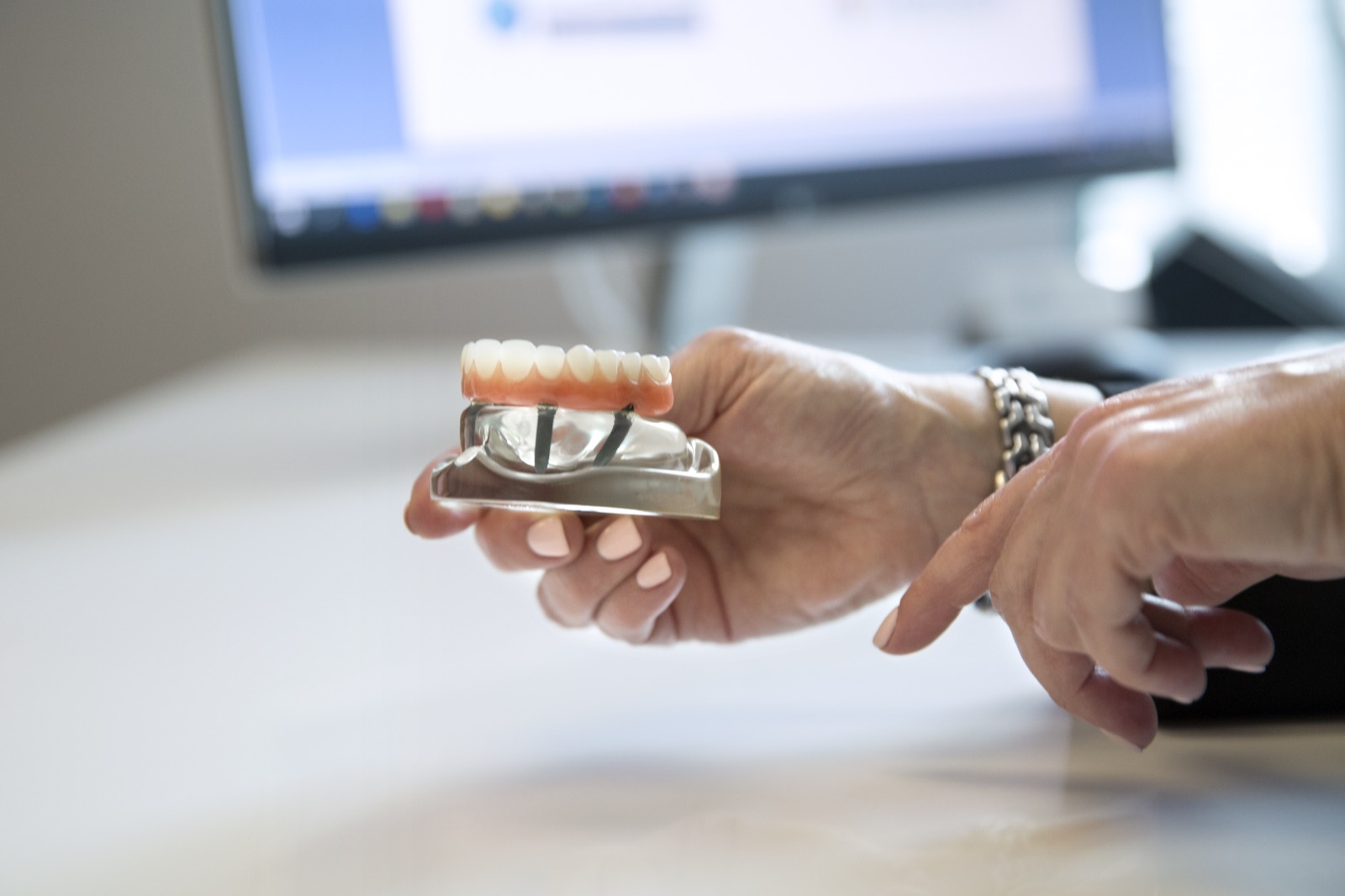
And the fit is checked against the actual implant positions rather than a plaster reproduction of them. A full-arch bridge has to sit on several implants simultaneously without tension. Small errors that plaster would have absorbed show up on a screen instead.
What digital does not change
Worth being straight about this, because it is often oversold.
Healing time. Bone integrates in three to six months whether the implant was placed by guide or by hand. There is no digital shortcut to biology.
Whether you need grafting. Scanning shows the bone you have; it does not create more. What it does do is find usable bone that a flat X-ray would have missed, which sometimes avoids a graft that would otherwise have been assumed necessary.
The judgement. Software does not decide how many implants your case needs, whether a tooth is worth saving, or which material suits your bite. It shows the anatomy clearly so that a person can decide well.
Maintenance. A digitally planned implant still needs cleaning underneath every day and a professional clean twice a year.
What it costs
For a full arch, from around $18,000 to $36,000 per jaw. The range spans All-on-4 through All-on-6 and reflects six things:
- How many implants support the arch
- Whether the bridge is acrylic or zirconia
- Whether bone grafting is needed
- How many teeth have to be extracted first
- Whether infection is present and needs resolving
- The level of sedation you choose
Guided planning is part of the fee rather than an add-on. A single implant with a crown sits in a different range entirely, and we will give you a written figure after the scan rather than a bracket before it.
If you want to see your own scan
The most useful thing we can do at a first appointment is show you your own anatomy and tell you plainly what is and is not possible in it. Book a consultation and that is what you will leave with.
Common questions
Is the CBCT scan a lot of radiation?
It is more than a single dental X-ray and considerably less than a medical CT. We take one when it will change a decision, not routinely.
Does the intraoral scanner touch my throat?
No. It works at the level of your teeth and gums. It is much better tolerated than putty by people with a sensitive gag reflex.
Can I have a copy of my scan?
Yes. It is your record. Ask and we will provide it, including if you want a second opinion elsewhere.
Does guided surgery hurt less?
Usually somewhat less swelling and bruising, because there is less tissue disturbance. The anaesthetic is the same either way, so you feel nothing during it regardless.
Do I still get temporary teeth the same day?
In most full-arch cases, yes. They are designed in advance from your scan, which is only possible because the implant positions are known before surgery.
How many appointments in total?
Typically: consultation and scanning, plan review, surgery, a two-week check, then the final restoration appointments once integration is confirmed. Fewer than the traditional sequence, largely because impressions do not need retaking.
What if the guide does not fit properly on the day?
We check its seat before starting. If it does not sit stably, we proceed using the plan as a reference rather than forcing a guide that is not seating — which is the safe choice, and the reason experience still matters alongside the technology.
Is digital planning worth paying more for?
For a single straightforward implant with generous bone, the difference is modest. For a full arch, for cases near the nerve or sinus, or where bone is limited, it changes what is safely possible. Those are exactly the cases where it is used.

Free Dental Implant Seminar — No Obligation, No Pressure
"Everything You Need to Know About Today's Dental Implant Treatments" — held monthly at our Markham clinic.
Explore Topics
Written by
Dentistry at Vitality Health
Content creator and writer sharing insights and stories.