
Our Services
Gum grafting for receding gums
When gums pull back and expose the root, a graft can cover the root again, calm the sensitivity and protect the tooth. Here is how it works and what recovery is really like.
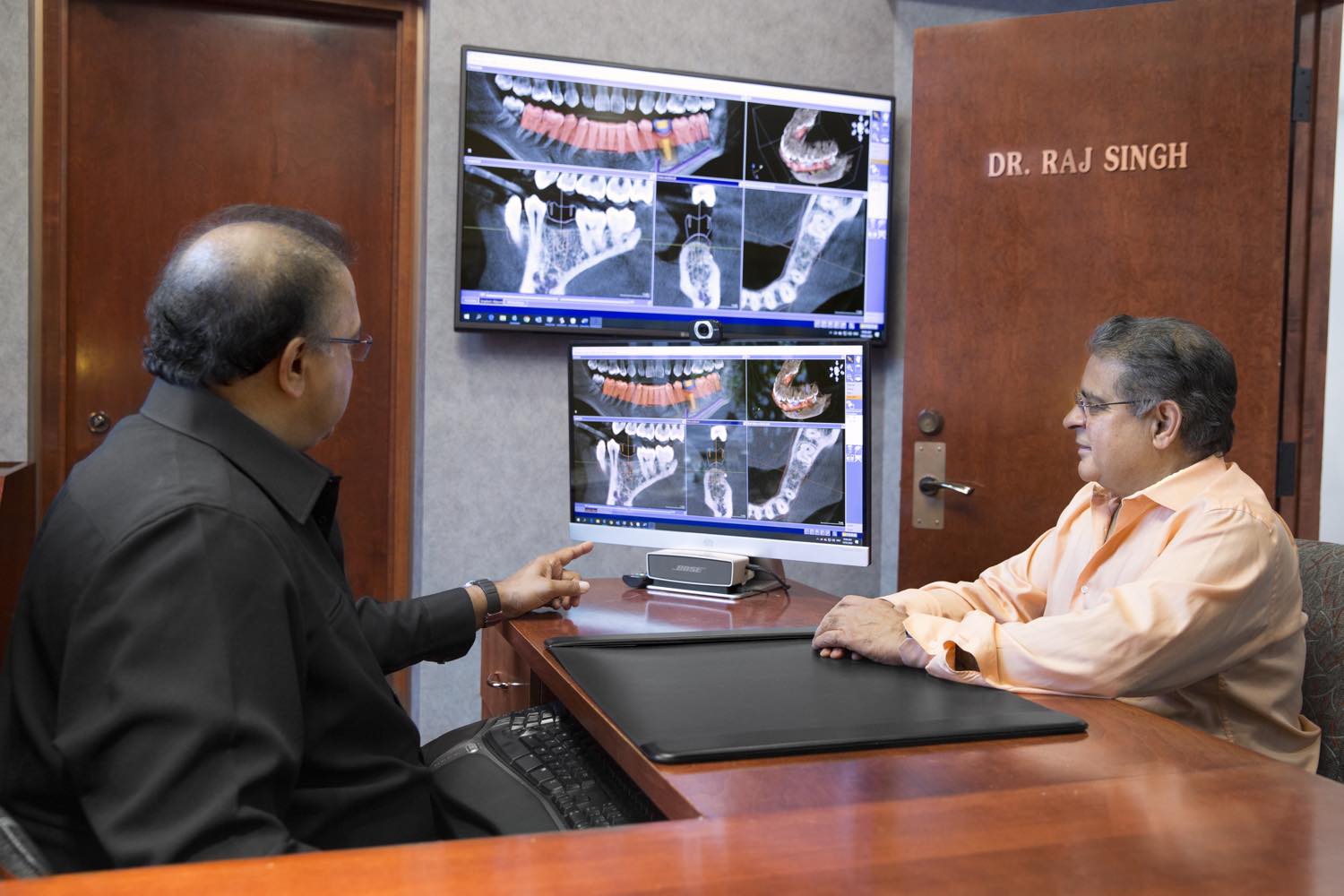
Reviewed by Dr. Raj Singh, Implant Dentist, Dentistry at Vitality Health
A gum graft is a small surgical procedure that adds gum tissue where the gum has receded and left the root of a tooth exposed. The new tissue covers the root, thickens the gum so it resists further recession, and usually relieves sensitivity to cold. It is done under local anaesthetic, takes about an hour, and most people are back to normal activities the next day.
Gum recession is common, it is progressive, and it does not grow back on its own. Once the root is exposed, the tooth is more sensitive, more prone to decay along the gum line, and, at the front of the mouth, looks longer than its neighbours. Grafting is the treatment that restores what has been lost.
This page explains why recession matters, when we recommend a graft and when we do not, the types of graft in plain language, the procedure, recovery week by week, how long results last, and what it costs. Gum grafts at our practice are performed by Dr. Raj Singh.
Why does gum recession matter?
The root of a tooth is not covered by enamel. It is covered by a softer layer called cementum over dentine, which has tiny channels that run to the nerve. When the gum recedes and exposes it, three things happen:
- Sensitivity. Cold drinks, sweet foods and even breathing in cold air can cause a sharp twinge. See our page on sensitive teeth.
- Root decay and wear. The root surface is softer than enamel, so it decays faster and wears away more easily under a toothbrush, leaving a notch at the gum line.
- Appearance and further loss. A receded tooth looks long, and thin gum tissue keeps receding. Left alone, recession can eventually threaten the bone that holds the tooth.
Recession has several causes: gum disease, brushing too hard, grinding, a thin gum type you were born with, tooth position, and orthodontic movement. Treating the cause comes first, because grafting a root while the cause continues gives a short-lived result. Read more about receding gums.
When is a gum graft recommended?
We recommend a graft when recession is causing sensitivity that does not settle with desensitizing toothpaste or fluoride, when the root is decaying or wearing, when the gum is so thin that further recession is likely, when the appearance of a front tooth bothers you, or before orthodontic treatment or an implant where thin tissue would be a problem.
We do not recommend a graft for every receded tooth. Mild recession with thick, healthy gum and no symptoms is often better monitored than treated. If gum disease is active, it is treated first; a graft placed into inflamed tissue will not take. We will show you the measurements and tell you plainly whether grafting is worth it in your case.
What types of gum graft are there?
Connective tissue graft
The most common type for covering exposed roots. A small piece of tissue is taken from under the surface of the palate (roof of the mouth), and placed under the gum around the receded tooth. The palate heals like a scrape and the colour match at the tooth is very good.
Free gingival graft
A thin strip of tissue is taken from the surface of the palate and stitched directly onto the area. Used mainly to thicken very thin gum, often on the lower front teeth, rather than to cover roots. The new tissue can look slightly paler than the surrounding gum.
Allograft (donor tissue)
Processed, sterilized tissue from a tissue bank, used instead of tissue from your palate. It avoids a second surgical site, so recovery is more comfortable, and it suits people who need several teeth treated at once. Results for root coverage are good, though your own tissue is still considered the most predictable choice.
What happens during the procedure?
- Planning. We measure the recession, check the bone and the neighbouring teeth, review the cause, and agree on the graft type and the teeth to be treated.
- Anaesthetic. The area, and the palate if tissue is being taken from it, is fully numbed with local anaesthetic. If the idea of the procedure makes you anxious, sedation is available so you are relaxed or asleep throughout.
- Preparing the site. The root surface is cleaned and smoothed, and the gum around the tooth is gently lifted to create a pocket for the graft.
- Placing the graft. The tissue is positioned over the root and secured with fine dissolving stitches. In some cases a protective dressing is placed over the palate.
- Instructions. You leave with written aftercare, a prescription rinse and pain relief advice. The whole visit takes about an hour for one or two teeth.
What is recovery like, week by week?
Days 1 to 3. Some swelling and soreness, mostly from the palate if tissue was taken there. Over-the-counter pain relief is usually enough. Eat soft, cool foods; avoid the area; do not brush the grafted teeth; use the prescribed rinse. Most people work the next day.
Days 4 to 7. Discomfort settles. The graft may look pale, then red or swollen, which is normal as blood supply grows into it. Keep avoiding hard, crunchy or hot foods and do not pull your lip to look at it.
Week 2. We see you to check healing and remove any stitches that have not dissolved. Gentle brushing of the area usually resumes with a soft brush.
Weeks 3 to 6. The graft blends in and firms up. Normal eating and cleaning return. The final colour and contour continue to mature for several months.
Call us if you have bleeding that does not stop with gentle pressure, swelling that increases after day three, fever, or if the graft appears to have moved. Complications are uncommon, and most are easily managed when reported early.
How long do the results last?
A well-planned graft is designed to be long-lasting. Studies following patients for ten years and more show that most connective tissue grafts keep their root coverage, and that the thicker gum they create is much less likely to recede again. Results are highly predictable when the procedure is properly planned and the cause of the recession has been addressed.
We say “designed to be long-lasting” rather than promising a result that never changes, for a reason: the graft cannot protect against a cause that continues. Scrubbing with a hard brush, untreated grinding, or returning gum disease will wear down grafted tissue just as they did the original. Gentle technique, a night guard where needed, and regular periodontal care protect your investment.
What does gum grafting cost?
The fee depends on the graft type, the number of teeth treated, and whether donor tissue is used. As a guide, gum grafting in Ontario typically ranges from about $700 to $2,000 per tooth, with several adjacent teeth treated in one visit costing less per tooth than treating them separately. Fees vary; we provide a written estimate before treatment.
Many dental plans cover part of the cost of gum grafting when it is done to treat recession, sensitivity or root exposure. We will submit a pre-determination to your insurer if you wish, so you know your share in advance. Our financing page explains payment options.
Common questions
Is gum grafting painful?+
The procedure itself is not, because the area is fully numbed. Afterwards, expect soreness for a few days, mostly at the palate if tissue was taken there, controlled with over-the-counter pain relief. People usually describe it as similar to a pizza burn on the roof of the mouth. Donor tissue avoids the palate site altogether.
How long does a gum graft take to heal?+
The surface heals within about two weeks; the graft continues to mature and blend in for several months. Most people are back to work the next day and eating normally within two to three weeks.
Can receding gums grow back without surgery?+
No. Gum tissue that has receded does not regenerate on its own. What you can do is stop it getting worse by correcting the cause: gentler brushing, treating gum disease, and protecting against grinding. Grafting is the only way to restore coverage that has been lost.
Will the graft match my other gums?+
A connective tissue graft placed under your existing gum usually matches very well. A free gingival graft can look slightly paler or thicker, which is why we tend to use it where it will not show. We will show you what to expect for your case.
How many teeth can be treated at once?+
Often several. Using donor tissue allows a whole section of teeth to be treated in one visit without taking a large amount of tissue from the palate. Treating adjacent teeth together also costs less per tooth.
Sources: Chambrone L, Tatakis DN. Long-term outcomes of untreated buccal gingival recessions: a systematic review and meta-analysis. J Periodontol 2016;87(7):796–808 · Chambrone L, Tatakis DN. Periodontal soft tissue root coverage procedures: a systematic review from the AAP Regeneration Workshop. J Periodontol 2015;86(2 Suppl):S8–S51
Sensitive, receding gums?
Book an assessment and we will measure the recession, find the cause and tell you whether a graft is worth it. Call (905) 479-7777.