
Our Services
Family dentistry
Every family member deserves care shaped around their age and their needs — children treated with patience, teens straightened, adults maintained, and seniors helped to keep their natural teeth.
Treating a whole family well means changing approach considerably between a nervous five-year-old and their grandmother. What stays constant is the standard of care and the willingness to explain what we are doing and why.
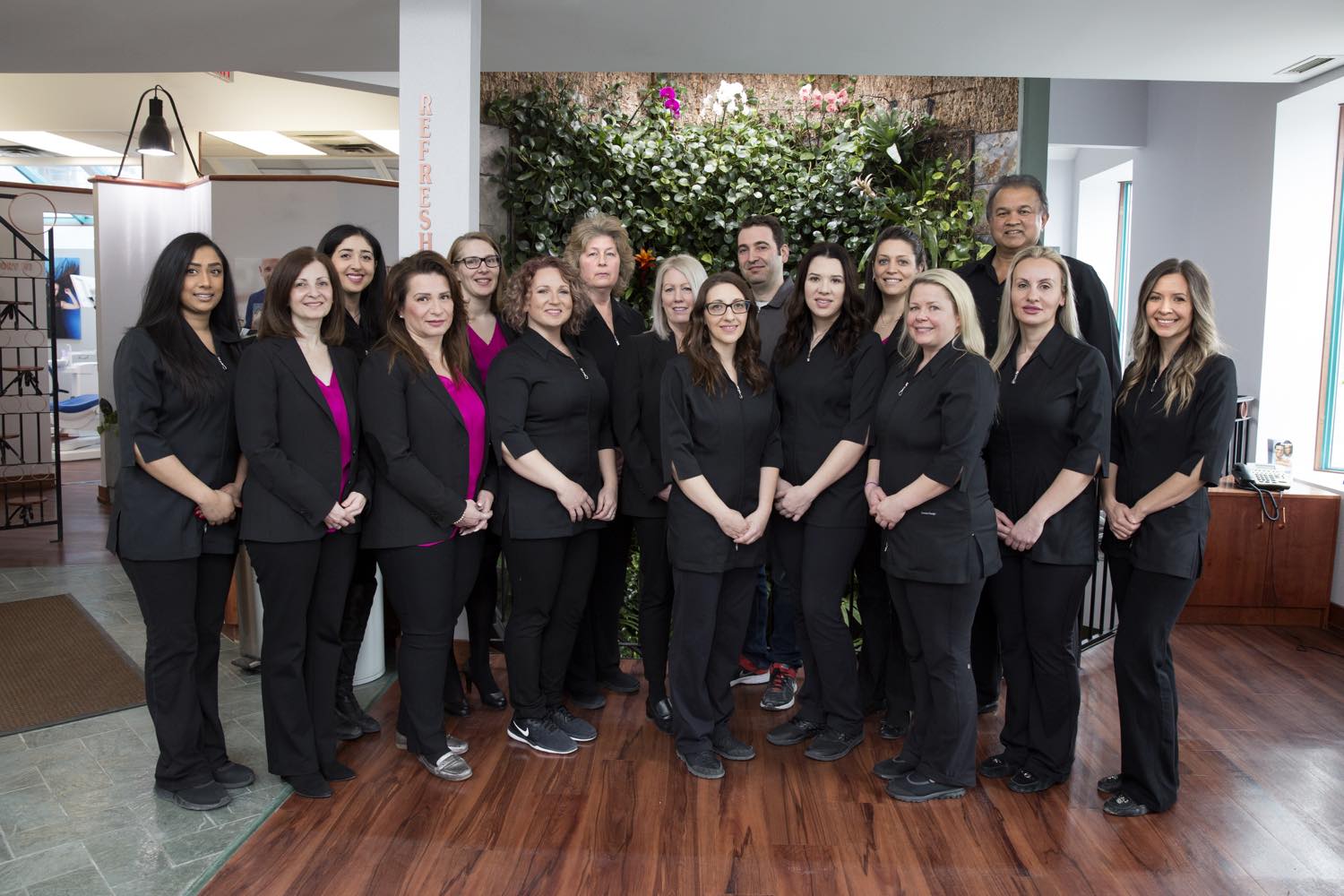
Our team speaks more than twelve languages, which for many families here is the difference between a parent understanding their child's treatment plan and simply nodding along.
Dentistry for every generation
Children
Early visits build a relationship with the dentist before anything uncomfortable ever happens. Cleanings, fluoride, and sealants to protect newly erupted molars, delivered patiently and without rush.
Teens
The orthodontic years. Invisalign and braces through our in-house specialist, plus sports guards for anyone playing contact sport and continued preventive care through a high-risk period for decay.
Adults
Maintenance, restorative work, and cosmetic treatment — the years where consistent prevention determines what your sixties look like dentally.
Seniors
Preserving natural teeth wherever possible, managing gum health, and where teeth have been lost, replacing them in ways that protect the remaining bone.
Services families use most
- ✓ Cleanings and preventive care
- ✓ Sealants for children's molars
- ✓ Custom sports guards
- ✓ Invisalign and orthodontics
- ✓ Professional whitening
- ✓ Dental implants
- ✓ Sedation for anxious patients
What changes at each stage of life
Family dentistry is not one kind of care delivered to different ages. What a mouth needs at six is not what it needs at sixteen, and neither is what it needs at seventy. The value of one practice seeing the whole family is that the pattern is visible over time.
Young children
The first visits are about familiarity as much as treatment. A child who has sat in the chair, had their teeth counted and left with nothing unpleasant happening is a child who will come back without a fight.
- Baby teeth matter more than people expect. They hold the spacing the adult teeth will need, and they do the chewing and the speaking in the meantime. Decay in them is treated rather than waited out.
- Sealants and fluoride are the preventive tools for teeth that have only just come through. Both are quick and neither involves drilling.
- Ask us when to bring your child first. The guidance depends on how their teeth are coming in, and we would rather answer it for your child than give you a number from a leaflet.
If your child is anxious, say so when you book. Laughing gas is available, and so is simply taking longer over the first appointment.
Teenagers
The teenage years bring three things at once, and they interact.
- Orthodontic treatment, which is most often planned in this window because the jaws are still developing. It is provided here by Dr. Julien Kim, a registered specialist in orthodontics.
- Wisdom teeth, which usually make themselves known in the late teens. Whether they need removing depends on where they are sitting, not on age.
- Sports mouthguards. A custom guard costs more than a boil-and-bite one from a shop and is the difference between a guard that gets worn and one that lives in a bag.
Diet and habits also change in these years, often out of a parent's sight. Sports drinks and energy drinks are acidic as well as sugary, which is a different problem from sugar alone.
Adults
For most adults the work is maintenance, and the two things worth watching are gums and wear.
- Gum disease is usually painless until it is advanced, which is exactly why it is checked at every examination rather than reported by the patient — gum disease and bleeding gums.
- Grinding and clenching show up as flattened edges and cracked enamel long before anyone notices doing it — teeth grinding.
- Old fillings do not last forever. Replacing one before it fails is a smaller piece of work than treating the tooth after it has.
Older adults
Two things change with age that people are rarely warned about.
- Medication causes dry mouth, and dry mouth causes decay. Saliva is what keeps the mouth's chemistry in balance; without enough of it, decay appears in places it never used to, particularly at the gum line where the root is exposed. If you have started a new medication, tell us.
- Gums recede, and roots are softer than enamel. Root decay in later life is common and is not a reflection of how carefully someone brushes — receding gums.
Where teeth have already been lost, the choices are the same ones at any age and the decision is usually about cost and bone. A denture is the least expensive, a bridge works over a short gap with sound teeth either side, and where there is enough bone an implant is usually the option we would suggest first, because it does not rely on the neighbouring teeth and helps hold the bone. Implant-supported dentures sit between the two.
One practice for the whole family
- Twelve languages are spoken here — English, Mandarin, Cantonese, Italian, Hebrew, Greek, Macedonian, Hindi, Gujarati, Russian, Korean and French. Mention which you would rather use when you book.
- Hours that accommodate school and work. We open at eight on Tuesday and Thursday, run to seven on Monday and Thursday, to eight on Wednesday, and Saturday mornings from eight until two.
- Free parking directly outside, which matters more than it sounds when you are arriving with children.
- Specialists in the same building — an oral surgeon, an orthodontist and a dental anaesthesiologist — so a referral rarely means starting again somewhere else.
Common questions
When should my child first see a dentist?+
It depends on how their teeth are coming through, so ask us rather than working from a general figure. Bring it up at your own appointment and we will tell you what suits your child.
Do you treat children and adults in the same practice?+
Yes. Most families here are seen across two or three generations, which is the main practical advantage: the pattern in a family's teeth is visible over time.
My child is frightened of the dentist. What can you do?+
Tell us when you book. Laughing gas is available, and often the more useful thing is simply allowing longer for the first visit so nothing has to be rushed.
Why do I suddenly have cavities in my sixties when I never did before?+
Most often because of dry mouth from medication, combined with gums that have receded to expose softer root surface. It is common and it is not a reflection of how well you brush. Tell us what you are taking.
Do you speak languages other than English?+
Twelve are spoken at the practice, including Mandarin, Cantonese, Italian, Hebrew, Greek, Macedonian, Hindi, Gujarati, Russian, Korean and French.
Ready to get started?
Book the whole family in. Call (905) 479-7777 or request appointments online.